
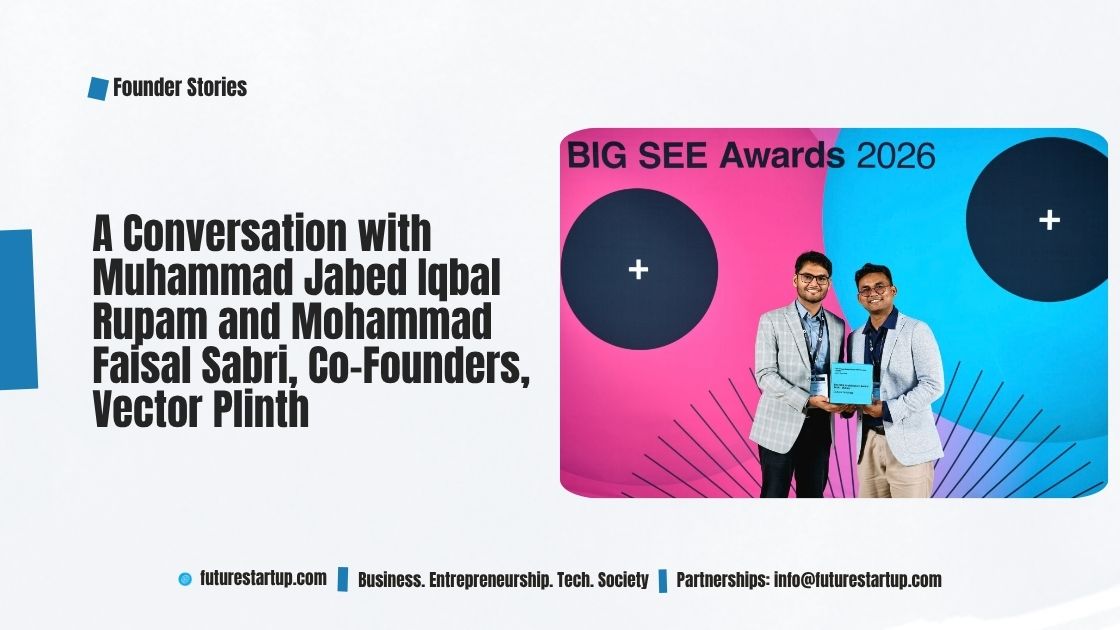
Architect Muhammad Jabed Iqbal Rupam and Architect Mohammad Faisal Sabri are the co-founders of Vector Plinth, an architectural firm that has spent the last nine years pioneering neo-modern architecture in Bangladesh. The firm started in 2017 with an ambition to bring clean, functional, Nordic-inspired design to Bangladesh in a way that honors local context, climate, and historical memory.
Today, Vector Plinth has earned national recognition for landmark projects like the Feni College Massacre Memorial Complex and international acclaim, having recently won the prestigious BIG SEE Award at the Architecture Awards 2026 in Slovenia.
Architecture, like most serious disciplines, sits at an intersection that is harder to navigate than it first appears: cultural history, engineering constraint, financial feasibility, and human emotion all have a claim on the same building. What Rupam and Faisal have spent nine years working out is how to hold all of those claims at once without losing the thread of any of them.
In this fascinating conversation, Rupam and Faisal walk us through their journey to what they are doing today, the early inspirations and founding philosophy that shaped their approach, what it actually takes to execute a memorial for a massacre without either aestheticizing grief or flinching from it, how they have managed growth through project discipline, what winning a global award changes, and what timeless architecture means when you are building it in Bangladesh.
Future Startup: Before Vector Plinth existed, what drew both of you to design and spatial planning? Did you always know you wanted to become architects and build a practice together?
Ar. Muhammad Jabed Iqbal Rupam: For me, space has always been something deeply emotional rather than just physical. Growing up in Bangladesh, you see how the built environment affects people's daily moods, productivity, and connection with nature. I have always been fascinated by how light, shadow, and materials could transform a person's experience inside a room.
Early on, I knew I didn't just want to be an architect who designs buildings; I wanted to create spaces that leave a lasting impression on people’s minds and enhance the beauty of our cities.
Ar. Mohammad Faisal Sabri: My path was shaped by a curiosity about how structure and storytelling meet. Architecture isn't just about putting up walls or roofs; it is a visual language. Every building tells a story, whether intentionally or unintentionally.
When Rupam and I began discussing design during our formative years, we realized we shared a common frustration with how generic and cluttered urban development had become.
We shared a vision to establish a practice where art, history, and technical discipline could coexist seamlessly.
Future Startup: What were your early professional experiences like before starting Vector Plinth? What key lessons did you learn from working in the industry early on?
Muhammad Jabed Iqbal Rupam: In the early days of any architectural career, you spend a lot of time working on individual components, such as drafting, rendering, or overseeing site details.
What I quickly realized was that the traditional market often treated architecture as a transactional commodity. Developers wanted maximum square footage with minimal thought given to liveability, natural light, or long-term sustainability.
Faisal Sabri: Working across various projects taught us that a great concept on paper easily falls apart on site if you lack two things: financial clarity and structural feasibility.
We saw brilliant design concepts get diluted during construction because the business and engineering side wasn't properly integrated with the creative vision from day one.
That realization became a foundational lesson for us when we eventually set out on our own.
Future Startup: As you observed the urban development happening across Bangladesh, what specific gaps did you spot in how architecture was traditionally being practiced here?
Jabed Iqbal Rupam: The most glaring gap was the lack of spatial clarity and user-centric functionality.
We saw concrete jungles rising everywhere, like overdesigned, overly complex structures that ignored basic principles of natural ventilation, sunlight, and quiet comfort.
Faisal Sabri: There was also a missed opportunity in storytelling. Architecture in public or cultural spaces was often treated as static monuments rather than active, living places where people could interact, reflect, and gather.
We asked ourselves: Is it possible to bring the clean, functional minimalism seen in Northern Europe and Nordic countries to Bangladesh, while keeping it deeply rooted in our local culture and history?
That question became our guiding principle.
Future Startup: In 2017, you both made the leap to launch Vector Plinth. How did that transition happen, and what was the initial setup like?
Jabed Iqbal Rupam: Vector Plinth was officially born in 2017. It started with a commitment between Faisal and me to do things differently. We didn't want to be just another design studio; we wanted to build a holistic, professional institution.
In the beginning, it was about proving our capabilities through small, meticulous interventions, showing clients that thoughtful design actually saves costs, improves energy efficiency, and delivers timeless value.
Faisal Sabri: Those early years required immense patience. When you start an architecture firm without a massive family business background, you have to earn every client’s trust through sheer quality, transparency, and innovation.
We chose the name Vector Plinth because a "vector" represents direction and magnitude, while a "plinth" is the solid base upon which everything is constructed. It reflects our philosophy: grounded in strong foundations, pointing toward modern direction.
Future Startup: Vector Plinth is widely recognized for practicing "Neo-Modern Architecture". How do you define this concept, and how do you adapt a style popular in Nordic regions to Bangladesh's tropical climate?
Jabed Iqbal Rupam: Neo-modern architecture revolves around simplicity, functionality, spatial transparency, and a clean aesthetic. It strips away unnecessary ornamentation to focus on what truly matters: user experience, light, air, and materials.
In Northern Europe, this style creates calm, light-filled sanctuaries to combat cold, dark climates.
Faisal Sabri: In Bangladesh, adapting neo-modernism means designing for our tropical monsoon climate and dense urban fabric.
We utilize natural light and cross-ventilation strategically to reduce energy loads, combine eco-friendly materials with raw concrete, and design open layouts that bring a sense of tranquility inside.
It's about taking the simplicity of Nordic design and giving it a Bangladeshi soul.
Future Startup: Most architecture firms consist purely of designers, but Vector Plinth has built a broader team structure. How have you organized the firm operationally?
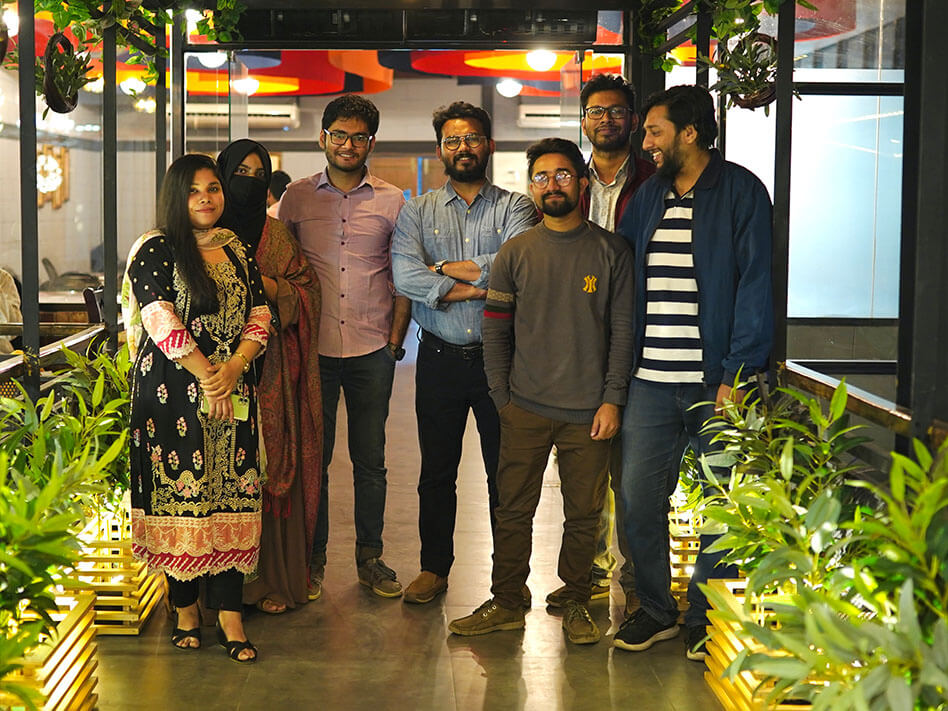
Jabed Iqbal Rupam: From the beginning, we realized that pure design isn't enough. Today, Vector Plinth is a comprehensive architectural firm powered by an expert team of architects, engineers, project management specialists, and financial analysts.
Faisal Sabri: If I can add, we eliminate cost overruns and structural surprises later, mostly by bringing financial analysis and feasibility studies into the design phase from day one.
Our architects work hand-in-hand with engineers and project managers to ensure that every creative detail is buildable, durable, and cost-effective. It's a seamless bridge between art, technology, and execution.
Future Startup: One of Vector Plinth’s strict internal policies is limiting the number of projects you accept. In a commercial market that incentivizes volume, why do you enforce this restriction?
Jabed Iqbal Rupam: If you take on too many projects simultaneously, quality inevitably suffers. For us, every project is a research and development effort.
By taking on a strictly limited number of assignments, we ensure that both Faisal and I, along with our core senior team, can give deep, uninterrupted focus to every single design detail.
Faisal Sabri: This discipline allows us to maintain high standards, test innovative construction methods, and ensure strict quality control on site.
We tell our clients upfront: we won't be the fastest or the highest-volume firm, but we will deliver a space that is timeless, practical, and crafted with complete integrity.
Future Startup: A major turning point in Vector Plinth’s story was the design of the Feni College Massacre Memorial Complex. How did this project come about, and what was the core narrative behind it?
Jabed Iqbal Rupam: The Feni College project holds a very special place in our hearts. During the 1971 Liberation War, freedom fighters were brutally executed at the football field goalposts inside Feni College.
When we were tasked with creating a memorial to honor these martyrs, we knew it couldn't be a typical, passive monument. It needed to be an architectural interpretation of history.
Faisal Sabri: We drew direct inspiration from that tragic historical event at the goalposts.
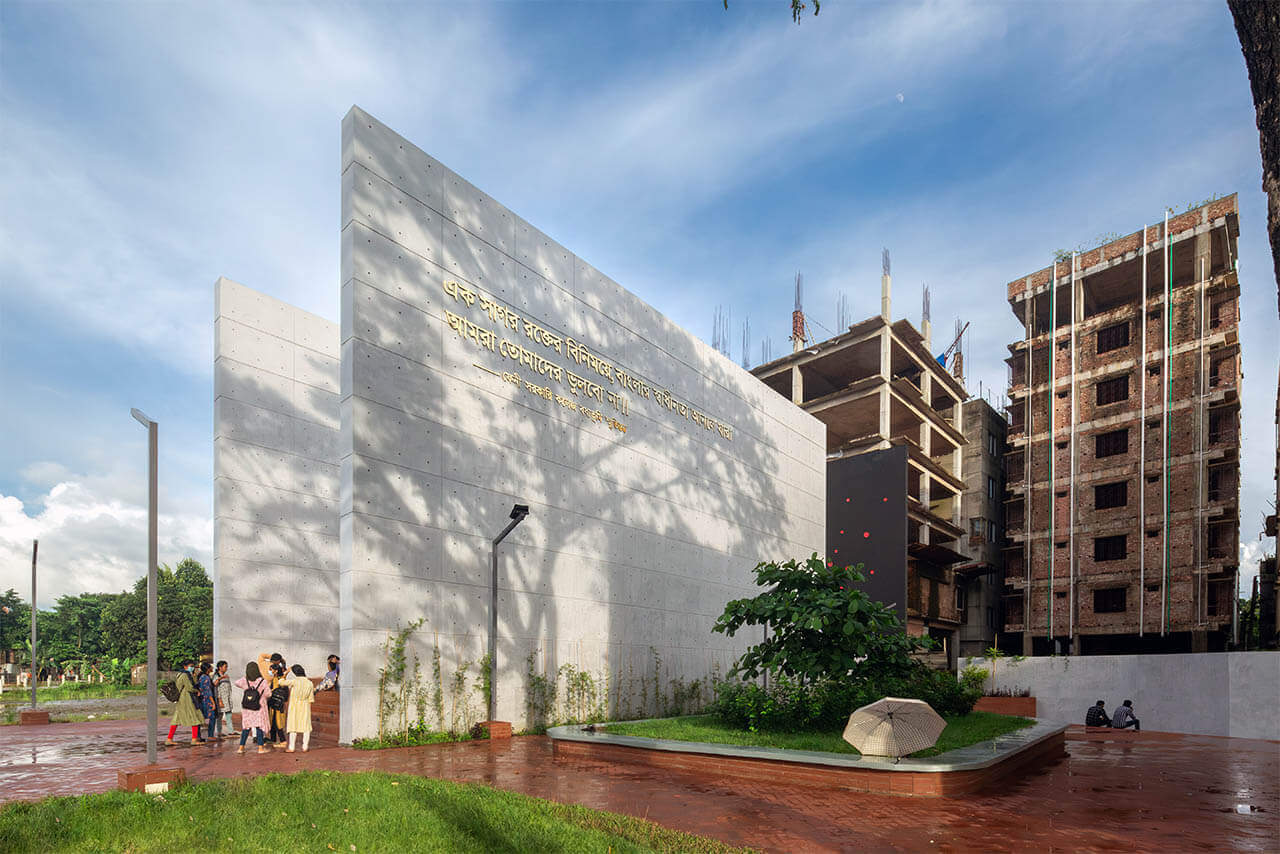
We designed two imposing 40-foot-high concrete walls that stand as abstract, solemn representations of those infamous goalposts. The design invites visitors not just to look from afar, but to walk through history and feel the weight of sacrifice.
Future Startup: The symbolic elements inside the Feni Memorial are detailed: the "L"-shaped walls, the red perforations, the copper cylinders. Can you explain how you translated history into these physical materials?
Jabed Iqbal Rupam: The memorial’s "L"-shaped walls encapsulate four thematic journeys: "Walk of Memory" (স্মৃতির পথে হাঁটা), "Wall of Silence" (নীরবতার প্রাচীর), "Reconstruction of History" (ইতিহাসের পুনর্গঠন), and "Journey to Freedom" (স্বাধীনতার যাত্রা).
On the back black wall, we introduced vivid red perforations, which evoke the bullet wounds inflicted on our martyrs.
Faisal Sabri: We also installed six copper cylinders, each symbolizing a key phase of the 1971 Liberation War consciousness: awakening, struggle, pain, victory, and freedom. Engravings like "এক সাগর রক্তের বিনিময়ে" (In exchange for an ocean of blood) add solemn dignity.
Crucially, we integrated an open-air amphitheater and memorial plaza, turning what was once a site of tragedy into a vibrant social and cultural gathering space for today's youth.
Future Startup: While the Feni Memorial is a public monument, Vector Plinth also creates intimate residential and commercial interiors. How do you apply these same neo-modern principles to private projects like Nest of Nafiz and Bini?
Faisal Sabri: Whether it's a public memorial or a private home, our underlying human-centric philosophy remains identical.
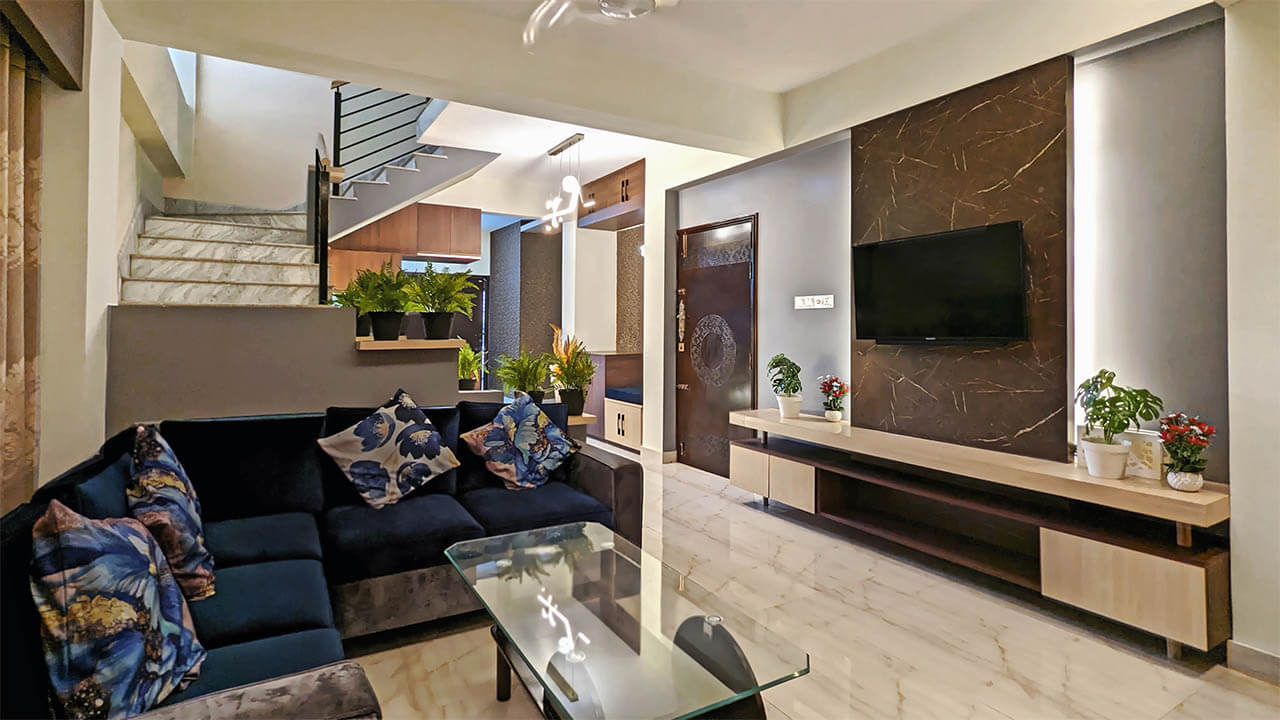
"Nest of Nafiz and Bini" is a duplex apartment interior designed as a peaceful sanctuary. We tailored the space around the family’s daily routine, using warm textures, calm color palettes, and multifunctional custom furniture to create an effortless feeling of comfort and spatial openness.
Jabed Iqbal Rupam: In projects like the Sathiha Afroza Residence, we designed the exterior to blend subtle rural touches with crisp, contemporary lines.
Meanwhile, in commercial spaces like HN Distribution, our focus shifts toward spatial clarity, light optimization, and operational efficiency. Every space must serve its unique purpose cleanly.
Future Startup: Executing high-concept, detail-oriented architectural projects in Bangladesh isn't easy due to supply chain limits, contractor habits, and site constraints. How do you navigate these ground realities?
Jabed Iqbal Rupam: It needs hands-on involvement, I believe. You cannot just hand over drawings to a contractor and expect perfection.
Our team spends significant time on site, training workers on non-standard techniques like achieving smooth exposed concrete finishes or precise metal fabrication, etc.
Faisal Sabri: Client education is equally important. When clients see how a well-planned layout maximizes natural cooling and reduces electricity bills, or how durable materials lower maintenance costs over a decade, they become our strongest advocates.
Overcoming site challenges is simply part of our commitment to quality.
Future Startup: Vector Plinth recently won the prestigious BIG SEE Award at the Architecture Awards 2026 in Slovenia for projects like the Feni Memorial and 'Parental Shed'. What did this international recognition mean for your team?
Jabed Iqbal Rupam: Winning the BIG SEE Award on an international platform in Slovenia was a truly humbling milestone for us. It validates that architecture rooted in Bangladeshi history and local context can stand shoulder-to-shoulder with global design standards.
Faisal Sabri: It reinforced our core belief that architecture is a universal language. You don't need a background in architectural theory to feel the emotion of a space.
When international juries look at our work in Bangladesh and connect with its story, it proves that authentic, emotionally resonant design transcends borders.
Future Startup: Looking ahead, where do you see Vector Plinth in the coming years, and what advice would you give to young architects who want to build a philosophy-driven practice in Bangladesh?
Jabed Iqbal Rupam: Our focus remains on pushing boundaries within Bangladesh while taking on projects that challenge urban conventions.
We want to continue shaping spaces that enrich human lives, preserve memory, and make our cities more beautiful and liveable.
Faisal Sabri: To young architects, my advice is simple: stay true to your principles and be patient.
Don't rush after trendy aesthetics at the cost of functionality and integrity.
Architecture is more like a marathon, not a sprint. If you stay dedicated to honest design, continuous learning, and deep respect for your local context, the work will speak for itself.