
The definition of modern architecture has continuously evolved, expanding far beyond its original mid-century roots. In today's globalized world, architectural styles are no longer confined to specific geographic regions.
For instance, the simplicity, spatial clarity, and functional elegance have made neo-modern architecture highly popular across Northern Europe and the Nordic countries. It has also attracted attention worldwide, including in Bangladesh. But the question remains whether this distinct, minimalist architectural style can thrive in the dense, tropical context of Bangladesh.
Vector Plinth, a Chattogram-based Bangladeshi architecture firm whose founders we've featured recently, has been seeking to answer this question with its growing prominence and portfolio of work.
Vector Plinth began its journey in 2017 with a clear, disruptive mission: to introduce something entirely new to Bangladesh's architecture industry. Co-founders A.R. Rupam (Architect Iqbal Rupam) and Faisal Sabri set out to bridge the gap between global modernism and local context.
At the time, they recognized that rapid urban growth was cluttering Bangladeshi cities with uninspired, repetitive structures. Many of these buildings ignored basic human needs such as natural light, cross-ventilation, and emotional tranquility.
From day one, the duo sought to test whether Nordic-inspired neo-modern principles, stripping away unnecessary ornamentation to emphasize functionality, natural light, and eco-friendly materials, could be adapted to Bangladesh's climate.
Over the past nine years, this foundational ambition has matured into a proven, timeless design philosophy rooted in creativity, honesty, and continuous innovation.
A defining element of Vector Plinth’s evolution is the realization that the firm is not merely about its founders. Rather, Vector Plinth represents an overarching idea a rigorous design ethos and commitment to quality that the co-founders take deep pride in cradling, nurturing, and passing through their entire team and extended network of collaborators.
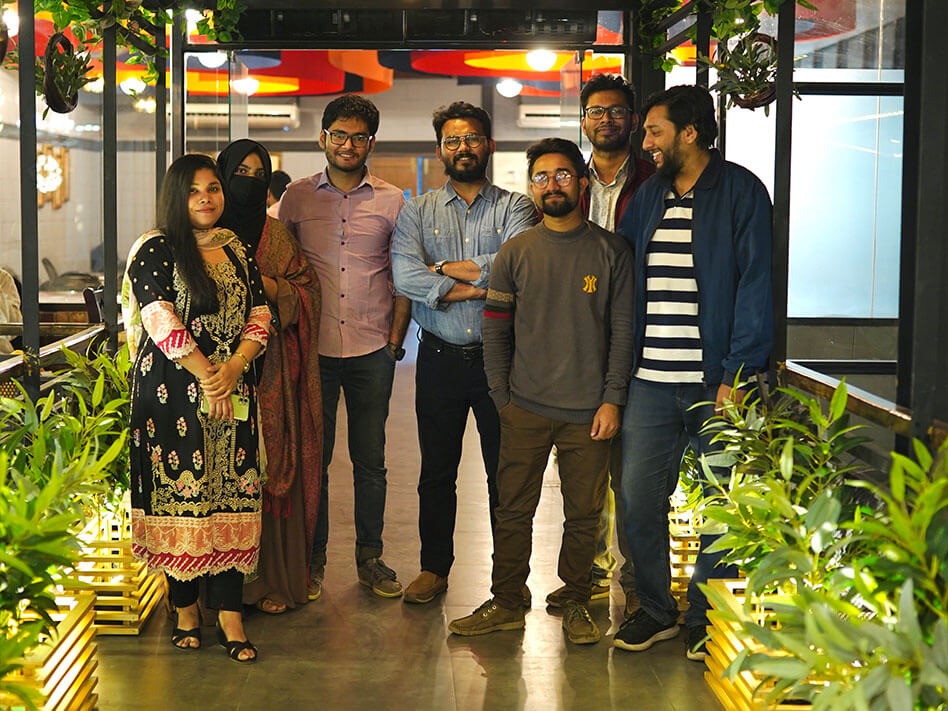
Today, the firm operates as a comprehensive, multidisciplinary architectural institution. It boasts an expert team composed of architects, engineers, project management specialists, and financial analysts.
By bringing financial feasibility and structural engineering into the creative design process from the very beginning, Vector Plinth ensures a seamless integration of art and technology. To safeguard this collaborative culture and maintain uncompromising quality, Vector Plinth enforces a strict policy of taking on a deliberately limited number of projects at any given time. This allows every team member to contribute thoughtfully, treating each assignment as a collective craft rather than a commercial assembly line.
At its core, neo-modern architecture emphasizes user experience, functional efficiency, and a clean, simple aesthetic. As Vector Plinth’s team refined its practice over the years, they developed sophisticated methods to ground these global principles in the local environment.
Their designs intelligently harness natural sunlight and passive cooling to lower energy consumption. By combining raw materials, eco-friendly elements, and spatial transparency, the team builds comfortable, peaceful environments that connect occupants directly with nature, proving that minimalism can feel warm and inviting.
"Our goal is to create an architectural practice that will be timeless. Meaning, even after ages pass, it will feel modern and practical. We don't just want to build beautiful buildings; we want to create spaces that will leave a lasting impression on people's minds and enhance the beauty of our cities,” explains A.R. Rupam, Co-founder, Vector Plinth.
As Vector Plinth’s portfolio expanded, the team demonstrated how neo-modern design could serve diverse human needs from intimate residential living to complex public storytelling.

As Vector Plinth’s portfolio expanded, the team demonstrated how neo-modern design could serve diverse human needs across both private residential living and commercial environments. A prime example of their residential work is the "Stroke of Elegance," an apartment interior thoughtfully created as an "Elegant Masterpiece".
This project beautifully demonstrates the power of neo-modern simplicity through its smart use of tailored furniture, calming color palettes, and uncluttered layouts designed around family comfort.
Their versatility is further showcased in the exterior design of the Sathiha Afroza Residence, which seamlessly blends a subtle rural touch with modern, contemporary architectural reflections.
On the commercial front, projects like the interior for HN Distribution highlight the firm's ability to prioritize spatial clarity and operational functionality, ensuring that business spaces work as efficiently as they look
Vector Plinth’s commitment to paying deep attention to local history and context culminated in the landmark Feni College Massacre Memorial Complex. Built to honor the martyrs of the 1971 Liberation War, the complex is not merely a monument, but an interpretation of history through architecture.
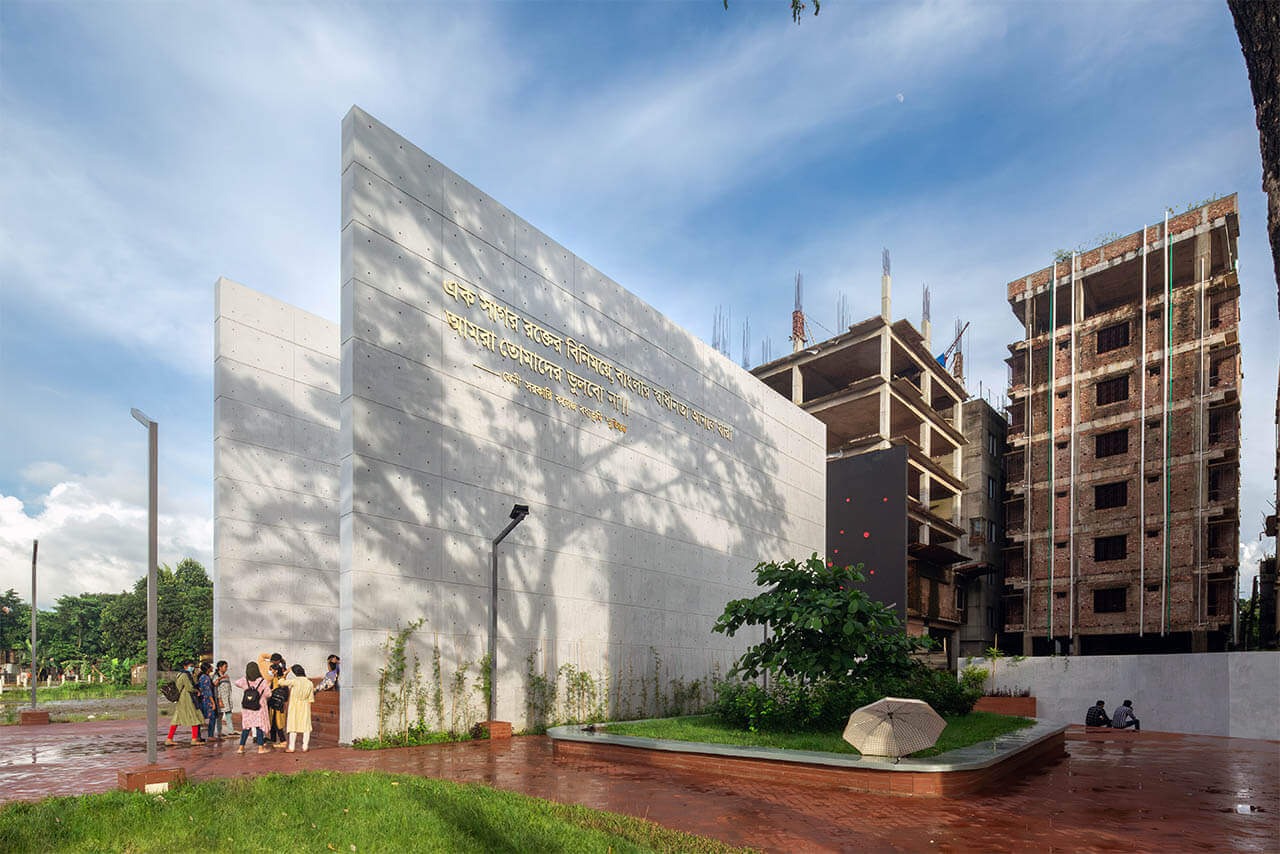
Inspired by the tragic execution of freedom fighters at the Feni College football field goalposts in 1971, the team designed two 40-foot-high concrete walls to serve as abstract representations of those infamous goalposts. The memorial's "L"-shaped walls encapsulate four distinct themes: Walk of Memory, Wall of Silence, Reconstruction of History, and Journey to Freedom.
Engraved quotes add solemnity, while red perforations scattered across the black walls symbolize the bullet wounds inflicted on the martyrs. Six copper cylinders represent the essential stages of the liberation war: consciousness, awakening, struggle, pain, victory, and freedom. Today, the site includes an open amphitheater, transforming it into a vibrant social hub.
Vector Plinth’s steady, detail-oriented approach is gradually driving a positive shift in Bangladesh's urban landscape, proving that modern architecture is about creating spaces that communicate with people and honor their history.
This dedication to bridging the gap between local heritage and global neo-modern standards has not gone unnoticed on the world stage. Recently, Vector Plinth and co-founder Architect Iqbal Rupam achieved a monumental milestone by winning the prestigious BIG SEE Award.
The BIG SEE Award is a highly respected international platform dedicated to recognizing outstanding achievements in architecture and design worldwide. Vector Plinth officially received this accolade at the Architecture Awards 2026, held in Slovenia.
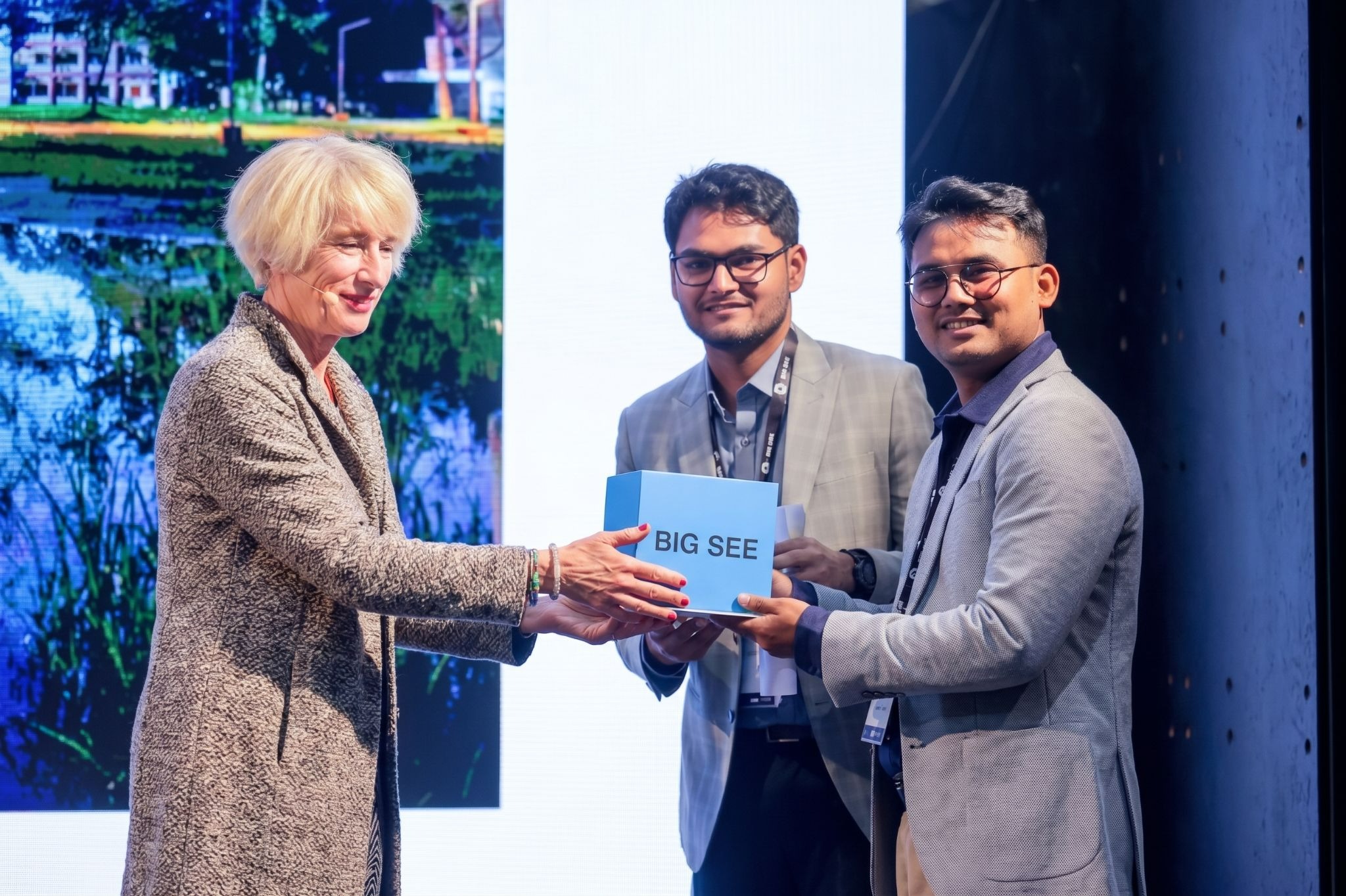
This international recognition was not just a victory for the founders, but a powerful validation for the entire Vector Plinth team. Projects like the emotionally charged Feni College Massacre Memorial and the innovative 'Parental Shed' were instrumental in successfully putting Bangladesh on the global architectural map. The award signifies that Bangladeshi design, when executed with profound thought and collaborative discipline, can compete with and stand alongside the best in the world.
Reflecting on this international achievement and the philosophy that brought them there, Faisal Sabri explained the deeper meaning behind their work: "Modern architecture is not just about changing the structure of walls or roofs; it is a language for expressing history, culture, memory, and emotion. Every structure should have its own story. Even those who have no idea about architecture should be able to understand our language and feel that emotion just by looking at it; this is always our goal", explains Faisal Sabri.
Vector Plinth's nearly decade-long journey proves that world-class architecture deeply rooted in neo-modern principles yet highly attentive to local contexts is entirely possible in Bangladesh.
By operating not just as a firm, but as a collaborative ecosystem of passionate professionals, Vector Plinth continues to cradle an idea that the firm hopes will shape the skyline for years to come. The firm doesn't merely want to build structures; it aims to engineer the soul of spaces, enrich city identities, and leave a timeless legacy.