
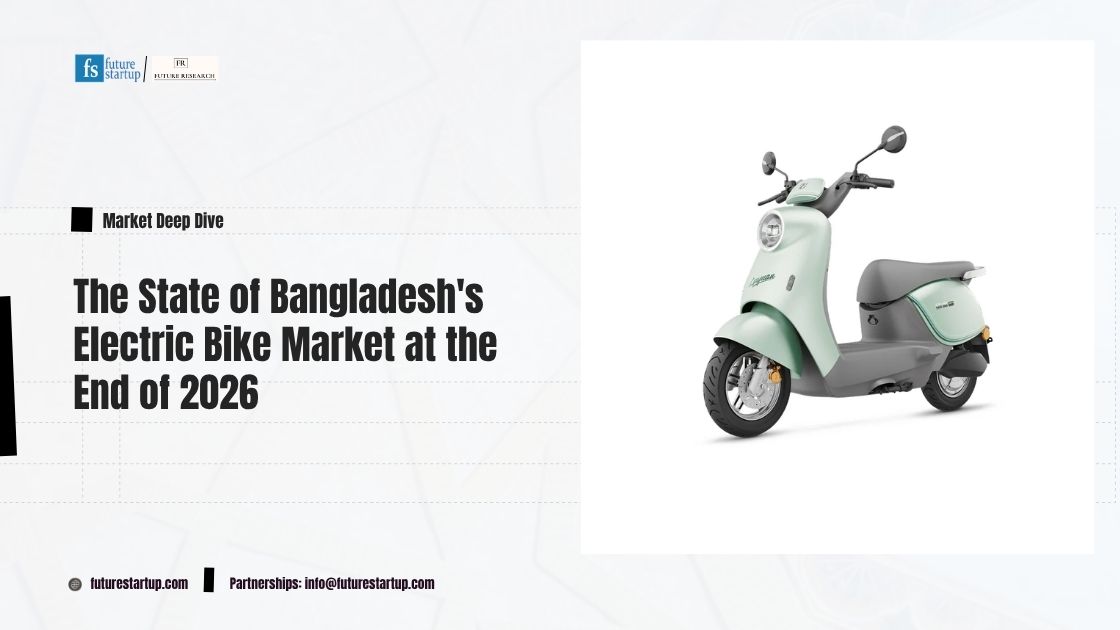
Local conglomerates are investing billions of taka, foreign brands are entering through distribution and manufacturing partnerships, and fuel-price uncertainty is bringing new buyers to electric two-wheelers. The market is growing, and its next phase will depend on affordability, reliable batteries, and service that lasts beyond the sale.
Bangladesh's electric two-wheeler market has moved from a scattered collection of imported scooters into a more competitive industry. Imports rose from 2,446 units in FY2022-23 to 10,053 in FY2024-25. Recent estimates put sales at 3,000 to 3,800 e-scooters a month. Fuel shortages in 2026 pushed new buyers toward electric bikes and accelerated a climb that had already begun, albeit slowly, a few years back.
Local industrial groups are driving the build-out. Walton, Runner, Akij, Nasir Group and PRAN-RFL are investing in everything from importing and distributing finished vehicles to assembling them and building factories. Announced investment across the major players exceeds Tk 2,000 crore, although the figure mixes different kinds of commitment and does not measure capital already spent on e-bikes.
Foreign companies are arriving by several routes.
Yadea entered through an assembly partnership with Runner. Revoo, part of the Transsion group behind Infinix, TECNO and itel phones, has built a local distribution network. Premium brand Naxeon announced its entry through Appleton Motors, and state-owned Atlas Bangladesh signed an agreement with China's Zhejiang Luan Electric Vehicle Company. Imports, local distributors, assembly partners and manufacturing deals each signal a different level of commitment.
The appeal is easy to see. Charging an e-bike costs far less than buying petrol, and many scooters suit short trips to work, university or the market. Moreover, e-bikes are more approachable for many users who want to own a bike but don’t find regular motorcycles suitable for their needs and taste.
Whether an e-bike saves money overall depends on its purchase price, how far the rider travels, how long the battery lasts and what a replacement costs. A rider who covers 40 km a day spends roughly 30 to 60 percent less per kilometre than a petrol rider once the battery is counted, a courier who covers 100 km a day saves more, and a 20 km commuter lands close to break-even. A low purchase price helps little if the battery fades early or parts run out.
While everyone talks about accelerating growth, the market remains hard to count. The registry lists 261 registered electric two-wheelers, customs recorded more than 10,000 imports in FY2024-25, and other estimates put the fleet between 20,000- 50,000. It appears each number measures something different.
Apparently, brands are ramping up capacity. One group alone cites capacity of 5,000 units a month, and buyers are still learning which brands to rely on.
Sabbir Nawazz, Head of Marketing at Rangs Group, which is building its own electric mobility business, expects the market to mature and settle around distributors with proper sales, parts, and service. He says, “Right now, the e-bike market in Bangladesh is purely about practicality—people want the most affordable option that gets them a decent mileage per charge. But that’s going to change. As buyers get more mature and tech-savvy, they’ll start looking for better quality, cool features, and actual design. And because electric bikes are way easier to upgrade than regular motorcycles, we're going to see new versions coming up constantly, almost like smartphones or gadgets.”
While the market has received meaningful coverage, reliable analyses remain in short supply. In this brief, we aim to map the opportunity for founders, investors, manufacturers, policymakers, and riders. We try to size the market, sort it into layers, profile the buyers and the companies, test the economics of ownership with real numbers, and review the policy that shapes it.
Where sources disagree, we show both figures and explain the gap. We then set out where the openings and risks sit and what to watch next.
In this brief:
Three figures describe the fleet, and they differ by a factor of nearly 200. The registry lists 261 electric two-wheelers, yet customs data shows 10,053 imports in FY25 alone. Other estimates put the fleet past 50,000.
One explanation may be that each figure counts something different. The registry counts only registered bikes, and many owners skip registration. Customs data counts finished bikes recorded under their import classification, so misdeclared bikes and parts slip through, and bikes that local assemblers build from imported kits never appear as finished imports. The three figures show that the market is undercounted. None gives the fleet's exact size.
The imports that do show up tell a snowballing growth story that has been happening for a while. Between FY23 and FY25, the value rose from Tk 9 crore to Tk 47 crore, which works out to a doubling every year. Imports reached 7,658 between July 2024 and March 2025, so FY25 averaged about 850 bikes a month, and the last three months of the year averaged about 800.
New brands fed the climb. Revoo's maker reports that sales were growing more than 100 percent a year in 2025. Sources give two start dates for the brand: September 2024 for commercial operations and 2022 for imports. The dates probably mark different milestones: first shipments and a formal launch.
Runner began assembling Yadea in 2025, Nasir launched in November 2025, and RYDO started production in January 2026. A 2024 cut in taxes on imported electric two-wheelers and parts added to the acceleration.
FY26 shows no slowdown. Imports reached 12,330 over the same nine months a year later, up about 61 percent and already above the full FY25 total. One report describes about 30 importers moving an estimated 30,000 units a year through fully built and knocked-down channels. That is an industry estimate with no published method.
Monthly sales come in two conflicting series. One puts average sales before the crisis at 800 to 1,000 and March at about 2,200. The other, from industry insiders, counts 1,776 bikes in January, 2,195 in February, and 2,561 in March. A third report gives 2,260 for March.
Imports reconcile most of this, with one caveat: imports and retail sales are different things, and neither series publishes a method. The 800 to 1,000 average matches FY25 imports, so the first series most likely describes the 2025 level. January's 1,776 likely reflects the start of 2026, after Yadea assembly, Nasir, and RYDO arrived.
Sales were already climbing fast before March. For March itself, a range of 2,200 to 2,600 covers every report.
The fuel crisis added a jolt to the growth. Conflict in the Middle East disrupted fuel imports, and the government rationed sales to 2 litres. Walton sold about 200 units in February and 400 in March. Yadea's sales rose 80 percent in March, and Revoo's about 30 percent.
Estimates of the jolt range from 17 percent to more than 100 percent. A month-on-month comparison shows sales rising 17 percent from February to March and 44 percent from January. Measured against the pre-crisis average, March sales more than doubled. Company figures run from 30 to 100 percent. The gap comes from the baseline. January and February already ran high, so the month-on-month gain looks modest. The 2025 average sat much lower, so the same March looks huge against it.
A fair summary would be that the crisis lifted sales by 17 to 44 percent on the early-2026 level, and by about double on the 2025 level. These comparisons show the timing of the increase. They do not isolate how much the crisis caused.
The lift has lasted so far. One report puts April sales near 5,000 units, May at about 3,000, June at 3,800 and August at 3,414, against 969 a year earlier. The report counts e-scooters and says they make up more than 90 percent of electric two-wheelers. The figures suggest demand stayed above the March level after April's peak. We can treat the numbers as provisional until another source corroborates them.
The petrol market the buyers left shows two readings as well. Motorcycle sales fell from 640,000 in 2022 to 384,000 in 2024. Another report says the category, worth an estimated Tk 7,000 to 8,000 crore, grows 16 to 17 percent a year. The first counts units. The second most likely counts taka, so rising prices can lift value as volume falls.
E-bikes grew inside a market that lost 40 percent of its volume in two years, and the category holds only 2 to 3 percent of that market. While the share is small, the momentum is large, and these are different buyers.
"E-bike" covers electric bicycles, low-speed vehicles, and scooters that resemble conventional motorcycles.
Price, use, regulation, and operating cost vary across them.
Electric bicycles and low-power scooters sit at the bottom, with Bikroy listings starting near Tk 14,000. Students and short-trip commuters buy them. Quality varies widely, and buyers care most about battery safety and access to repairs.
Most volume sits at roughly Tk 50,000 to Tk 130,000. Revoo's A01 lists at Tk 79,900. Walton's Takyon range starts near Tk 89,999. Runner's 12 Yadea models run from Tk 90,000 to Tk 315,000. Price range, warranty, and distance to the nearest service centre shape the purchase.
The top runs from about Tk 130,000 to Tk 250,000 and beyond, and Akij concentrates here. A bank HR officer paid Tk 220,000 for a Jiho A8 SE that covers 105 to 110 km on a charge and came with a three-year warranty. He bought it to stop queuing at petrol pumps. Naxeon's Appleton Motors is pitching a premium motorcycle with a top speed near 120 km/h at the very top of the range.
Bangladesh E-Bike Market: Layers by Price and Buyer (2026)
| Layer | Typical Price (Tk) | Main Buyer |
| Electric cycle, low-speed | 14,000 - 60,000 | Students, short-trip commuters |
| Mass commuter | 50,000 - 130,000 | Commuters, delivery riders, households |
| Premium scooter | 130,000 - 250,000+ | Urban professionals, second vehicle |
Source: BikeBD, Motorcycle Valley and The Business Standard. Prices are indicative online listings.
Scooters change how to read the whole market. The segment makes up more than 90 percent of electric two-wheelers. You can say most "e-bikes" in Bangladesh are scooters.
Geography shifts the picture too. A senior executive at one manufacturer says demand in Khulna and Chattogram sometimes runs stronger than in Dhaka.
Sabbir Nawazz, the Head of Marketing at Rangs Group, whom we quoted earlier, sees the same pattern outside the capital. "You will see e-bike adoption is noticeable among the female users. I have seen more e-bikes commuting on the roads of Bogura than Dhaka. For the last 6 months, the TIV has ranged from 2500-4500 units/month, and we expect it to grow at least by double the size by next year,” he says.
While these observations don’t come from any formal survey, three separate accounts still agree: demand in Khulna and Chattogram, women buying, and women riding in Bogura. Taken together, they suggest a buyer who makes short, predictable trips in a mid-sized town and values low running costs and easy handling. While the evidence is anecdotal, it does explain a pattern about the market.
Supply follows that rider. Yadea's local partner reported 86 sales centres in April 2026 and plans 250 by the 2026-27 fiscal year. Nasir has showrooms in 40 districts. A showroom in Bogura needs a technician and a parts shelf, and those take longer to build than the showroom.
The next question then is: which buyers fill those showrooms?
Most buyers want affordable and safer mobility. Some also want to skip fuel queues, trim travel costs, simplify short trips, or add a convenient second vehicle.
Many daily journeys fit a scooter's range. In a survey of 57 users, the average daily commute ran between 15 and 25 km, a distance a home-charged scooter covers overnight without a public network.
A 2016 university study put the average speed of Dhaka traffic at 6.8 km an hour, and a two-wheeler slips through that congestion.
E-bikes suit a defined set of regular trips and do not replace buses or conventional motorcycles for every journey.
Revoo's team says young professionals lead adoption, especially women. Parents feel safer when a daughter rides a bike with controlled speeds, and homemakers and older riders like the ease of use. Another brand executive describes e-bikes as lifestyle products as much as transport tools.
Having said that, little published data covers the number of female buyers, what they look for, etc. A bike that feels easy to ride also does not prove safer in traffic. Safety depends on brakes, tyres, speed, visibility, road conditions, rider training, helmets and the behaviour of other drivers. The market should treat ease of use as an attraction and leave safety claims to evidence.
Couriers cover more kilometres and spread the battery bill across them. Daraz, Pickaboo, Foodpanda, Pathao and Chaldal run fleets with high daily mileage, and their managers count every taka per kilometre. Companies can also manage charging schedules, maintenance and registration better than an individual buyer. This is a segment that fits the utility claims of e-bikes.
Families that already own a car or a motorcycle also buy e-scooters for short urban trips. They keep the petrol vehicle for long journeys. For them, the value lies in convenience and a low cost per trip.
Entry-level bikes start at around Tk 50,000, which opens the market to buyers who cannot afford a premium scooter. The sticker price tells only part of the story. A fair comparison adds energy, maintenance, registration, battery replacement, and resale value over the years a buyer plans to keep the vehicle. Cheap running costs favour e-bikes when they accumulate enough kilometres.
Chinese brands lead on volume. Bangladeshi conglomerates build the local manufacturing layer underneath them. While the two groups compete today, the line between them already blurs. For instance, Runner assembles Yadea.
Transsion Holdings, the group behind Infinix, TECNO and itel phones, owns the Revoo brand. In February 2026, Revoo signed a deal to sell through selected Best Electronics showrooms nationwide. An electronics background helps with sourcing and distribution, and servicing batteries and parts over years is a separate skill.
Runner started building motorcycles in 2012 and began assembling e-scooters with Yadea in 2025. It plans to move from assembly to full manufacturing at Bhaluka.
TailG, Salida, AIMA and Exploit hold strong positions in the middle of the market.
According to sources, Walton holds about 18 percent and Revoo about 20 percent. In August, Yadea took 21.6 percent of e-scooter sales. The figures cover different periods and different products, April versus August and bikes versus scooters, and none comes with a published method.
However, these are competing estimates and cannot support a ranking until more reliable data appears.
Walton launched the country's first locally produced e-bike in 2022 under the Takyon brand. Its factories already make circuit boards, battery management systems and batteries. A dedicated e-bike plant with 20,000 units of annual capacity is planned. Seven Takyon models cover Tk 89,000 to Tk 172,000.
Walton's own numbers add two cautions. Its sales of 200 units in February and 400 in March, set against the industry's 2,195 and 2,561, work out to about 9 and 16 percent, so the 18 percent share may reflect another yardstick, a peak month, or both. Its growth also ran 7 to 10 percent a year for three years before March.
Imports quadrupled over two of those years, so Walton's growth trailed the market, which suggests that imported brands took most of the new buyers.
Akij Motors entered the segment between 2020 and 2022 and assembles seven models at Gazipur. It aims at buyers who care about durability and performance, and most of its models cost more than Tk 100,000. At that price, warranty support, battery life, and service quality need to show up in practice and stay out of the brochure.
Nasir Group has put in Tk 300 crore. It launched five models in November 2025, two with graphene batteries and three with lithium, and opened showrooms in 40 districts. Its factory started at 70 bikes a day, and the group says it will invest Tk 500 crore in total.
PRAN-RFL's RYDO scooter brand has about Tk 200 crore behind it. Production began at Habiganj in January 2026 at roughly 500 units a month, with room to reach 3,000. At its April 2026 Bashundhara launch, RYDO listed nine models between Tk 55,000 and Tk 146,000. The group wants a Tk 50,000 scooter by 2027, if policy support allows. A separate Tk 500 crore plan covers conventional motorcycles as well as e-scooters, so that figure does not measure the electric bet alone.
Bangladesh Auto Industries Limited is building an EV plant at Mirsharai, and its first locally made EVs were set to reach the roads in July 2026.
Appleton Motors runs two brands, Eve eBikes for the mass market and Naxeon for the premium end. The company says it is building the country's first integrated two-wheeler chassis plant, drawing on its steel-pipe business, and that local manufacturers currently fabricate frames from imported tubes and sheets. It also says pre-order allocations for Naxeon sold out. These are company claims without independent confirmation.
State-owned Atlas Bangladesh signed an agreement in May 2025 to market Zhejiang Luan's e-bikes through dealers across the country. An agreement to market a brand is a smaller commitment than a factory.
So far we see three broad approaches in the market:
Local and foreign companies are not necessarily rivals in every part of the value chain. A local manufacturer may rely on a foreign brand’s technology, while an international company may depend on a Bangladeshi partner for distribution and servicing. Their long-term competitive advantage will depend on what they build beyond the showroom.
Money, daily habits and policy push the same way.
Running cost. A petrol motorcycle burns Tk 2 to 3 of fuel per kilometre, and one executive puts it at Tk 3 to 4. Estimates of the e-bike's cost run from 10 to 15 paisa to 15 to 20 paisa to 30 to 40 paisa per kilometre. None of the sources state its method. The lower figures likely reflect efficient models on household tariffs, and the higher ones may allow for charging losses. This brief uses 30 to 40 paisa against Tk 2 to 3, the conservative end of both ranges, so the savings it reports do not flatter e-bikes.
A month of charging can come to Tk 300 to 500, and there is no engine oil to change. In a 2023 survey of e-bike users, cost saving ranked first among reasons for buying, and lower maintenance came second.
Household budgets. Rising urban living costs squeeze commuters, and e-bikes offer a cheaper way to cover short distances every day.
Fuel insecurity. March taught riders what a petrol queue costs in hours. One Dhaka rider said he once waited nearly six hours for fuel, and a litre took him only 7 to 8 km. An economist called the surge a rational response to price volatility and import vulnerability. Sales through August stayed well above the pre-crisis level. If fuel supply fully normalizes, this force may still fade.
Familiarity. Millions of electric three-wheelers already run on Bangladeshi roads, most of them unregistered, so battery-powered transport looks familiar. In a recent study, 64.9 percent of poll participants held favourable views of electric mobility, and 42.1 percent of non-users cited range worries as a barrier. The same study links improvised charging in slums to electrical fires, an early sign that battery safety will matter as volumes grow.
Environment. Of the 57 users in the survey we referred to earlier, 82.5 percent believed e-bikes are better for the environment. Cost still leads their reasons for buying.
The duty gap. The FY26 budget cut duties on battery and raw material imports from 60 percent to 1 per cent. A bike that crosses the border in boxes pays a third of the tax of a bike that arrives built. That gap explains the assembly lines in Gazipur, Habiganj and Bhaluka. It also rewards anyone who misdeclares a built bike as parts, and it makes accurate declarations and consistent enforcement part of the market's economics.
Running cost depends on one number, and the battery moves it.
The market’s strongest promise is lower operating cost. Whether that becomes a durable business advantage depends on the battery, the distance travelled, and the cost of supporting the vehicle.
Reported estimates put electric two-wheeler energy costs at roughly 10 to 40 paisa per kilometre, compared with about Tk 2 to Tk 3 for petrol in a conventional motorcycle. The estimates vary by model, tariff, and calculation method. This analysis uses 30 to 40 paisa per kilometre for electricity to avoid relying on the lowest reported figure. Sources include Rising BD, Prothom Alo and The Business Standard.
Electricity alone can make an e-bike look dramatically cheaper to run. But the battery is a meaningful cost. One industry source puts a replacement battery at Tk 30,000 to Tk 35,000, with an expected life of around three years.
Consider three simplified examples. They assume 300 riding days a year, a battery replacement at the end of three years and no financing, insurance, repairs, depreciation, or registration costs. The calculations are illustrative, not a guarantee of actual ownership cost.
| Rider profile | Daily distance | Distance over 3 years | Battery cost per km | Electricity plus battery |
| Light commuter | 20 km | 18,000 km | Tk 1.67–1.94 | About Tk 1.97–2.34/km |
| Regular commuter | 40 km | 36,000 km | Tk 0.83–0.97 | About Tk 1.13–1.37/km |
| High-mileage rider | 100 km | 90,000 km | Tk 0.33–0.39 | About Tk 0.63–0.79/km |
Illustrative calculations based on a Tk 30,000–35,000 battery, three-year life and electricity at Tk 0.30–0.40 per kilometre. Actual costs depend on battery chemistry, degradation, charging losses, tariffs, and usage.
The difference is significant. High-mileage riders spread battery expense over more kilometres, which strengthens the case for delivery fleets. A light commuter may still save money, but the margin narrows once the battery is included. A battery that lasts longer than three years improves the economics; early failure can reverse part of the savings.
These calculations also leave out the purchase price. A buyer deciding between a low-cost e-scooter and a conventional motorcycle should compare the total cost over the intended ownership period, including resale value. The lowest-priced vehicle is not necessarily the cheapest to own.
Capacity is expanding quickly. One group has cited a capacity of around 5,000 units a month, equivalent to 60,000 a year. That figure alone is greater than the annualised demand implied by recent monthly sales of around 3,000 to 3,500 units. Walton’s planned factory would add further capacity, while other manufacturers are also expanding.
Announced capacity does not mean all factories will produce at full utilisation. But the imbalance creates a clear risk: if demand grows more slowly than expected, manufacturers will compete on price. That could benefit buyers in the short term and pressure margins across the industry.
The prospect of a Tk 50,000 scooter would intensify that pressure. Brands selling models at Tk 90,000 or more would need to justify the premium through better range, battery life, service, features, or financing.
Battery performance is central to trust. Different models use different chemistries and pack configurations, and buyers may struggle to assess real-world life, charging safety or replacement cost at the point of sale. A warranty is useful, but its value depends on what it covers, how claims are handled, and whether replacement parts remain available.
Battery variation also complicates servicing. If a model uses an unusual pack, the owner may have difficulty finding a compatible replacement several years later. Standardisation, transparent warranty terms and published replacement prices would help buyers compare products and reduce the risk of being left with an unusable vehicle.
Sabbir Nawazz highlights the problem of inconsistent batteries and weak support in the informal market. His view reflects the experience of a company entering the sector, so it should be read alongside the wider evidence on registration, service coverage and customer complaints.
Tariff differences have encouraged local assembly. Reported taxes on fully built electric two-wheelers have been substantially higher than those on knocked-down kits. The precise rates depend on the applicable tariff classifications and fiscal year, but the difference has made assembly commercially attractive.
The same structure can create unintended incentives. When the tax on a finished vehicle is much higher than on parts, it becomes important that imports are declared accurately and that the rules are enforced consistently. The policy framework is therefore not separate from the market’s economics: it influences which business models are viable and which products reach buyers.
The FY2026-27 budget introduces a broad set of incentives for electric vehicles and related manufacturing. The benefit to any given e-bike depends on the final tax notifications and on the import or manufacturing category it falls under.
Duty benefits extend to e-bike manufacturers, including local assemblers and parts makers. Lithium-ion and sodium-ion battery production gets tax exemptions until 2030. Duties and taxes on imported chargers and charging stations are gone. Advance income tax on EV registration and renewal fell. A draft EV Industry Development Policy proposes a 1 per cent supplementary duty on EV components and income tax exemptions for manufacturers. Some business leaders warn that parts of the package favour importers over local producers, and the rules will matter most if they reward real local value addition and ignore a changed import route.
Registration is the weak link, and its cost depends on who quotes it. An industry executive puts it at Tk 8,000 to 12,000. A calculator built on BRTA's fee tables adds up to about Tk 7,600 to 8,600 for two years. One dealer quotes about Tk 15,000 for two years, including help with the process. The quotes differ because they bundle different items: a registration fee, inspection, a digital number plate, a registration certificate, a tax token, and, for the dealer, assistance. Under the 2023 policy on registering electric motor vehicles, fees also follow motor power in kilowatts. A buyer should expect roughly Tk 8,000 to 15,000 for two years and should confirm current fees with BRTA or an authorised dealer. The same executive says BRTA has no dedicated desk for e-bikes. Buyers face lengthy procedures, and many vehicles stay unregistered, which keeps the formal market small and the fleet count unreliable.
Charging policy moves faster. Industry sources count only 112 public charging stations, mostly in Dhaka and Chattogram. Most riders charge at home, so the gap hurts range confidence outside the big cities more than it hurts daily use.
Home charging brings a new cost. On August 13, the power and energy minister said illegal battery rickshaws and e-bike charging had pushed midnight electricity demand abnormally high. A rule on overnight charging would land on riders and sellers, and it could hit fleets that charge overnight. Fire and reliability risks from poor chargers and substandard batteries point toward product standards, accurate labelling, safe battery disposal, and consumer protection.
Two national targets circulate. One source cites 30 percent EV penetration by 2030. Another cites 15 percent of registered vehicles by 2030. They may measure different things, a share of new sales and a share of the registered fleet, and the sources do not say. Both imply large numbers. Bangladesh has 4.3 million registered two-wheelers, and each 10 per cent of them equals 430,000 bikes, about ten years of sales at today's pace of 40,000 a year. A target describes an ambition. A forecast needs credible registration data, clear rules, and sustained demand.
The industry’s biggest openings are not limited to selling more scooters. Several parts of the ownership experience remain underdeveloped, creating room for new businesses and specialised services.
Fleet electrification as a service. Delivery companies need vehicles that remain available for work. A provider that combines vehicles, financing, charging plans, maintenance and battery replacement into one service could offer fleets predictable costs and less downtime. The value proposition is not just a cheaper vehicle; it is dependable cost per kilometre.
Battery leasing and swapping. Battery replacement is a major future expense for individual buyers. Leasing or swapping models could spread that cost over time and reduce the upfront burden. Some vehicles already support swappable batteries, but the economics depend on standardisation, utilisation and a sufficiently dense network.
Battery pack assembly and quality assurance. Local battery assembly could create value if it improves quality control, availability and warranty service. Manufacturers and independent providers could also offer testing, diagnostics and certification that help buyers compare batteries more confidently.
Service and parts networks. A showroom is not the same as an after-sales network. Reliable repair shops, trained technicians and readily available parts can distinguish a brand in a market where buyers have limited information about long-term reliability. Independent service networks could serve several brands, provided they have access to compatible parts and technical documentation.
Financing and insurance. Instalment financing could make better-quality scooters accessible to buyers who cannot pay the full price upfront. Insurance products suited to electric two-wheelers could also help formalise the market, provided registration and vehicle identification are reliable.
Certified resale. A transparent used e-bike market could make ownership less risky. Buyers would benefit from verified battery health, service history and registration status. Sellers would have a more credible way to demonstrate the condition of a vehicle.
Capacity may outrun demand. Multiple manufacturers are investing at once. If sales settle below expectations, factories may operate below capacity and compete aggressively on price. That could squeeze smaller firms and make long-term service commitments harder to sustain.
Battery trust remains fragile. A bad battery can damage confidence in an entire category. Buyers need clear specifications, credible warranties and a reliable path to replacement.
Brand loyalty is weak. A 2023 survey by Emerging Credit Rating found that 72 per cent of respondents did not have a preferred e-bike brand. Price and availability may therefore dominate purchase decisions until companies establish a track record for quality and service.
Informal imports create an uneven market. Nawazz describes the problem: "On the flip side, even though BRTA registration has been mandatory since 2023, variations in battery sizes and a lack of strict monitoring mean a lot of small-time importers are dumping cheap, unapproved bikes with zero backup support. Customers end up suffering once they buy. But in the near future, just like the rest of the auto industry, this wild-west phase will settle down. The market will eventually consolidate, leaving only the serious distributors who actually have the proper sales, parts, and service infrastructure to back up what they sell."
His account raises a credible concern, but the evidence needs careful handling. The gap between registration figures and import volumes points to incomplete registration or inconsistent categorisation, but it does not by itself prove that every unregistered vehicle is unapproved or that informal importers routinely abandon customers. Nawazz also represents a company entering the market and has a commercial interest in stronger distribution and service standards.
The broader issue is still important. A market with weak enforcement can reward sellers that compete mainly on upfront price and leave buyers to bear the cost of repairs, battery failures or missing parts. Better enforcement should be paired with a workable registration process, transparent product standards and accessible consumer remedies.
The market’s opportunity will depend on resolving these practical problems. More brands and lower prices can attract first-time buyers. Reliable batteries, service and resale options are what can persuade them to stay.
For manufacturers, the immediate opportunity is to build products that fit specific buyer needs while establishing a dependable service network. Assembly can offer a cost advantage under current tariff structures, but it is not a durable differentiator on its own. As more brands sell similar platforms, battery quality, warranty support, parts availability, and total ownership cost will matter more.
For foreign brands, a local partner can provide access to distribution, regulatory knowledge and service coverage. The strongest partnerships will go beyond getting products into showrooms. They will establish responsibility for repairs, battery replacements, and long-term customer support.
For fleet operators, high daily mileage can make the economics attractive. But purchasing decisions should be based on the full cost of operating a vehicle, not electricity alone. Operators should verify the battery warranty, replacement price, real-world range, repair turnaround time, and registration status before committing to a large fleet.
For investors, the main risk is that manufacturing capacity arrives faster than sustainable demand. Businesses around the vehicle may offer more defensible opportunities than another brand selling an imported scooter. Battery services, financing, diagnostics, fleet management, maintenance, and certified resale all address problems that will grow with the installed base.
For startups, several gaps are worth exploring:
For regulators, a practical registration process and consistent enforcement would help formalise the market. Product and battery standards, transparent import classifications and clearer consumer protection would reduce the advantage of sellers that compete by cutting corners.
For buyers, the most important questions are straightforward: What is the battery warranty? How much does a replacement cost? Where can the vehicle be repaired? Are parts available? What will the scooter be worth when it is time to sell?
Bangladesh’s electric two-wheeler market has a credible growth opportunity. Local companies are investing, foreign brands are entering, and consumers have clear reasons to consider electric mobility. But the next phase will not be decided by the number of brands or factories alone. It will be decided by whether companies can make the vehicle affordable to buy, economical to own, and dependable to use.
Three signals will help distinguish durable growth from a temporary surge.
First, watch monthly sales. If sales remain above the pre-crisis level after fuel availability normalizes, the market will have demonstrated demand beyond emergency substitution. If they fall sharply, the crisis may have accelerated purchases that would otherwise have happened later.
Second, watch registrations against imports and sales. Better alignment would suggest that the formal market is expanding and that the authorities have a clearer view of the fleet. Continued divergence would make it difficult to assess demand, enforce standards, or design effective incentives.
Third, watch fleet adoption. A major delivery operator moving a meaningful share of its vehicles to electric would provide stronger evidence of commercial viability than a burst of individual purchases during a fuel shortage. Fleet adoption depends on total cost, battery life, service availability and operational reliability.
Capacity will be another test. If factories expand faster than demand, competition could push prices down. That would be welcome for buyers, but only if companies can continue to fund warranties, parts and service. The cheapest scooter on the market may not be the best value if its maker cannot support it after two years.
Nawazz expects customer preferences to evolve and the market to consolidate. "Even though BRTA registration has been mandatory since 2023, variations in battery sizes and a lack of strict monitoring mean a lot of small-time importers are dumping cheap, unapproved bikes with zero backup support. Customers end up suffering once they buy. But in the near future, just like the rest of the auto industry, this wild-west phase will settle down. The market will eventually consolidate, leaving only the serious distributors who actually have the proper sales, parts, and service infrastructure to back up what they sell."
His first point fits the market’s price sensitivity and limited brand loyalty. The second is a possibility rather than an established outcome. As products improve, electronics, software, and design could become more important differentiators. Brands with strong product-development capabilities may gain an advantage.
But faster product cycles could create a problem for owners. A vehicle is a larger and longer-lived purchase than a smartphone. Buyers need access to batteries and parts even after a model is discontinued. If companies introduce new versions without supporting older ones, the resale market will suffer, and early adopters may be left with vehicles that are difficult to repair.
Nawazz also expects consolidation around distributors with real sales, parts, and service infrastructure. That is plausible given the number of entrants and the investment needed to support customers nationwide. Consolidation, however, does not guarantee better service. The decisive test will be how companies handle warranty claims, battery replacements and repairs once their fleets are several years old.
Tags: E-Bike, EV Market, Market Map