
Written By Arifur Rahman Naim, CEO, JoulesLabs
JoulesLabs has relaunched jouleslabs.com with around nine AI services and a free readiness assessment. Its CEO explains what changed, and why AI agents built most of it.
The software industry is changing faster now than at any time since we started JoulesLabs in 2017. AI writes code, drafts content, and makes images. What clients ask for is changing too. More and more, they want to know how AI can do real work inside their business.
So this year we went deep into research. We wanted to know what businesses actually need from AI, and where they get stuck. We studied demand across industries and markets, read the research, tracked the main industry events, and looked closely at what other firms offer. One pattern kept coming up. Many companies want AI working for them, but few get it running in their daily operations. Some don't know where to start. Some have an idea but no team to build it. Some have a pilot that stalled.
From that research, we designed nine services around one promise: we implement AI in your business. We find where AI helps most, build it on the systems you already run, and keep it safe and running.
Our old website didn't say any of that. It described a company that builds apps and websites. We still do that work well, but it is no longer what we lead with. A few new pages would not have fixed this. The whole story had changed, so the whole site had to change.
We made one more decision early on. If we are going to ask businesses to let AI do real work, we should do the same with our own work first. So we rebuilt the site from scratch, with AI agents doing the work across content, design, images, and development. People stayed in the loop at every step, setting the direction, checking the work, and signing it off. Our CTO, Mehedi Hasan Nahid, describes this as one person in the middle with the steering in his hands.
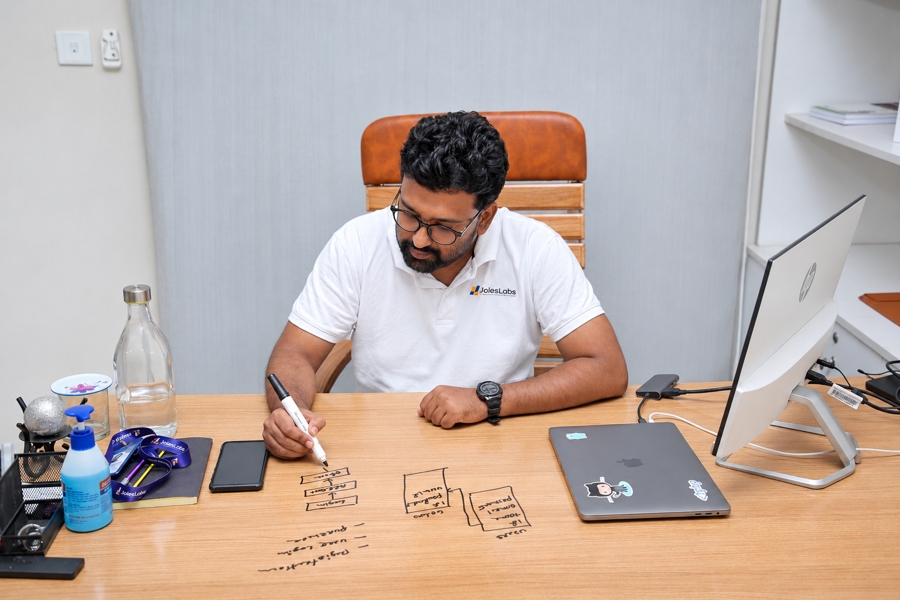
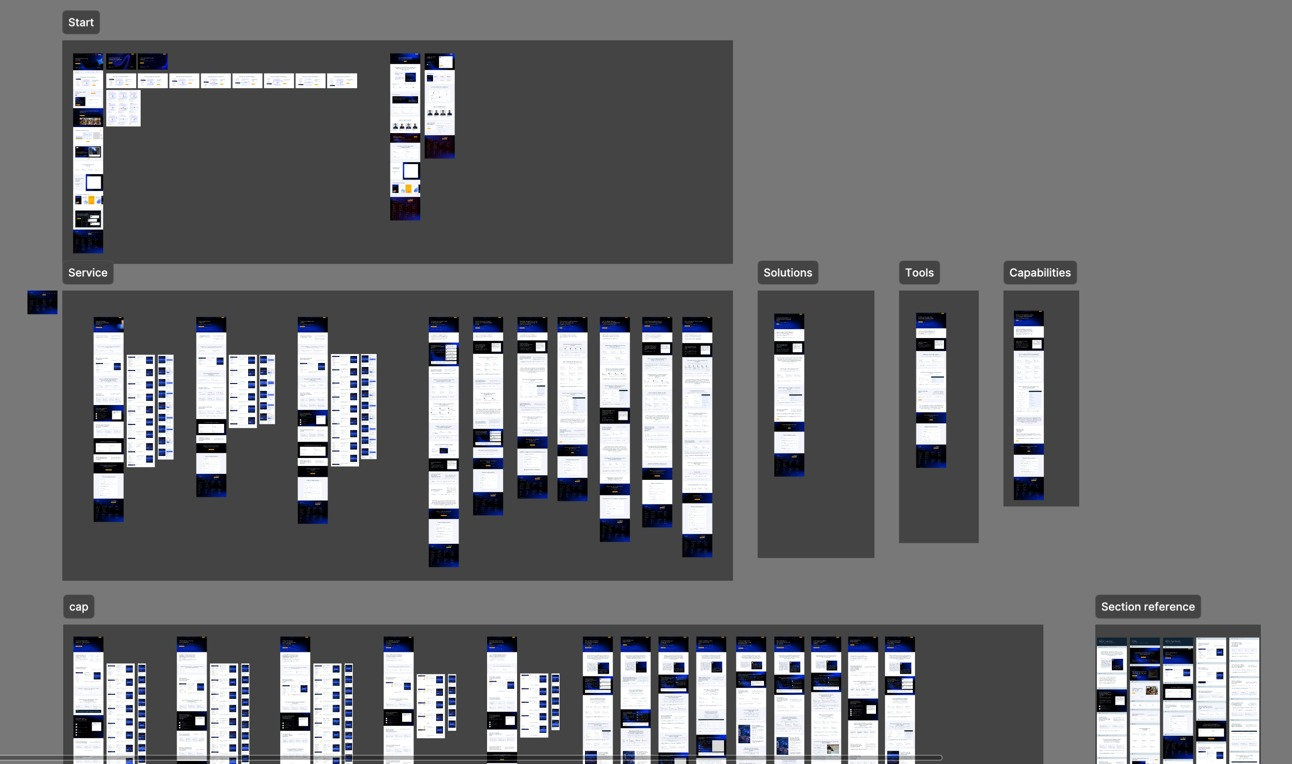
The new jouleslabs.com has more than 50 pages. Here is how we built it, including where it broke.
Each page speaks to a specific industry, department, or problem. To keep the pages from repeating each other, our SEO team started with market research, run with agents. It showed which industries were moving, what buyers were searching for, and which questions nobody answered well. That research set the shape of the site. Agents then took each page from brief to finished draft, with the team directing and signing off.
Every page was checked against our Brand DNA, the document that says who we are and what we will and won't say. One rule is strict: if we haven't delivered something yet, we don't claim it. That is why many industry and capability pages describe our approach rather than finished client work.
Our design team began by studying the websites of more than 40 AI services companies around the world, and used what they found as a yardstick. The main idea came from what AI has changed. Getting software into production used to take great effort, and now it can feel like it flows. That is where the liquid animation across the site comes from.
The team designed the homepage, the first pages, and a design system built for an agent to use. Then an agent built the rest. It didn't always work. On long capability and solution pages, the agent's layouts kept breaking. The team fixed those by hand and wrote new rules so the agent could handle them next time.
Stock photos would not do. Every image had to show how a system runs, where it tends to break, and where we come in. Our creative design team briefed an agent on each image and on the site's visual language. They then reviewed every result and sent back what needed another pass.
Our web development team set the architecture before any code was written. The site is a static site built with Astro. It is structured so Google and AI tools can read each page quickly, and it has room for a content management system later. Agents wrote the code. The team decided where code goes, which rules it follows, and how each new page is checked so it doesn't break the ones before it.
Building our own website was a test of our own service, and three things stood out:
We offer clients the same model. Agents do most of the work, and people set the direction, check it, and own the result.
Each of our nine services has its own page:
There are also pages for the industries and departments we serve, and for the work we have shipped since 2017: more than 40 web, mobile, and SaaS products for clients in more than 12 countries.
Most companies start with the readiness assessment. For a company new to AI, it takes about 30 days and shows where AI fits and how to adopt it. For a company with a stalled pilot, it takes two to three weeks and ends in a clear verdict: fix it, re-scope it, or retire it. It is free for qualified companies, meaning those with 50 or more employees, a real process or pilot to assess, and a decision-maker involved.
If you want to see where AI could do real work in your business, start at jouleslabs.com.
About the author: Arifur Rahman Naim is the co-founder and CEO of JoulesLabs, a Dhaka-based software company that helps businesses put AI to work in their daily operations. He can be reached at [email protected]
The FS Letter brings the week's interview, our analysis and a few pieces from the archive. Free, once a week. Sign up and we will send you our quarterly ebook of the best interviews.
Subscribe and get the ebookHow to Build brings together our founder interviews on how companies in Bangladesh are built.
Visit our shop Get your copyFor companies
FS Narrative Studio tells it through reported stories, published here and sent to our readers. See how it works