
Bangladesh's energy challenges have moved solar from the margins to the centre of the country’s national energy strategy. Despite the importance, building it right remains a harder challenge. As businesses and institutions seek reliable, lower-cost clean energy, Muspana’s EPC expertise aims to help turn Bangladesh’s rooftop potential into practical solar projects.
"Without energy, there is no economy; without economy, there is no civilization", writes Vaclav Smil, author of Energy and Civilization: A History.
Bangladesh's energy problem is becoming harder to solve with conventional power alone. The country has enough installed generation capacity on paper. The challenges come from the fact that it does not always have the fuel, grid reliability, or economics needed to turn that capacity into dependable electricity. As such, gas shortages, expensive imported fuel, and rising electricity demand have made the search for additional domestic energy sources more urgent.
Solar has emerged as one of the clearest long-term renewable-energy answers. The thesis is that Bangladesh has abundant sunlight, a large number of existing rooftops, and a power system that needs more generation close to where electricity is consumed. Rooftop solar can reduce daytime demand on the grid, lower electricity costs for businesses and institutions, and gradually give consumers more control over how they source power.
The problem is that it is not easy to build it well.
A solar system is not simply a collection of panels on a roof. The economics depend on how the system is designed, the quality and compatibility of its components, the condition and usable area of the roof, the customer's actual load, grid conditions, installation quality, net-metering arrangements, and what happens after commissioning.
A system that looks good when it is handed over can still become a poor investment if it is badly designed, poorly maintained, or abandoned when problems emerge.
This is where the role of the engineering, procurement and construction, or EPC, company becomes important.
Muspana, the engineering brand of Filament Engineering, is one of the established companies that has spent much of the past 18 years building this capability in Bangladesh. Its solar business began with charge controllers, inverters and other components and gradually moved into larger projects, government contracts and rooftop solar systems. Today, the company works across the project cycle, from site assessment and system design to procurement, installation, commissioning and maintenance.
Its experience offers a useful way to examine a much larger question: what will it take for Bangladesh to turn its rooftop-solar ambition into dependable energy infrastructure?
In this article, we look at why solar has become central to Bangladesh's renewable-energy strategy, what the economics of rooftop solar look like for households, businesses and institutions, and what makes implementation difficult.
We trace Bangladesh's experience with solar, from the country's pioneering solar-home-system program to the current push for large-scale rooftop generation. We also look at Muspana's evolution from a small engineering business into a solar EPC contractor, its project experience, the lessons its engineers have learned in the field, and what separates a functioning solar installation from one that simply puts panels on a roof.
The article draws on research into Bangladesh's energy and solar market, interviews with Muspana chairman Ataur Rahman Sarker and senior engineers working on its solar projects, Tanvir Siraj and Mahmudul Hasan Rifat, and an earlier Future Startup interview with Muspana managing director Atiqur Rahman Sarker Sohel. While we wanted to understand Muspana’s solar work, we also wanted to understand the opportunity, the economics, and the execution challenges behind Bangladesh's rooftop-solar push.
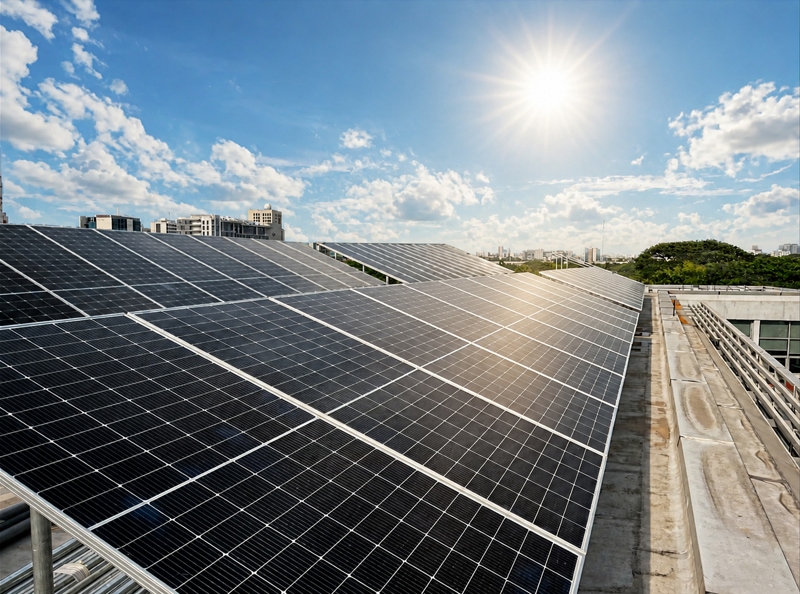
The problem solar is trying to solve is not a shortage of power plants. It is a shortage of dependable, affordable electricity.
On paper, Bangladesh has enough power plants. Government figures put demand near 18,000 megawatts, against installed capacity of 30,000.
One of the problems is fuel. Imported LNG supplies about 35% of the country's gas demand, mostly from the Middle East, and the cost of imported energy has risen sharply after war spread across the region.
By April, load shedding had reached 1,200 to 1,500 MW; the crisis had added billions of dollars to the energy bill, and dues owed to power producers grew substantially.
The pressure has not eased since. After a July accident at an LNG terminal operated by Excelerate Energy, pipeline gas supply fell by more than 17 percent. By early August, gas supply to power plants had dropped to around 700 million cubic feet a day from more than 900; the Power Development Board was running furnace-oil plants for about 3,000 MW and diesel plants at peak hours, and the shortfall stayed above 2,000 MW every hour from noon to evening. In early October, 35 power plants were reported shut, and load shedding reached 2,500 MW. On October 7, gas-fired plants needed 2,524 million cubic feet a day and received only 895.
Tanvir Siraj offers an insider perspective on the challenge. A BUET-trained mechanical engineer, he commissioned and later ran shifts of a 300 MW fuel-oil plant in Anwara, Chattogram. He now works on solar projects at Muspana, a Dhaka-based engineering company with nearly two decades of solar and Solar EPC work. “There is no gas, no oil; they are not able to produce electricity,” he says, describing the predicament facing some plants.
There is no quick way to replace the existing power fleet. Hundreds of thousands of crores of taka are tied up in generation infrastructure, while many independent power producers operate under long-term contracts. Many plants date from the years when the government paid generators a capacity charge whether or not they ran. The rental plants are gone, but the independent producers have long-term contracts. A gap of about Tk 5 a unit between generation cost and selling price pushed the government to raise tariffs from June. The increase averaged 16.7 percent.
Demand is rising at the same time. Tanvir remembers studying for school examinations by the light of a hurricane lamp. His Dhaka home now runs an air conditioner. “Once the lifestyle goes up, it is very hard to bring it down,” he adds.
Large solar farms offer one answer, but land is a constraint. A 300 MW fuel-oil plant can fit on roughly 20 to 30 acres. Tanvir estimates that a solar plant of the same capacity could require around 1,000 acres. While the government is now planning to allocate unutilized or underutilized land, land on that scale would come out of rice fields.
This is where the discussion of rooftop solar gains momentum. The idea is that the roofs are already built. Most of them produce nothing. If roofs can be utilized properly, rooftop solar can be a meaningful strategic energy source for the country. More on that in a moment.
Policy points at solar from several directions.
The government has set a target of 10,000 MW of solar within five years. The Renewable Energy Policy 2025 targets 20% of electricity from renewable sources by 2030 and offers incentives including a 10-year corporate tax exemption for eligible renewable-energy projects.
Rooftops are central to the plan. The government has identified roughly 5.5 GW of rooftop solar capacity by 2030, more than half of the 10,450 MW of renewables the government hopes to add between 2026 and 2030. A national rooftop program aims to add 2,000 to 3,000 MW across public-sector buildings.
The rules around rooftop solar have also become more permissive.
The 2025 net-metering guideline, which lets a building offset its bill with the power it exports, allows eligible rooftop systems to reach 100% of sanctioned load, up from the earlier 70% ceiling. It also expands access to single-phase consumers, introduces online applications, and allows export credits to be paid into bank or mobile financial accounts. Sanctioned load is the maximum a utility authorizes a customer to draw.
The private market is already moving. IEEFA calls industrial rooftop solar the biggest single driver of clean energy expansion. It estimated 667 MW of industrial rooftop solar across 239 establishments by mid-2026, compared with 418 MW in official data. Including smaller systems, the broader market could already be around 1 GW. EPC companies have reported pipelines running into hundreds of megawatts. The net-metered count stands at 4,551 systems with 213.3 MW, and 1,531 of those went in during 2025. A March 2024 study had counted 2,125 systems with 88.2 MW.
Households are catching up as outages reach homes. "Now people understand that I might not even get uninterrupted energy next summer," says Ataur Rahman Sarker, Muspana's chairman and general secretary of the Bangladesh Sustainable and Renewable Energy Association. "So I have to do solar." He estimates that renewable energy, hydro included, currently accounts for around 6% of supply and believes rooftop solar, if done properly, could eventually contribute 15% to 18%.
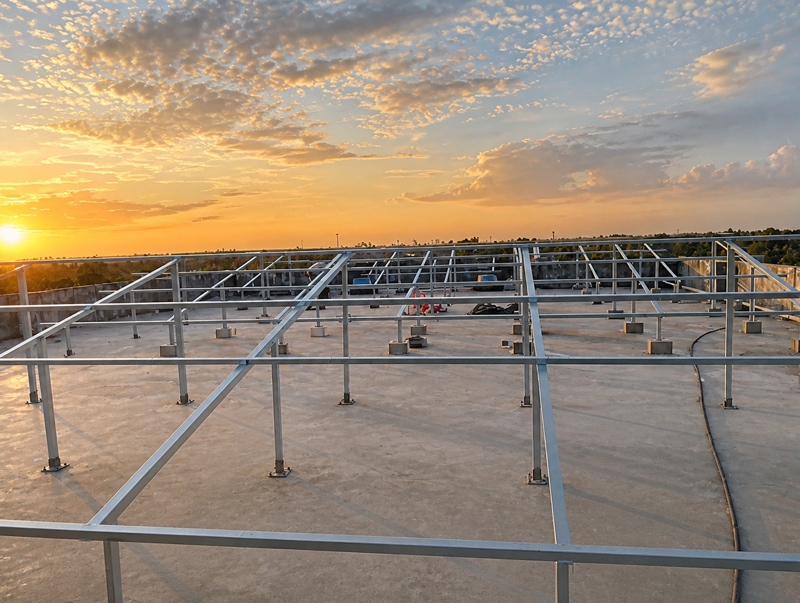
The solar resource is not the problem. The sun supplies the easy part. Bangladesh receives roughly 4.5 kWh of solar radiation per square metre each day. The economics are increasingly attractive too.
IEEFA estimates the levelised cost of rooftop solar at roughly Tk 3.5 to Tk 4 per kWh. For an industrial customer with sanctioned load up to 5 MW, daytime electricity can cost Tk 11.56 per kWh and evening peak electricity Tk 16.06, so rooftop solar saves at least Tk 7.56 per kWh. That leaves substantial room for savings.
Factories that have installed rooftop systems report generation costs around Tk 4 to Tk 5 per unit without batteries and Tk 7 to Tk 8 with storage, compared with grid tariffs of around Tk 12.7 to Tk 12.9.
Households have a different calculation. A household consuming 76 to 200 units a month pays Tk 8.5 per unit, while the first 75 units are cheaper. A low-use household that pays close to solar's own cost has less to gain. But if electricity outages persist, solar is a convincing alternative.
Muspana's own pricing gives a useful benchmark. Mahmudul Hasan Rifat, the deputy manager who runs its solar and lightning-protection projects, says a grid-tied system with no battery can cost up to around Tk 50,000 per kilowatt, with larger systems costing less per unit. A hybrid system with batteries can cost roughly double. Panels take 45 to 50 percent of the bill.
The payback period depends on the customer's tariff, roof, load profile, and system design. Tanvir, whom we mentioned earlier in the article, and Rifat put grid-tied payback at around three to three and a half years.
A back-of-envelope calculation shows why the range is plausible. Assume a kilowatt yields about 1,200 kWh a year, an assumption to test against an installer's simulation. At the household rate of Tk 8.5, that earns roughly Tk 10,200 a year, and a Tk 50,000 system pays back in about five years. At a factory tariff near Tk 12, it earns Tk 14,400 and pays back in three and a half.
The evening peak tariff makes rooftop solar with storage viable for industry. Storage changes the equation because it allows solar generated during the day to displace more expensive electricity during evening peaks.
That said, the economics have three limits.
The first is the roof.
Tanvir gives the example of a ten-storey Dhaka building with 40 flats, each with a 5 kW sanctioned load. The building's total sanctioned load is 200 kW. But a roughly 5,000-square-foot roof, allowing around 70 square feet per kilowatt, might hold roughly about 70 kW of panels, a third of the sanctioned load. The building has a 200 kW electricity requirement and a roof that can support only about a third of that in solar.
A village house with fewer appliances and a more open roof can have a very different calculation. For instance, a village house with no air conditioner can reach 70 to 80%.
The second constraint is equipment cost. High import duties can increase the price of rooftop systems and discourage adoption. Bangladesh has limited domestic manufacturing capacity for solar equipment, and much of the industry's raw material and finished equipment comes from abroad.
The third is policy design. Countries such as Vietnam used generous feed-in tariffs to accelerate rooftop solar. For instance, Vietnam offered a feed-in tariff of $0.0838 per kWh and now has 9,300 MW of rooftop solar out of 16,500 MW of solar in total. Bangladesh has relied more heavily on net metering and other regulatory incentives.
While solar offers real opportunity, the economics only work when the system is properly designed and actually produces electricity. And Bangladesh’s previous experience with solar makes that last part complicated.
Bangladesh's first large solar success happened far from rooftops in villages the grid had not reached.
Grameen Shakti began installing solar home systems in the 1990s and had reached about 20,000 houses by 2003. In 2003, state-owned IDCOL launched its own program, initially approving a pilot of 500 systems.
Over the following years, the program sold and supported more than four million solar home systems and brought electricity to roughly 20 million people. The World Bank has described it as the world's largest national off-grid electrification programme and says it made solar a credible power source in Bangladesh.
It worked because the programme was more than an equipment-distribution exercise. Technical standards, quality control, field inspection, financing and an ecosystem of local dealers all mattered.
The grid eventually reached most of the households that had relied on solar home systems, and the programme wound down. Installations ended in 2018 as the grid reached more homes.
Rooftop solar for buildings that already had electricity arrived later. A 2010 directive encouraged new buildings and industries to generate part of their power from rooftop solar. Net-metering guidelines followed on 28 July 2018, with later revisions expanding eligibility. Between 2018 and June 2025, the country added 209.07 MW of rooftop capacity.
The early rooftop push taught hard lessons. When solar became a requirement for certain new electricity connections, some installations were reportedly treated as a compliance exercise. A few panels could satisfy the requirement without producing meaningful amounts of electricity. As such, many installers placed a few panels on a roof to clear the paperwork.
Many experts concluded that the blanket mandate ignored practical feasibility, especially for urban apartments and shaded roofs.
The lesson: installing solar and building a useful solar system are different things.
Current policy works through net-metering incentives and a program for public buildings.
The same issue appears in the history of solar home systems. The home-system programme earned wide praise, and its later years exposed a weak point. Ataur Rahman Sarker estimates that Bangladesh installed around 5.6 million systems and argues that parts of the programme eventually became “an unsuccessful story” because too many systems stopped functioning.
Solar equipment can be installed quickly. Keeping it productive for years requires maintenance, technical capacity and someone accountable when something goes wrong.
Bangladesh is now entering that second phase with rooftop solar. Experts warn the country risks repeating the retention failures of the home-system era unless policies address the real bottlenecks and meaningful consumer education happens.
Before going deep into how to avoid repeating the same mistakes, let us answer a more pertinent question of whether solar can be a meaningful long-term energy strategy.
All evidence suggests that solar is not a fad, but it is not a complete answer either.
Start with what solar does well. Once built, a panel burns no fuel. In a country that spends billions of dollars a year on imported energy, every kilowatt-hour made on a roof is one that a gas or furnace-oil plant does not have to make. The technology is modular: a roof can be added in months, while a power plant takes years. And it lasts when it is built and maintained properly, as the older installations described later in this article show. The effect is already visible in the numbers: IEEFA links the rise of industrial rooftop solar to a roughly 6 percent fall in daytime demand between 2024 and 2026.
Now the limits. The first is timing. Panels produce in daylight, but the worst shortfalls come after dark. Power Development Board data reported by The Daily Star showed load shedding peaking at 2,483 MW around 7pm on one day this year, and a shortfall of 1,840 MW at 9pm on another. A grid-tied system with no battery produces nothing at those hours, and, as explained later, it shuts down when the grid does. Solar relieves the daytime load, mostly factories and offices. The evening gap needs storage or firm power.
The second is output. This article's own assumption of about 1,200 kWh per kilowatt a year means a solar array delivers the equivalent of roughly 14 percent of its rated capacity over a year. A power plant that runs 60 percent of the time, an illustrative figure, produces four to five times as much energy from each megawatt installed. So 1,000 MW of rooftop solar does not replace 1,000 MW of power plants. It saves fuel and trims the daytime peak.
The third is the grid. Solar output swings with the clouds. As its share grows, the grid needs flexible plants, storage and stronger distribution networks, the concern Tanvir Siraj raises later in this article. Vietnam, whose rooftop boom is described above, later moved to cut its rooftop tariff to ease pressure on its grid.
Having said that, those limits do not argue against solar. They argue for treating it as one layer in a system designed around it. More on that question in the final section of this article.
Now, let’s take a look at the challenges of doing solar right.
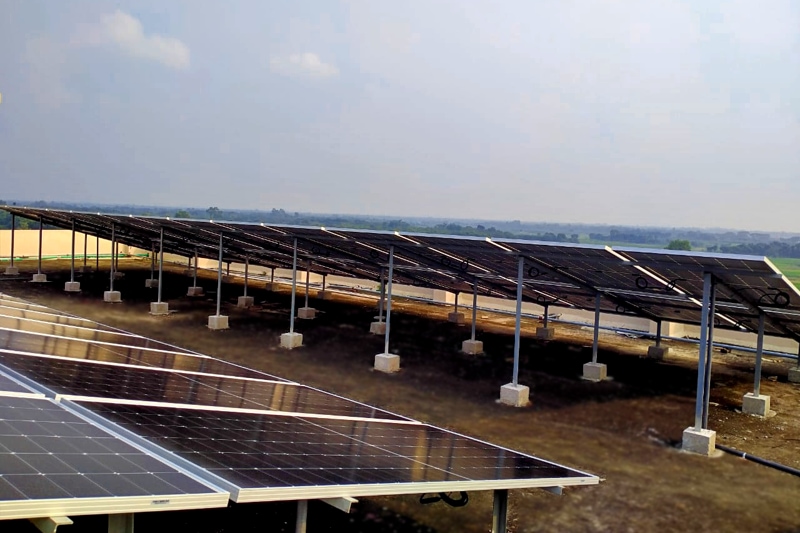
A rooftop solar system is infrastructure. A good system needs someone to survey the roof, calculate the load, design the array, select compatible equipment, install it correctly, complete the electrical work, secure the net-metering connection, and return when something breaks.
That is the job of an EPC contractor. A solar project that works for 20 years needs a firm that does engineering, procurement, and construction, called EPC. One firm designs the system, buys the equipment, builds it, and hands over a working plant.
IEEFA has identified EPC capacity as one of the constraints on Bangladesh's rooftop-solar expansion.
The market has few such firms and many hopefuls. The market is attracting new companies because the opportunity is large. But a 20-year asset cannot be treated like a one-time equipment sale.
Ataur Rahman Sarker, Muspana's chairman, says the rapid growth of interest in solar has also attracted companies without much experience in the sector. His concern is less about competition than about execution: a system that is poorly designed, badly installed or left without maintenance can undermine confidence in rooftop solar more broadly. In fact, this was part of the reason solar failed to become a meaningful energy source in Bangladesh over the past years despite consistent policy push.
The newcomers pose a particular risk. The solar story has drawn in companies with deep pockets from unrelated businesses, but no technical background in solar and no first-hand field experience. Capital can buy equipment and win a contract. It cannot replace years of watching how systems fail, and the failures are physical.
Direct current is the first hazard. DC from a string of panels does not extinguish itself when an arc forms, so a loose, mismatched or badly crimped connector can start a fire on the roof. Earthing and lightning protection come next. An array is a large metal structure on the highest point of a building, in a country with heavy thunderstorms, without proper earthing and surge protection, it can be damaged by a strike or become a shock hazard. Sizing is a third. Undersized cables overheat, and mismatched panel strings can exceed the inverter's voltage limit on cold mornings. Batteries add their own risk: lithium storage installed without ventilation and proper protection can catch fire. Finally, grid-tied inverters must shut down when the grid goes dead, so that line workers are not shocked by power flowing back into the network. A badly configured system may not.
None of this shows up in a quotation, and a poorly built system looks identical to a good one on the day of handover. A firm whose real business is elsewhere can also walk away when solar underperforms, leaving the owner with a warranty from a company that is no longer answering the phone.
Rifat has seen the consequences.
In Jigatola, Dhaka, Muspana worked on four of six buildings that needed rooftop solar. Another provider handled the remaining two. Panels were installed, but the systems had no functioning inverter connection. The original provider could no longer be found. The building managers eventually turned to Muspana.
The problem with a failed solar system extends beyond one roof. A customer who pays for a system and then watches it stop working can conclude that solar itself does not work.
For a market trying to scale rapidly, that is expensive.
Muspana is the brand of Filament Engineering Ltd, a Dhaka-based engineering company led by two BUET-educated brothers. Atiqur Rahman Sarker Sohel is managing director and Ataur Rahman Sarker, whom we quoted above, is chairman.
The company works across solar as an EPC contractor, lighting, round conical electrical poles, lightning protection, and waste management systems. It has around 120 people on its core payroll and a larger network of subcontractors.
Future Startup first profiled the company in 2017 and interviewed Sohel in July 2026.
Muspana's solar business goes back to the industry's earlier days in 2008. The company began with products before it became a project contractor. It moved from charge controllers and backup systems into complete solar systems, then into projects and eventually EPC work.
That evolution is useful for understanding the company. It did not begin by deciding to become a rooftop-solar company. It arrived there gradually.
Sohel started in 2008 with power-backup units, which Bangladeshis call IPS, while holding a job at Grameenphone, where he had joined in 2007 with a plan to work five years and then go full time. The trade licence came on February 1, 2009. He and two friends rented a single room in Mohammadpur for Tk 6,000 a month.
In 2010, heavy rain flooded their office. Documents, charge controllers, converters, and batteries went underwater and were destroyed. His partners said they could not continue. Sohel carried on. That October, he started Filament Engineering Ltd with his elder brother, now the chairman, while both held jobs. He eventually left his corporate job in 2012 and committed himself to the business, five years to the day after he started.
The first phase was about products. The company made charge controllers. A charge controller sits between a solar panel and a battery and manages charging, and it served homes with no grid connection. Sohel estimates that around four lakh of its solar charge controllers entered the market. The company added off-grid inverters and battery chargers, and made CFL bulbs along the way.
Then the market changed. As the national grid expanded, demand for off-grid household systems declined. The company had to move from selling components to building larger systems.
Systems became projects when the government turned to solar. Public offices began commissioning solar buildings, and solar became mandatory in some places. A shift that began in 2013 firmed up after 2017.
Around 2013, it began moving more seriously into projects. From 2017, government work became a larger part of the business.
However, the transition required a different kind of capability. Large government tenders often require a contractor to demonstrate previous experience; a bidder for a Tk 10 crore job shows about Tk 7 crore of earlier work. Muspana began small, built credentials, and enlisted with organizations including Military Engineering Services, PWD, Roads and Highways, LGED, the Coast Guard, the Navy's NSSD and Radio Betar.
Projects became EPC. Instead of selling a panel or inverter, Muspana began taking responsibility for the whole system. Muspana imports key equipment and focuses on engineering, application and installation. It manufactures where local production makes sense, as with poles.
The company built another layer around that work: a network of subcontractors who have worked with it for years. A large project can then be divided among teams that already know the company's standards and processes.
Rooftop solar came through the same door. Government departments set solar requirements on their roofs, and the company says nearly all of Muspana's solar work sits on rooftops. This year's private demand pulls the company toward a new market.
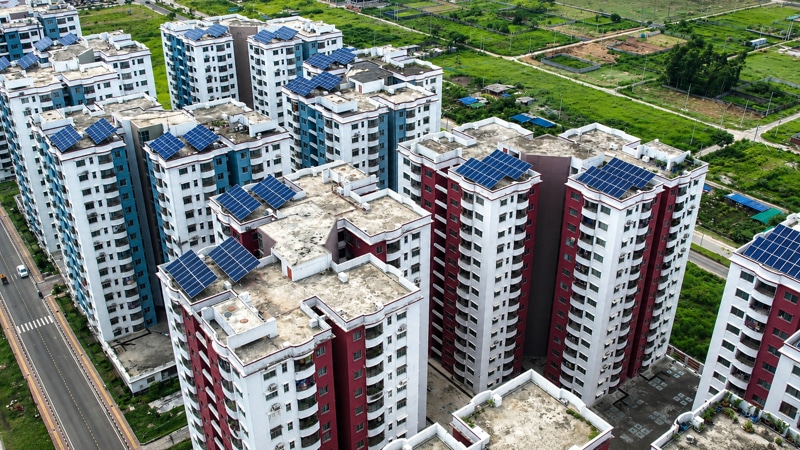
One of Muspana's most useful projects is also one of its largest exercises in repetition.
The Department of Youth Development has Youth Training Centers in all 64 districts. Muspana installed roughly 33 kW at each centre, or about 2.1 MW in total. Each centre also required a net-metering application. The project therefore involved not only putting panels on 64 roofs, but getting 64 separate systems through the utility process. The team filed 64 applications and followed each to a meter change.
SREDA's public listing ranks Filament Engineering first in the country by number of net-metered systems.
It exposed a problem that had little to do with solar engineering. Government offices had limited experience receiving payments from utilities for electricity exported to the grid. When an office exported more than it used, the distribution company did not know where to send a cheque. Muspana's team helped navigate the process. That experience has since become part of its institutional knowledge. A YTC office in Jhalakathi received the first. Back in Dhaka, Muspana's staff held an impromptu celebration.
The company points to older installations as evidence that its work continues after handover. A 700 kW apartment project in Uttara, completed in 2018, is still operating, according to Rifat. A crew returned last year unasked to clean the panels and repair some cabling.
The company says it cleaned the 59-kilowatt BMRC system and the 36-kilowatt IEDCR system, both from around 2020, at its own expense.
At the World Bank's Agargaon office, it installed an 85 kW system around 2022–23 and subsequently took on maintenance. Rifat says an audit team from the bank's head office inspected it and filed a positive report. A monthly maintenance contract followed.
Its project portfolio also includes systems at government officers' quarters, the Ruppur Atomic Energy Electrification Center, Shaheed Syed Nazrul Islam Medical College and other public institutions.
The company's people are particularly proud of one thing. They can still find the roofs. "The main thing is that they can be found," Rifat says. Most of the roofs in the Agargaon government complex carry Filament Engineering systems.
Scale needs care. The company puts the total installation at more than 40 megawatts, mostly small and mid-size systems. Government accounts for more than 90 percent of the work. Its published solar portfolio contains relatively few private industrial installations. However, that is changing as the company turns toward the private rooftop market.
The company says that while it did not focus on private clients before, that is changing as more private organizations are now looking to diversify their energy sources.
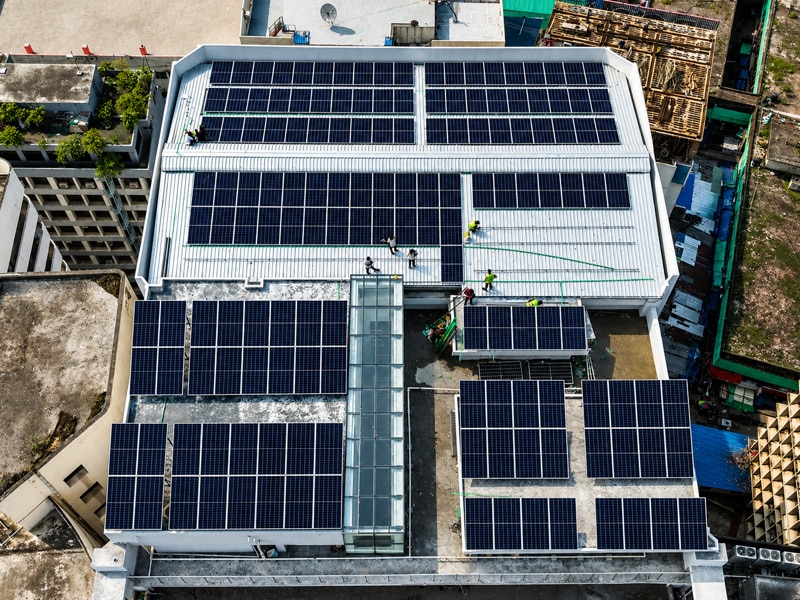
A rooftop project fails in the details, and most of the details involve the roof and the weather.
Design is the first risk. An oversized system raises the capital cost. An undersized system disappoints the owner. An incompatible inverter can create problems years later.
Muspana's engineers say most mistakes happen at the design stage, since the rest of a system is simple wiring.
Shade and structure follow. Dhaka roofs carry large water tanks, and their shadows fall across panels that the drawing placed in full sun.
Old buildings may not have been designed to carry solar structures. Installers have sometimes drilled into roofs without adequately addressing waterproofing, leaving owners with leakage problems.
The climate adds another layer. Dust reduces output. Coastal projects face salt corrosion and strong winds. Solar structures that work in central Bangladesh may need a different approach near the coast.
Paperwork can be just as frustrating. IEEFA found that rooftop projects face delays in getting net-metering connections despite a fixed 10- to 15-day approval timeline. CPD points to inconsistent net-metering approvals.
Skills are another constraint. There are plenty of electricians who can repair household appliances. Far fewer have practical experience designing and commissioning solar systems.
Neglect finishes the job. Owners treat installation as the end of the work. Panels need cleaning and wires need inspection, and a system left alone declines. Then the owner blames solar.
And then comes maintenance. Owners treat installation as the end of the work. Panels need cleaning. Cables and connections need inspection. Inverters and batteries eventually need replacement. A system left alone declines. Then the owner blames solar.
Muspana's process starts with a site visit. Government work usually arrives through tenders and the e-GP system. International organizations can issue requests for quotation. Private clients reach the company through its website, phone line, and referrals.
The first step is the same: understand the site. Every client gets a site visit. "We don't miss the site visit," says Rifat. A technical and financial offer follows, then negotiation, a work order, a final visit, a budget, and purchasing.
The engineering team then prepares the design and runs simulations using tools such as AutoCAD and PVsyst. For larger roofs, it can use aerial mapping through OpenSolar to plan panel placement. The client approves the drawing before work starts.
A supervising engineer stays at each site, and a group of 10 to 15 people, including the chairman and the managing director, receives daily updates. The company's senior leadership remains involved in technical decisions.
Equipment selection follows the same logic. Muspana has used Sunpro panels and SAJ inverters for years, and Rifat says familiarity helps the team diagnose problems and arrange repairs quickly. Clients can ask for other brands.
The team also screens clients, looking at technical capacity first, then intent, then finances. Siraj describes industries that reinvest every taka and then cannot pay salaries. A supplier who finishes a job there may wait a long time to be paid.
After handover, the team walks the client through the system against the bill of quantities and starts monitoring. Service is free for the first one or two years. A paid maintenance agreement follows, as with the World Bank office, where a crew cleans the panels every month.
The company also screens customers. Technical feasibility comes first. Then comes the client's intention and ability to pay.
After installation, the Muspana team walks the client through the system against the bill of quantities and starts monitoring. Service is free for the first one or two years. A paid maintenance agreement follows, as with the World Bank office, where a crew cleans the panels every month.
Years in the field have changed some of Muspana's assumptions about how solar works. Coastal installations need stronger structures and more attention to corrosion. At a hotel near Inani Beach, the team paid particular attention to wind loading.
In Dhaka, dust is a recurring problem. The company now tells customers to watch generation through the monitoring app. A sudden drop can signal that the panels need cleaning. Cleaning is easy. A bucket of water, a mug, and a gentle wipe fix it, and rain does much of the cleaning for free. January and February are the dusty months, and the team usually visits old installations.
Household customers require another kind of education. People often start with an oversized idea of what a backup system should do. Muspana's engineers try to narrow the requirement to the appliances that actually matter during an outage. A refrigerator, a few fans, and lights may be enough. That produces a smaller system, lower cost, and a clearer expectation. The team puts specific questions to the customer and lets the answers choose the system. The first asks whether the goal is to escape load shedding or to cut the bill.
With government offices, the team teaches. Staff often do not know the net-metering process, so Muspana's engineers explain which letter goes where and which form to fill. An office that learns the process makes the next project easier for everyone.
The company has also learned to say no. A small installation far from Dhaka may not make economic sense if the cost of sending a trained team exceeds the value of the project. That is not a particularly exciting business lesson. It is an important one.
A rooftop system has five core parts: panels, which turn sunlight into direct current; an inverter, which converts it to the alternating current a building uses; a mounting structure; cables and circuit breakers; and a net meter, a bidirectional meter that records what the building exports.
For an organisation considering rooftop solar, the first question should not be which panel to buy. It should be why it wants solar.
Three systems and broad use cases exist. A grid-tied system is designed primarily to reduce electricity costs. It normally has no battery and shuts down when the grid goes off.
A hybrid system adds battery storage and can keep selected loads running during outages. A hybrid system uses solar first, then the battery, then the grid. Rifat says disconnected regions are now few. He expects hybrid to become the household norm.
An off-grid system operates independently of the grid, although its relevance is shrinking as grid access expands.
The right choice depends on the load profile. A buyer should work through seven questions before signing a contract.
Muspana's engineers and the outside evidence give a working checklist.
Define the purpose. Lower bills point to a grid-tied system with net metering. Surviving outages point to a battery and a hybrid inverter.
List the load that must survive. Four fans, four lights, and a fridge draw about 600 watts by Rifat's tally. His rule of thumb says a one-kilowatt hybrid system carries that for roughly four hours. Muspana's team publishes a free app on Google Play that walks a customer through these questions.
Inspect the roof. Measure the unshaded area, allow about 70 square feet per kilowatt, and ask how the installer will seal any holes it drills. Ask how the mounting structure will be fixed and waterproofed.
Get the meter right. The installer should be able to explain the application process, meter change, and export-credit mechanism. A one-way meter can count exported power as consumption, and some digital meters block export. Under the 2025 guideline, export credits now go to a bank or mobile banking account.
Compare quotes with the benchmarks. Ask the installer to explain any quote far above or below the Tk 50,000 per kilowatt grid-tied ceiling and the roughly double hybrid price. Similarly, compare panel capacity, inverter capacity, mounting structure, cables, protection equipment, installation, monitoring, net-metering support, and after-sales service. A cheap quote may simply be leaving something out.
Test the installer. Ask for the PVsyst simulation and the design drawing. Ask who files the net-metering application, which brands go in, and who cleans the panels. Ask whether the firm will answer the phone in year eight.
Plan the upkeep. This may be the most important question. A rooftop system is expected to operate for around two decades. Inverters, batteries and other components have shorter lives. The buyer therefore needs an installer that expects to remain accountable after the initial warranty period.
Choose how to pay. The owner can buy outright, or an installer can finance the system and sell the power under a three-party agreement with the utility.
Solar does not suit every roof. A shaded roof cuts output. A building that wants battery backup for several air conditioners needs a far larger system. A client with shaky finances is a risk for any installer.
The cheapest solar is the solar planned before the building goes up. Developers and private owners decide whether the roof arithmetic described earlier works or fails, and the people who buy the flats live with the result.
A few choices cost little at the design stage and a great deal to fix later. Place water tanks, stair-head rooms and lift machine rooms on the north side of the roof so they do not shade the panels. Design the slab for the added weight and wind load, and cast fixing points into it so nobody has to drill and risk leaks later. Leave a conduit route from roof to electrical room, space for an inverter, and room, with ventilation, for batteries that may come later.
The next choice is what the system should power. For a building like Tanvir's ten-storey example, a roof array will not cover the whole sanctioned load, but it can cover the common loads: lifts, water pumps, corridor and stairwell lighting, much of which runs in the daytime. At the ceiling price of Tk 50,000 per kilowatt, a 70 kW grid-tied array would cost up to about Tk 35 lakh, and less per kilowatt for larger systems. Skipping the battery keeps the cost at roughly half of a hybrid system. If the wiring and space were prepared, storage can be added later.
Financing can also change the picture. An installer can fund the system and sell the power under the three-party arrangement described earlier, or the owners' association can start with half the system and expand.
Muspana's ambition is larger than selling panels. Ataur says the company set a target of 2 megawatts a year back in 2015. Some years the company did less, and in others it doubled or tripled. He wants at least 150 megawatts through Muspana, built slowly and to a standard.
The opportunity he sees is distributed energy: buildings making more of their own electricity.
Institutions are an obvious market. Schools, hospitals and religious institutions often have limited budgets but continuing electricity needs. Their electricity bills can become difficult to manage, while cutting their grid connection is not always practical. Solar can turn part of that recurring expense into an asset.
Industry is another. Factories have larger daytime loads and higher electricity tariffs, making rooftop solar attractive. Storage could make the economics stronger where evening electricity is particularly expensive.
Solar irrigation is a third opportunity. Bangladesh still operates a large fleet of diesel irrigation pumps, and solar could replace some of that fuel consumption.
Households are the hardest segment. A nationwide retail solar business would require local sales, installation, and service capacity in all 64 districts. Muspana has not built that network.
Sohel and Siraj both say they want a way back to smaller customers, where the company began. The company started with households. It now has to decide how to return to them without losing the engineering discipline it developed through larger projects.
Muspana's solar service begins with a conversation. The company has a dedicated electrical engineer who answers solar-related questions for free. It also runs free educational sessions and publishes the Muspana Solar App on Google Play that helps users think through their loads and backup requirements. A free webinar runs on a Saturday each month, usually the third, with registration on the company's Facebook page. The latest session drew more than 150 registrants, including government officers, factory maintenance managers, technicians, and students. Technical engineers lead it, and they leave the company out.
For a serious project, the process moves from conversation to site assessment, design, proposal, and installation. A client who cannot fund the full system can start with half. After a work order, the installation crew moves in. Muspana handles the net-metering paperwork through to the meter change, walks the client through the system, starts monitoring, and gives free post-installation service for the first one or two years.
For large organisations, the useful starting point is references. Ask to see completed projects. Ask for systems of a similar size and type. Ask how much energy they actually produce. Ask who maintains them. The same standard should apply whether the buyer chooses Muspana or another EPC contractor.
The question is not simply whether the company can put panels on the roof. It is whether it can make the system work.
Contact starts at muspana.com, which lists the phone number.
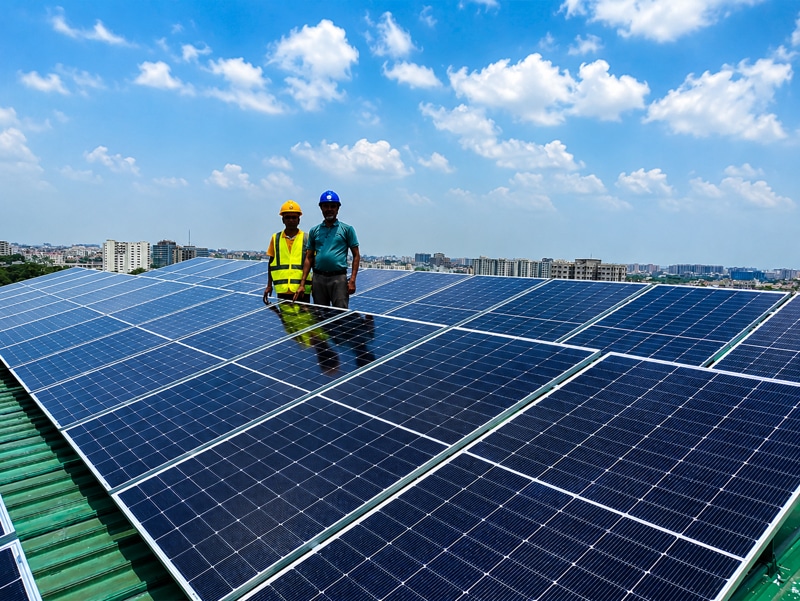
Whether solar is a passing response to a few bad years or a lasting part of how Bangladesh powers itself is the question this article keeps returning to, and the government's own planning points to the second answer. The Renewable Energy Policy 2025 set a target of 20 percent of electricity from renewables by 2030. The National Renewable Energy Development Strategy 2026–2030 builds on it, aiming for at least 30 percent by 2040, with 5,500 MW from rooftop solar and 4,500 MW from ground-mounted solar by 2030. Net metering has been expanded. Customers who install rooftop systems by February 2027 will receive Tk 10.50 per unit for the power they export until February 2030, a step closer to the feed-in tariffs described earlier. The government is also setting up a Tk 1,500 crore fund for low-interest renewable-energy financing. These are commitments that run to 2030 and 2040, not a reaction to one summer's shortage.
Bangladesh is short of land, and that is exactly why rooftops matter: a roof needs no new land. For the ground-mounted share, the strategy leans on guidelines that open government land to private developers and on agrivoltaics, which lets crops, fisheries and livestock share space with solar arrays so that solar does not displace food. With careful siting and policy, land becomes a constraint to be managed rather than a ceiling.
Long-term does not mean automatic. The strategy itself expects policy preparation, land selection, financing and grid studies to take up 2026 and 2027, which leaves most of the building to 2028 through 2030. It also says that as renewable capacity passes 10,000 MW, the grid must be modernised and large solar projects may need battery storage. The engineering limits described earlier are built into the plan. Whether solar becomes a foundation depends on how well that plan is carried out.
Bangladesh's rooftop-solar opportunity is now large enough that installation speed will become increasingly important. So will grid readiness. Siraj worries about what happens if solar capacity grows faster than the electricity network can absorb and manage it. Solar generation changes with sunlight. Batteries introduce another load profile. Grid frequency and stability become more important as distributed generation grows. That is a system-level problem that the government will have to address.
The government's list is longer. IEEFA recommends a full duty waiver on rooftop solar and faster net-metering connections. Ataur wants SREDA made a strong, independent body, and he wants city authorities such as RAJUK to require roofs designed for panels. He also wants hands-on solar training of a week to ten days at government training centers, including the Youth Training Centers where Muspana built the 64 solar roofs.
There is also a question of who gets heard. Bangladesh has a small but powerful group of wealthy households and developers who own the biggest roofs and commission the biggest buildings. Whether or not they install solar for their own use, their interest matters, because policies such as roof-ready building rules or lower duty on equipment move faster when the people who build the city ask for them.
Siraj has an idea he wants to test. A German visitor once suggested to Siraj that solar panels could shade rooftops and reduce heat entering buildings, potentially lowering air-conditioning demand. It sounds plausible. Bangladesh needs data before treating it as a benefit. The larger case for rooftop solar does not depend on that possibility.
The economics are already changing. The policy is moving. The roofs are there. What Bangladesh needs now is execution.
A rooftop solar system is not a short-term purchase. It is infrastructure that has to keep working for years after the installer has collected the final payment. The real test will come later, when the panels are dirty, the inverter needs attention, and the original installer is asked to come back. By then, the market will know which systems were built to last.