
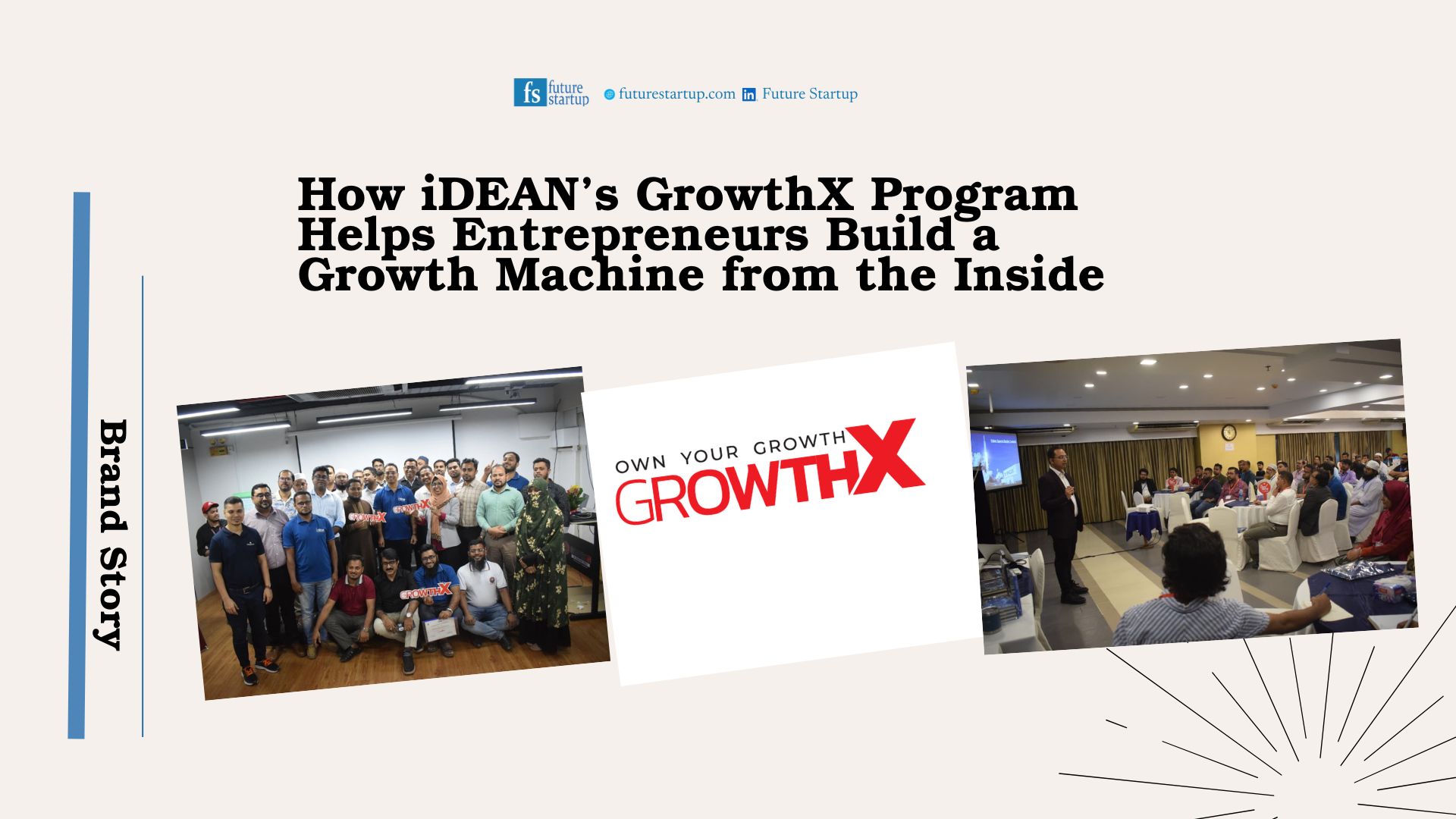
TL;DR: GrowthX is iDEAN Consulting’s three-month business growth program for entrepreneurs who want to move beyond tactical marketing and build a more systematic approach to growth. The program combines online sessions, in-person workshops, business-growth frameworks, and hands-on application to help entrepreneurs diagnose the structural problems inside their businesses and build systems for sustainable growth. It is one of the newest components of iDEAN Consulting’s growing business strategy and education platform in Bangladesh.
We have published two pieces on Mark Anupom Mollick and iDEAN Consulting. The first was a long company profile that covers Anupom's fourteen-year journey, the founding of iDEAN, and the full picture of what the firm has built. The second went in depth on how iDEAN's consulting service works, examining its diagnostic process, frameworks, and what a business should expect from a strategy engagement.
This article focuses on one of iDEAN's flagship programs: GrowthX. iDEAN describes the program as an initiative that helps operators transform into growth strategists.
Twenty years ago, building a meaningful company required substantial capital, a large team, and years of incremental work before anything resembling scale became visible. That model still exists. But a different kind of founder has emerged alongside it, and their trajectory looks quite different.
Anupom calls this person a Superpreneur. A rough definition describes a modern, highly specialized founder who uses domain expertise, advanced technology, proven frameworks, and speed to build scalable businesses with lean teams.
Superpreneurs do not scale headcount as the primary lever. They scale capability. A single founder with the right frameworks and AI tools can now do what used to require a team of fifty.
The constraint on building a business has moved from capital and headcount toward knowledge and execution speed.
GrowthX, which runs with the tagline “Own Your Growth,” is iDEAN's structured attempt to enable these founders.
The program has completed five batches with over 150 graduates. A significant percentage of past participants describe that attending the program has meaningfully changed how their businesses operate.
The program is three months, bi-weekly, and built around seven frameworks that together form what iDEAN calls the Growth Code. But the curriculum is a means, not an end. The program says it is actually trying to enable entrepreneurs to operate at the level the current moment demands.
The business-building playbook of the 1990s rested on a few shared assumptions. Growth was slow and steady. Learning happened through trial and error over years. Resources meant capital and people. Technology was something you adopted late, after the market had proven it out.
Each of these assumptions has been inverted.
Pace of growth now rewards speed and iteration over steady accumulation. An entrepreneur who spends two years refining a product before taking it to market has already lost to someone who shipped, learned, and adapted six times over in the same period.
Education and knowledge have become specialized in ways that general street smarts cannot replicate. The founder who understands the strategic and technical dimensions of their market in depth has a genuine advantage over one who is figuring things out as they go.
Resources have decoupled from capital. A lean operator with AI fluency and the right frameworks can build what once required a large infrastructure.
Technology has stopped being optional. It is now the core competitive surface.
This is the context in which Anupom developed the Superpreneur concept, a description of the specific capabilities that distinguish the founders who are building successfully in this environment from those who are applying older methods to a changed landscape.
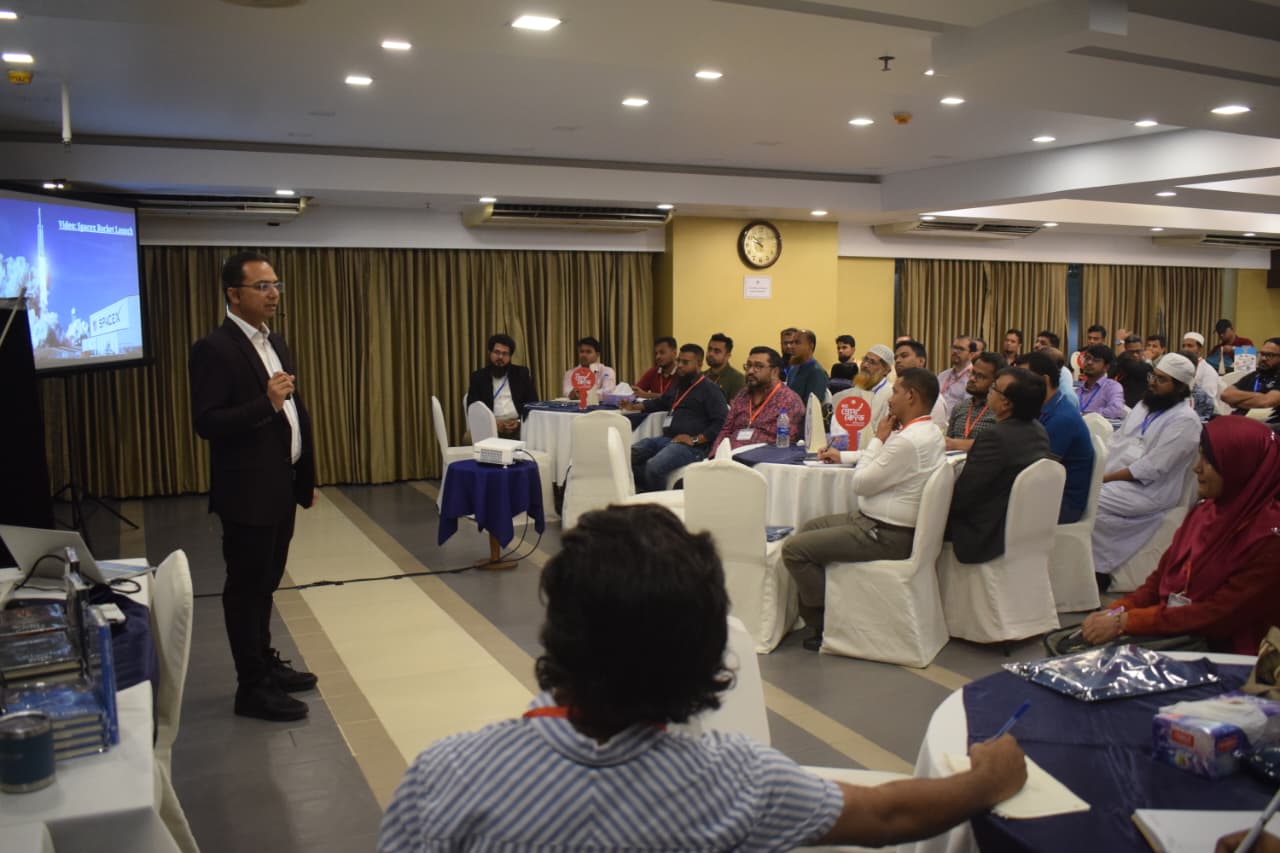
A Superpreneur, in iDEAN's framework, operates with seven specific attributes. These attributes map directly to what GrowthX teaches, and they identify the capability gaps that most entrepreneurs in Bangladesh carry without fully realizing them.
Framework-Driven Execution. A Superpreneur does not reinvent approaches to each new problem. They apply structured frameworks to solve complex problems systematically, which makes their execution more reliable and their results more predictable.
Speed. The competitive advantage is not necessarily quality or capital. It is the ability to launch, learn, and adjust faster than the market expects. A Superpreneur treats speed as a strategy.
Deep Subject Mastery. The idea that you can build a successful business without deep knowledge of your domain has not survived contact with the current market. Superpreneurs carry specialized expertise. They know their subject well enough to make precise decisions rather than educated guesses.
Lean Operations. A Superpreneur can build and run meaningful operations with a small, capable team. They are not constrained by the assumption that scale requires a large headcount. They design for leverage from the start.
Tech and AI Fluency. This is the capability that has compressed timelines most dramatically. A founder who can use modern software, automation, and AI tools to multiply their individual output can now do the work of a much larger team. For entrepreneurs in Bangladesh, this is also the capability most at risk of being missed, which is part of why Anupom has been vocal about the AI literacy gap.
Multi-Skill Agility. A Superpreneur understands the product, the marketing, the finances, and the technology well enough to connect them. They are not an expert in all of these but are fluent enough to see how the pieces interact, which allows them to diagnose problems at the system level rather than in isolated silos.
Data-Driven Decision Making. A Superpreneur makes evidence-based decisions. The combination of instinct and data, rather than instinct alone, allows them to move fast without accumulating unnecessary mistakes.
These seven capabilities are the destination. The seven frameworks in the GrowthX curriculum are the path to getting there.
GrowthX emerged from a pattern Anupom kept observing across more than a decade of consulting work spanning 50-plus industries. The pattern was consistent.
A random and unstructured approach to growth. Most entrepreneurs try different things at different times without a coherent framework connecting their decisions. Something works, and they double down on it until it stops working. Something fails, and they abandon it and try something else. The result is a business that lurches from tactic to tactic without building any cumulative understanding of what actually drives its growth.
The absence of a clear niche. Businesses try to serve everyone and end up with positioning so broad it becomes invisible. The customer they are best suited to serve gets no particular reason to choose them over a competitor.
Weak offer architecture. A business with a good product and a weak offer will consistently underperform a business with a decent product and a strong offer. Most entrepreneurs have never been taught what a strong offer consists of, so they compete on price by default.
A broken or absent funnel. There is awareness. There is occasionally a sale. What is usually missing is the designed sequence that moves someone from first contact to first purchase to repeat buyer. Marketing spend that is not connected to a functioning funnel produces one-time transactions rather than compounding revenue.
The operator trap. The entrepreneur is so consumed by running the business day to day that there is no cognitive bandwidth left for the strategic thinking that would allow the business to grow. Every week looks like the previous one, because every week is spent reacting to operational demands rather than building toward what the business could become.
GrowthX addresses all five. The Superpreneur Challenge, the free entry event that precedes each GrowthX batch, is designed to help entrepreneurs diagnose where they are currently stuck.
Before each new GrowthX cohort opens, iDEAN runs a free two-day live online event, the Growth Code Challenge or Superpreneur Challenge. Each day runs for two hours. Anupom introduces the Growth Code framework, walks through the paradigm shift from the 1990s model to the Superpreneur model, and uses the sessions to help participants locate where their current approach is falling short.
The Challenge is designed as a diagnostic test more than a preview event. The core question it asks participants to sit with: are you still building your business using a playbook designed for a different era? For many entrepreneurs who attend, the answer turns out to be yes, and it is specific enough that they can see exactly where.
This specificity is what makes the Challenge useful as a precursor to GrowthX. An entrepreneur who has attended the Challenge and can name the specific gap they are trying to close gets more from the three-month program than one who is enrolling on general motivation.
The Challenge is worth attending before deciding whether to enroll in GrowthX, even for entrepreneurs who are already fairly confident about the program.
Enrollment for each GrowthX cohort opens after the Challenge concludes. Cohorts are capped to a limited number of participants. The program runs twice a year.
GrowthX is structured around seven frameworks that form what iDEAN calls the Growth Code. Each one addresses a different layer of the growth system, and they are taught in sequence because each one builds on the previous.
Niche Selection comes first because every other framework depends on it. Who, specifically, is this for? Described precisely enough that the answer actually predicts behavior. Most businesses have not resolved this with the specificity the subsequent work requires.
Growth Hacking follows. The practical mechanics of acquiring customers efficiently, using channels and tactics matched to the specific niche rather than generic best practices borrowed from a different market.
Growth Monopoly is the positioning work. How does a business create enough differentiation that it stops competing primarily on price? The goal is not to be somewhat better on several dimensions, but to be the obvious choice for a specific kind of customer on a specific dimension that competitors cannot easily copy.
Campaign Launch Formula gets into execution. How a specific product, offer, or campaign actually gets brought to market in a way that converts the awareness generated by growth hacking, rather than spending acquisition budget that lands on a page with nothing to convert it.
Strategic Brand Management closes the loop by addressing how a business builds brand equity that reduces acquisition costs over time, rather than starting from zero with every new campaign.
Hourglass Marketing Funnel deals with the complete customer journey, from first awareness all the way to brand advocacy.
These elements are interconnected. Each one builds on the previous.
A participant who has not resolved Niche Selection cannot do effective work on Growth Monopoly or Campaign Launch Formula.
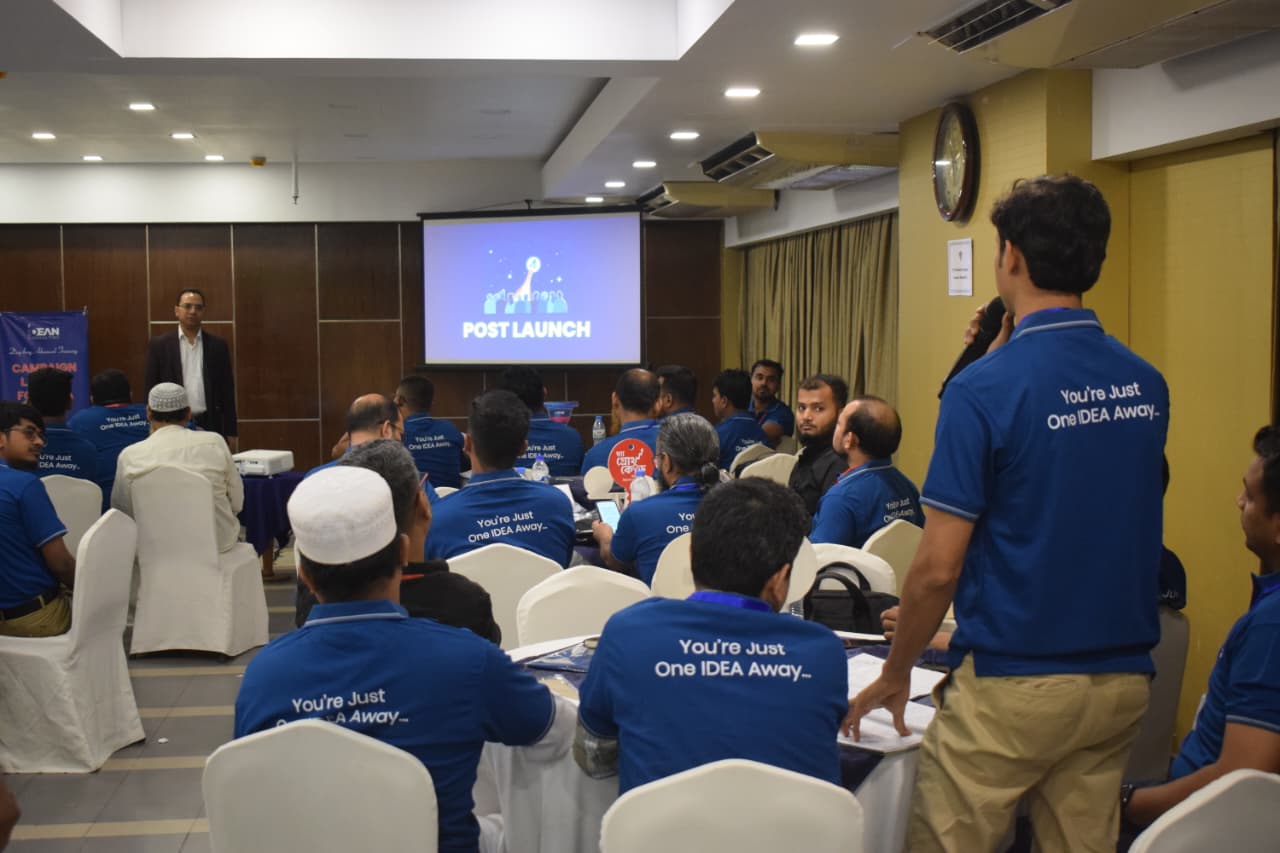
The program is designed so that each session produces something the participant uses in the next one, which is why the in-person workshops within the three months are mandatory rather than optional.
GrowthX runs as a three-month blended program: bi-weekly online sessions combined with mandatory in-person workshops. The bi-weekly cadence creates space between sessions for participants to apply each framework to their actual business before returning. This is where much of the learning happens.
An entrepreneur who has attempted to run the Niche Selection framework on their own business and discovered complications brings real material to the next session, which produces a different quality of discussion than one who is engaging with the concept theoretically.
The in-person workshops serve a specific purpose that the online sessions cannot replicate. Strategic frameworks are easy to understand in a session. They are harder to apply under pressure, in real time, with other entrepreneurs in the room watching.
The workshops create that pressure deliberately. Participants work through the frameworks applied to their actual businesses, in front of peers who will notice if the niche is still not resolved or if the offer has the same structural problem it had two sessions ago.
The selection process for each cohort is strict.
GrowthX is not for everyone, and iDEAN is explicit about this. The program is designed for founders who are ready to commit three months of genuine engagement, apply what they learn under real operating conditions, and sit with the discomfort of discovering structural problems they had not previously named.
This selectivity is also what makes the cohort experience valuable. Fifteen to twenty-five serious entrepreneurs, all applying the same frameworks to different businesses, produce a learning environment that no individual course can replicate.
The most useful way to understand what GrowthX produces is through how participants describe their own change. The pattern across the program's five batches is not primarily about revenue, though revenue is often the eventual result. It is about how entrepreneurs see their businesses.
Before the program, most participants describe their growth approach in tactical terms. After the program, they describe it in architectural terms. They talk about where in the system a problem is located, which lever to pull, and why. The shift is from doing things to running a system.
One documented case: a participant entered GrowthX with a business generating approximately 30,000 taka per season. Working through the Growth Code framework during the program, the participant identified that the problem was in the campaign architecture and in the absence of a funnel beyond initial awareness. Structural problems that no additional advertising spend would have addressed. Rebuilt from the foundation, the business reached two crore in revenue for the season.
Anumpom says the ambition of the program is to help create 500 companies generating one crore taka or more in monthly revenue. That target is measured in business outcomes rather than completion certificates.
That framing captures what GrowthX is trying to do at the level of the individual entrepreneur. The seven Superpreneur capabilities are not skills you learn once and file away. They are ways of operating that, once installed, change how you approach every business problem from that point forward.
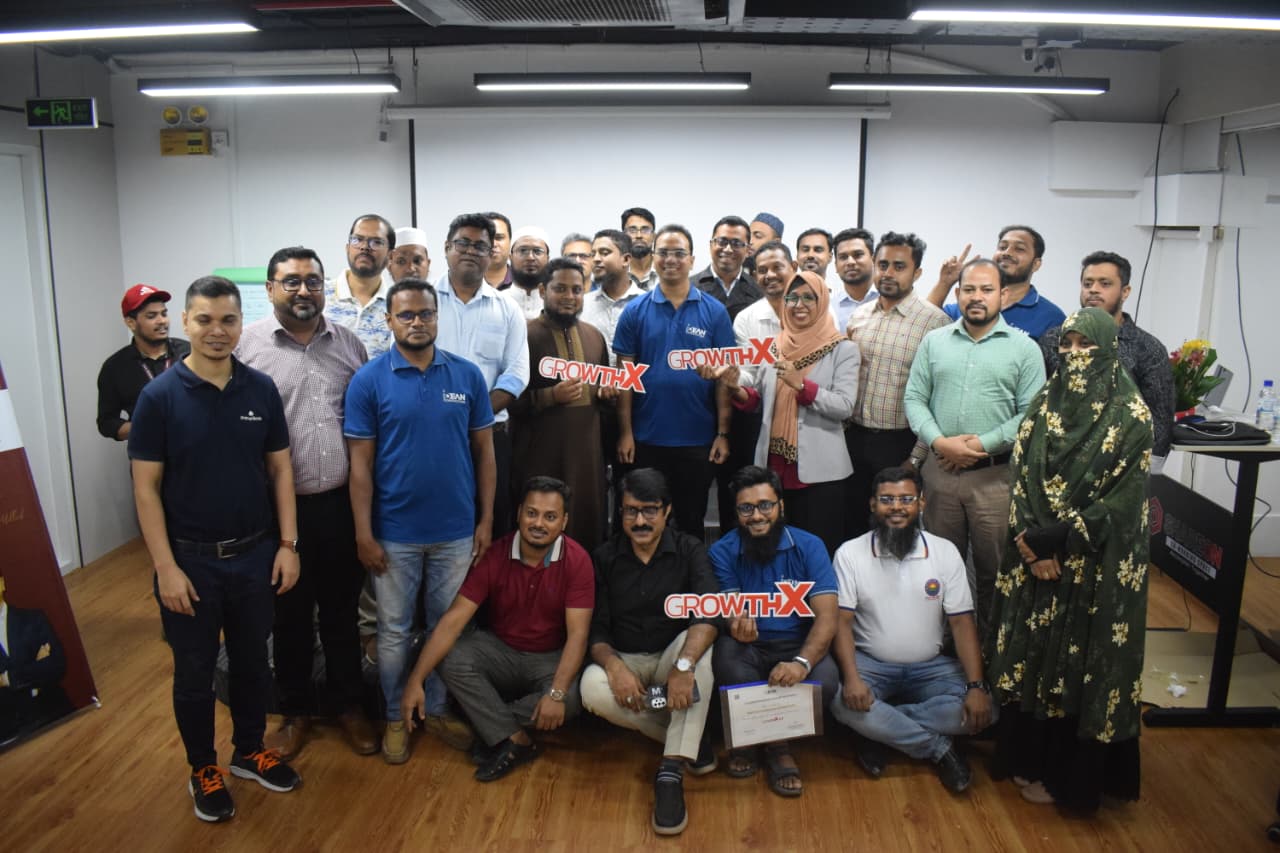
GrowthX is for entrepreneurs and business leaders who have already established something real, and who want to grow it with the tools and orientation that the current environment rewards.
The program is most useful for a founder who has some revenue, some customers, and some operational stability, but who feels the business has hit a ceiling they cannot explain and do not know how to break through.
The frameworks in GrowthX are designed for that specific situation: a business that exists and needs to grow, with a founder who is ready to examine the system rather than just the tactics.
Very early-stage founders who are still validating a core idea will benefit more from iDEAN's other programs. GrowthX works best when participants have real business material to bring to the workshop sessions, because the in-person work depends on applying the frameworks to actual situations rather than hypothetical ones.
The Superpreneur framing is also a useful self-filter. If the seven capabilities described earlier in this article describe where you are trying to get, and you can see clearly which of the seven you are currently weakest on, GrowthX is almost certainly worth the investment. If the concept feels abstract or premature for where your business currently is, start with the Superpreneur Challenge and use those two days to locate yourself more precisely.
GrowthX runs twice a year. The entry point is the Growth Code Challenge or Superpreneur Challenge, the free two-day live online event that runs before each new GrowthX batch. It is a useful way to assess whether the program is right for your current situation before committing to enrollment. Attending it costs nothing and produces a clearer diagnosis of where your growth system is currently breaking down. You can find full details on the program structure, the next cohort dates, and the Growth Code Challenge schedule at ideanconsulting.com.
For broader context on how iDEAN approaches business strategy, our consulting process article covers the diagnostic methodology and framework logic that GrowthX is built on. Our long-form profile on the company covers the full story of the firm and its founder.