
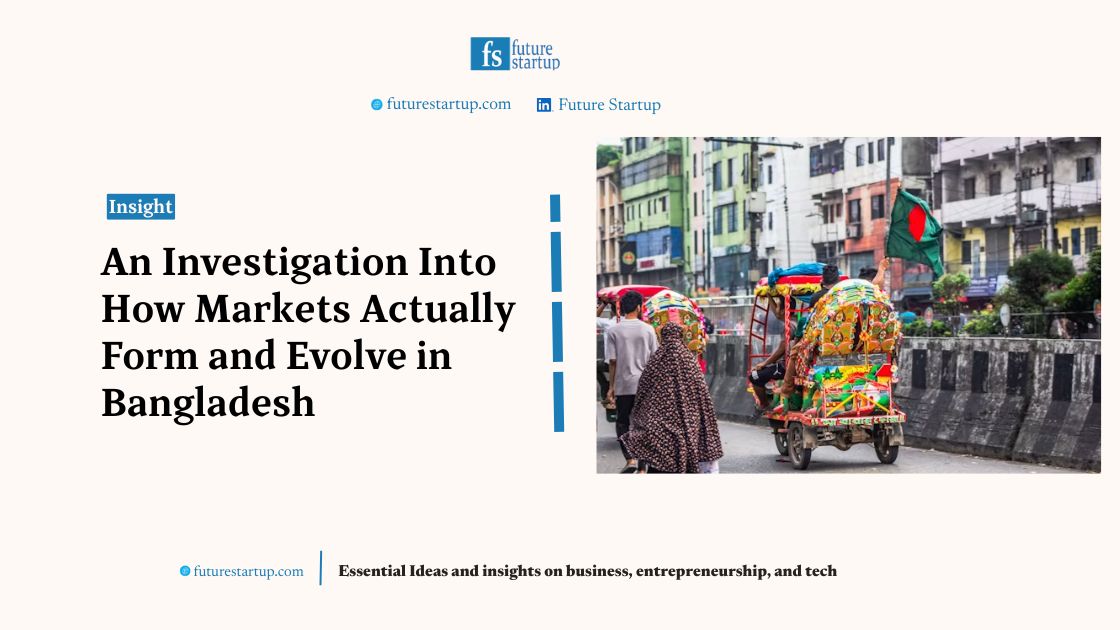
Somewhere in Sirajganj or Bogura, probably around 2015 or 2020, a rickshaw puller did a calculation. A neighbour had switched to an easy bike, an electric three-wheeler assembled in a local workshop, powered by a lead-acid battery pack from China.
The fuel cost was lower. The daily income was higher. Within a few years, hundreds of thousands of these vehicles were running across rural Bangladesh, registered with nobody, financed through informal savings and moneylenders, and charged from household electricity connections never designed for the purpose.
Somewhere between three and four million electric three-wheelers operate on Bangladesh's roads today, serving an estimated 112 million passengers every day.
Today, the government, development partners, and other stakeholders are discussing how to regulate and shape this market going forward.
The interesting thing is that the transition had already happened. It happened in workshops and on rural roads, and that too years before anyone in a policy office put numbers to it.
The EV market is just the most visible current case of something that runs through virtually every consequential sector in Bangladesh and many other markets.
A phenomenon we may call the emergent nature of how new markets develop and evolve.
Markets in Bangladesh rarely develop the way economists expect.
In many policy discussions around business and entrepreneurship, we hear that we could develop a policy regime, and it would deliver us a new sector. A kind of attempt at engineering new industries. We would claim this is infeasible. We could find examples of this happening in many markets where policymakers decided to aim for a certain outcome and designed a policy guideline to get there. However, in Bangladesh, there are not many examples of this. The examples of coordinated industrial policy or government pilot scaling into an industry remain few and far between.
Instead, we see that most new markets follow a messy trajectory. A practical solution meets a genuine need, ordinary people adopt it without encouragement, and scale accumulates informally.
Often, these developments happen outside registration systems, beyond formal financing, in regulatory grey zones tolerated because enforcement capacity is thin and the activity is too useful to suppress. To put it differently, entrepreneurial drives of people usually discover and make new markets happen.
Then, usually after a decade, it hits a ceiling.
The ceiling is always institutional.
Without registration, there is no bank loan. Without a regulatory category, there is no registration. Without auditable operations, there is no serious capital. Without standards, there is no path to global markets.
The informal system that solved the demand problem becomes the constraint on what the industry can become.
At that point, the question for everyone working in the sector becomes how to build the right systems to capture the value that the informal phase created.
We have seen this happen in garments, mobile money, e-commerce, and now in agritech, fintech, and many other emerging verticals.
The EV market makes the pattern visible in a form you can see. The pattern itself is much, much older.
Noorul Quader Khan sent 130 workers to South Korea to train with Daewoo in 1979. Desh Garments built on what they brought back. Then the knowledge diffused the way it diffuses in Bangladesh: through people. Workers trained at Desh left to join or start other factories. Supervisors became managers became owners.
Within a decade, the industry had hundreds of factories, none of which owed their existence to any program.
By the late 1980s, it had real scale. Employed hundreds of thousands of workers. Growing export revenue. And then only the ceiling appeared.
International buyers wanted compliance documentation. The MFA quota system created pressures that the industry could not address without formal organization.
The BGMEA emerged from this pressure. An industry body that could negotiate with buyers and give the informal mass of factories a formal face.
The gap between informal scale and institutional capacity closed slowly.
Three observations emerge from the garment industry.
Most sectors emerge from the entrepreneurial drive of visionary entrepreneurs working on something that has a real market demand.
Second, policy is only meaningful in, broadly, two instances. When it enables a growing sector to find an institutional footing to grow even further, and when it creates an environment where experimenting is inexpensive.
For the entrepreneurs, the insight is that while an informal beginning is the seed where things begin, and when operating in an informal setting is useful, the durable positions in the garment industry were built by those who owned the transition from informal to formal. The factories that invested in compliance infrastructure when it was optional. They ended up with the buyer relationships, certifications, and supply chain trust that proved genuinely hard to displace.
That is the model that repeats across every sector.
Bangladesh's pharmaceutical industry built its scale through a structural advantage that was formal but exploited informally. As a least-developed country, Bangladesh is exempt from TRIPS intellectual property rules until 2033, which means domestic manufacturers can produce generic versions of patented medicines without licensing fees.
The legal exemption made the room. Engineers and chemists trained at multinational subsidiaries moved to domestic companies, carrying process knowledge that no formal licensing arrangement would have transferred and filled the room.
Bangladesh now produces about 97% of its domestic medicine requirements. Square, Beximco Pharma, and Incepta exist at their current scale because the TRIPS exemption created the opening, and human capital diffusion did the rest. Government regulatory moves to support local pharmaceutical developments came after.
However, the real ceiling came in the form of export development. WHO pre-qualification, FDA approval, and European GMP certification are the credentials global markets require. The companies that have pursued them export to over 150 countries.
The ones that have not are domestically dominant and globally invisible. The exemption window closes in 2033. The race to build export certification before that date is, in miniature, the same race the garment industry ran in the 1990s. The window for mid-sized manufacturers is narrowing faster than most of them recognize.
The industry follows a similar trajectory. Private entrepreneurial drive creates an opportunity. The government comes in with a policy regime to support its growth. Then a different ceiling appears that private businesses need to navigate in order to find sustainable growth.
Dutch Bangla Mobile Money, now Rocket, was the first mobile payment service launched in Bangladesh. Then came bKash in 2011 under a Bangladesh Bank guideline that created regulatory space for a new category. The product was a network of over 300,000 small agents operating from shop counters and market stalls, managing cash-in and cash-out with minimal training and variable compliance.
The informal distribution layer was the business.
By 2025, bKash had over 82 million registered accounts and had become one of the largest financial institutions in the country by transaction volume. It built this without branches and any of the infrastructure that conventional banking treats as foundational.
After bKash, we have not seen meaningful innovation in the financial sector at scale in Bangladesh. Part of the reason is that instead of allowing relative informal development of the market, there is a fixed policy vision for how that market develops, creating challenges for innovation.
Contrarily, we are seeing new fintech innovations in the peripheries, such as trade finance, crowdfunding, and agri-tech, where there is still room for flexible innovation.
Bangladesh's e-commerce market started with Facebook. Hundreds of thousands of small businesses, such as fashion sellers, handicraft makers, and home cooks, built genuine customer bases through Facebook pages, collected payment through bKash, and delivered through personal courier arrangements.
The market was real and large before any formal platform had logistics to serve it. In fact, that market remains large and a dominant segment of online commerce in Bangladesh.
Daraz, Pickaboo, Chaldal, Shajgoj, and a cohort of category-specific operators built on top of that proven demand and inherited all the infrastructure problems the Facebook layer never had to solve, such as last-mile delivery in a city with no formal addressing system, cash-on-delivery management at scale, returns, and consumer protection.
Chaldal built its own dark stores and delivery fleet because nothing it needed existed in the market. Daraz built a logistics subsidiary for the same reason.
The sector is now split between two layers.
The Facebook commerce layer drives enormous volume but is invisible to formal capital, with no inventory data, no transaction history, and no credit trail. The formal platform layer has infrastructure, but not enough of the market.
In many ways, the development of ecommerce in Bangladesh should be credited to the informal entrepreneurs who plunged into that market when nothing existed and made it real.
The new market dynamics in the sector now offer opportunities for companies that can bring the Facebook sellers into a system where their inventory is trackable, reputation portable, and transactions generate a credit history.
Pathao's early growth was regulatory arbitrage at its simplest. Motorcycle taxis were illegal in Bangladesh. The law was not enforced. Dhaka's traffic makes car travel close to unbearable for most city trips, and motorcycle taxis met that demand in a way nothing formal did.
Pathao added matching, a payment layer, and a quality signal to what individual riders were already doing and scaled to hundreds of thousands of drivers before the regulatory conversation caught up.
The challenges came in waves. Municipal bans, BRTA interventions, and licensing negotiations have stretched across years.
These stories suggest that regulatory tolerance allows for innovation and new market creation.
At the same time, for entrepreneurs, it is important to understand that the window for shaping a regulatory framework is almost always earlier than it looks.
The companies that treat informal status as temporary and build institutional relationships during the informal phase, before the regulator arrives in enforcement mode, are the ones that get to influence what the framework becomes.
Agriculture is where the pattern is most deeply embedded and the upgrade hardest. Bangladesh's supply chain from farmer to market runs through farias, beparis, aratdars, a dense informal intermediary network that is genuinely efficient at moving perishable goods across a fragmented, poorly roaded country. It has been doing this for generations. Formal finance cannot see it.
Farmers without formal land titles cannot pledge collateral. Traders without business registration cannot access working capital. Supply chain data that exists in the heads of intermediaries cannot inform credit decisions.
Every agritech company working in Bangladesh, on financing, farm advisory, digital procurement, and input distribution, is essentially trying to make some layer of this network formally legible without disrupting the efficiency that makes it work.
The intermediate infrastructure that changes this, such as the data layer, the documentation systems, and the trust mechanisms that let formal capital flow into a supply chain it currently cannot see, takes years to build and requires working with the informal network.
That is both the constraint and the entry point. The companies making real progress in agritech are the ones that have understood this early enough to still be standing.
The pattern is not specific to Bangladesh. Gojek built on Indonesia's informal motorcycle taxi market, much as Pathao tried to build on Dhaka's, digitized an informal transport layer already operating at scale, formalized the economics without immediately formalizing the regulatory status, and grew large enough that Indonesia's government rewrote the rules around the existing reality.
What bKash did with informal cash transfer, M-Pesa did with Kenya's informal remittance networks in the late 2000s. M-Pesa now processes annual flows equivalent to nearly three times Kenya's GDP. Kenya's central bank let it operate before the regulatory framework was fully written, choosing to learn from deployment.
That sequencing decision is the reason M-Pesa exists at the scale it does.
Vietnam's electronics manufacturing followed the same structure. Informal cottage industry clusters in the Red River Delta built skills and supply chain knowledge through apprenticeship networks before Samsung arrived. Samsung found a ready workforce. What turned that into a globally competitive export sector was institutional SEZs, FDI frameworks, and trade agreements. Vietnam's electronics exports now exceed $126 billion annually. The capacity was already there; the institutional layer made it legible to global supply chains.
The point we are trying to make here is that often new sectors and industries follow an organic, emergent, and informal pattern. When that room for experimentation is available, people go out and try things, and it leads to breakthroughs.
Every sector in Bangladesh has a version of the same story. The informal scale, the ceiling, and who builds the infrastructure on the other side, and the policy coming to enable further growth.
The timing mistake, arriving a phase too early or a phase too late, gets made repeatedly by entrepreneurs and policymakers alike. And timing makes all the difference.
Unnecessary early regulatory intervention can stifle growth and innovation in a sector. For entrepreneurs, entering a market when it reaches maturity can mean that building something dominant is no longer without competitive challenges.
The EV market is parked on every road in Bangladesh as a reminder of what organic market formation looks like in practice.
It also offers insight into how to find and build in new markets in Bangladesh, what meaningful regulatory thinking should look like in emergent market scenarios, and also raises more complex policy questions about the role of policy makers when it comes to regulating these emerging sectors.
This analysis draws on our report on Bangladesh's EV market (April 2026) and research across RMG, pharmaceuticals, mobile financial services, e-commerce, ridesharing, and agritech.