
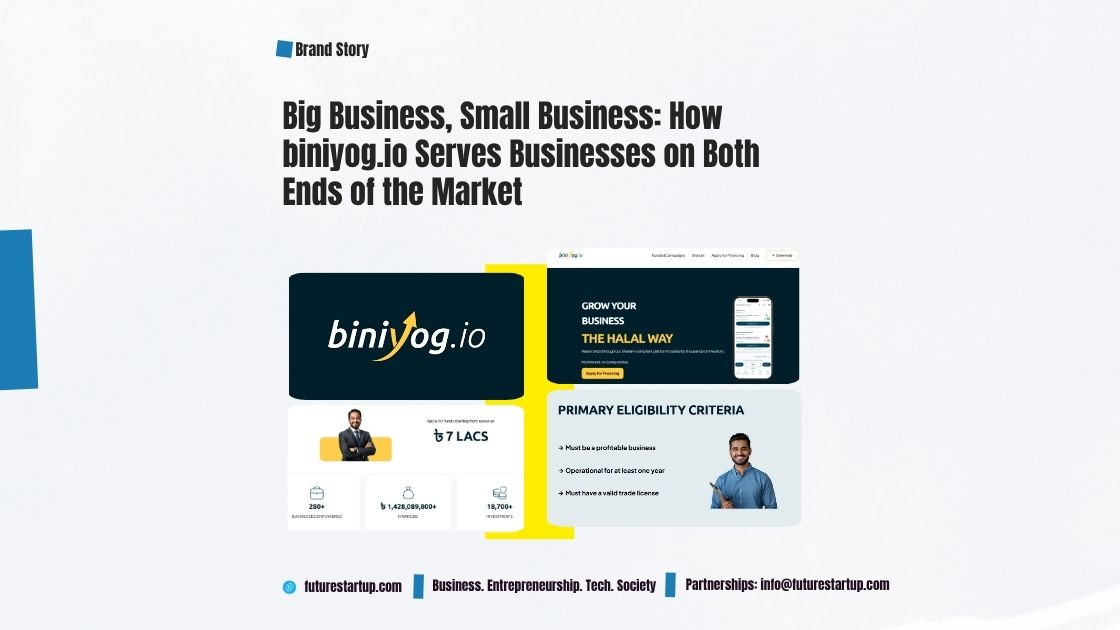
We published a long-form profile on small-business financing and the halal investment platform biniyog a few months ago. That piece examined how the company was built, its growth arc, business model, its investors, its risk assessment system, and where the company wants to go next.
While that profile provides an in-depth understanding of the company, there was one part we didn’t have space to explore in much detail: the businesses that raise investment through it.
What does biniyog actually offer businesses looking for working capital? Who is it designed for? How does the financing process work? What does it cost? And why would a business with other financing options use a platform like this? What do both large and small businesses say about using it?
Those questions are worth looking at because the businesses using biniyog are not all alike. Some of them are small trading businesses. Others are established companies that have raised venture capital or already work with banks. Some need money to buy inventory. Others need to finance a specific order or a seasonal business cycle.
While biniyog predominantly works with SMEs, what connects these businesses is less about size and more about the nature of financing they need.
To understand that need, it helps to start with the financing problem Biniyog has been trying to address since its founding in 2021.
Bangladesh’s SME financing gap is usually described in large aggregate numbers.
For instance, the IFC has estimated the country’s MSME financing gap at $2.8 billion. Nearly 10 million small businesses contribute significantly to the economy, yet a large share of them remains underserved by formal financial institutions. They can’t access formal credit.
Those are accurate numbers and describe the scale of the problem. But they don’t explain what the problem looks like inside a business. And they are hardly useful to a business owner trying to figure out how to fund their next procurement cycle.
Consider a trading company with regular customers, consistent revenue, and a predictable procurement cycle. It needs Tk 30 lakh to buy inventory this week and expects to collect the money from customers over the next 60 or 90 days.
The business may be perfectly viable. The problem is that the financing options available to it may not fit the business.
One of the factors that creates the gap is the collateral requirement. Bangladesh’s formal lending system uses land and property as its primary risk management tool. Banks typically rely heavily on collateral, formal documentation, and established lending structures. A business without sufficient property to pledge can find it difficult to obtain the working capital it needs, even when the business generates enough cash to repay it.
There are other mismatches.
Banks’ formal, sometimes quite extensive, documentation requirements and lengthy processing times also create challenges for many small businesses. Many early-stage and small businesses don’t maintain standard financial documentation. Others may need a quick turnaround for working capital. A business may need capital for three months, six months, or a particular procurement cycle. A conventional bank facility may be structured around a very different time horizon.
Moreover, for many formal financial institutions, assessing small businesses doesn’t make sense given the cost and potential return.
Overall, under the broad narrative of the small business financing gap, there are many factors that go underdiscussed.
The interesting thing is that these businesses are perfectly creditworthy by any cash-flow-based measure. They have consistent revenue, real buyers, documented cycles, and a track record. The existing formal financing system fails them because the assessment method cannot evaluate them.
This is where the broad idea of an SME financing gap becomes more concrete. The problem is not always that a business cannot borrow at all. Sometimes it is that the business cannot find the right kind of capital, in the right amount, for the right period.
Consequently, businesses deal with the gap in different ways. They use supplier credit, who embed the cost in pricing premiums. Their own cash. Informal borrowing, where annual rates run 20–40%, sometimes as high as 60 to 100%; or simply postpone purchases and growth.
Biniyog's proposition starts from this narrow problem.
Biniyog’s assessment infrastructure evaluates a business using a combination of data points across different aspects of a business. Instead of relying primarily on fixed-asset collateral, it assesses whether the business itself can support a financing cycle. That means looking at bank statements, invoices, delivery records, supplier relationships, customer relationships, and the actual movement of money through the business.
That explains what biniyog is actually building: a financing product around businesses where there is a visible relationship between capital going into the business and money coming back out.
And that shift from collateral-based to cash-flow-based evaluation makes the platform work for both companies like AponBazar, SupplyLine, AgroShift with institutional backing, and Ahlan Agro with a shed of cattle in Mohammadpur.
That brings us to the product itself.
As we have noted in our earlier coverage of the company, biniyog is a two-sided marketplace. On one side are investors looking for Shariah-compliant investment opportunities. On the other are businesses looking for working capital.
But calling it simply a marketplace understates what happens between those two sides.
biniyog evaluates businesses, structures financing contracts, conducts physical verification, presents financing opportunities to investors, facilitates the underlying transaction, and monitors repayment.
In concrete terms, for businesses, biniyog enables short-duration working capital. The primary financing instrument biniyog uses is Murabaha. In a Murabaha transaction, biniyog purchases the goods a business needs and then sells those goods to the business at a disclosed markup, with repayment taking place according to an agreed schedule. The business therefore does not simply receive cash in the way it would with a conventional loan. The financing is tied to an underlying purchase. There is no interest. The markup is the financing cost.
biniyog also uses other Shariah-compliant structures, including Musharaka, depending on the financing requirement.
The company says its financing contracts are structured around Shariah principles and that it works with IFA Consultancy on Shariah advisory and governance and is audited annually in accordance with AAOIFI international standards. Its current Shariah page says businesses are assessed for whether their activities and use of funds are compliant before being listed on the platform.
For a business owner, the practical proposition is access to working capital without pledging a fixed asset as collateral, at a cost that is disclosed upfront in the contract, with the financing structured around an identifiable business need.
This leads us to the next interesting question: how biniyog decides which businesses qualify.
If a bank has collateral as one of its primary tools for assessing risk, biniyog needs other ways to answer the same question: Will this business repay?
This is where its assessment system becomes central to biniyog’s business model.
biniyog's current explanation of its risk-grading system says its analysts consider a range of quantitative and qualitative factors, including business verifiability, financial statements, payment patterns, market exposure and operational strength. The company says its proprietary scoring engine incorporates more than 40 assessment factors and data points.
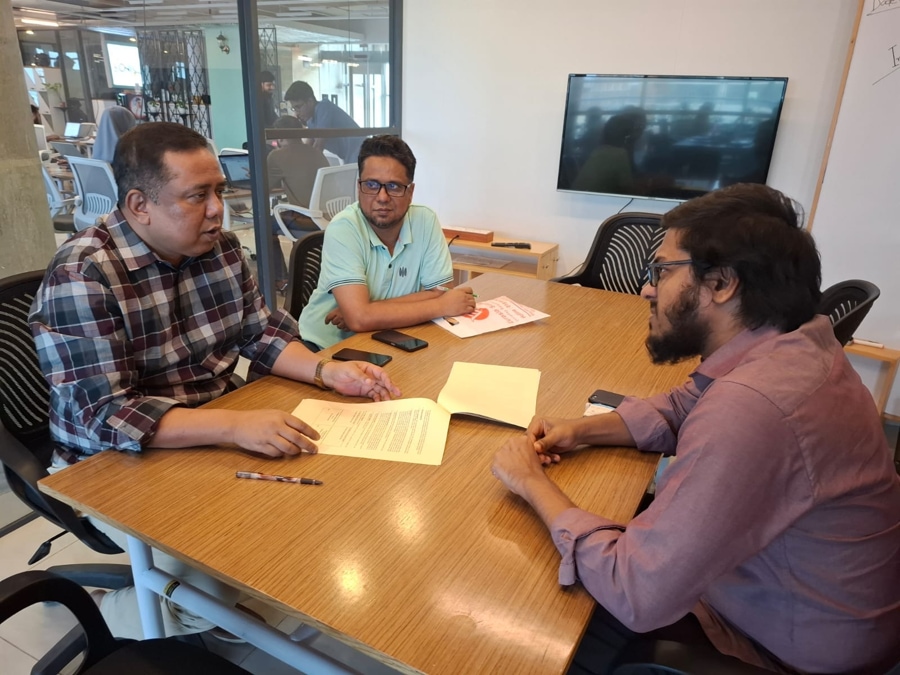
The process starts with document review. Then comes verification. biniyog conducts on-site inspections of a business as part of its assessment. Its current risk-grading description says the process can include verification of offices, factories, warehouses and other operational addresses, alongside analysis of financial documents, sales transactions, supplier transactions, debt exposure and payment behaviour.
That approach is meaningful. A business is more than its bank statement. A company may have good revenue numbers but still depend entirely on its founder. Another may have relatively modest paperwork but strong suppliers, repeat customers and a predictable operating cycle.
The assessment tries to capture some of that context.
The system has also evolved through experience. In our earlier profile, we described biniyog's assessment process as something the company has continuously refined since its early campaigns, using what it learns from every business and repayment outcomes to improve subsequent assessments.
This makes the assessment process a core part of the product rather than a mere eligibility filter.
Once biniyog has established that a business is viable and that its financing needs can be understood, the next question is what kind of financing should be built around it.
The answer becomes clearer from the financing products biniyog offers.
The platform currently lists work-order or order-based financing, raw-material purchase financing, and outlet-expansion financing among its financing modalities. Its baseline eligibility criteria include at least one year of operations, profitability, and a valid trade licence. A business launched six months ago, or in the idea/MVP stage, does not qualify.
These characteristics point to a particular kind of business. An importer buys goods and sells them. An FMCG distributor purchases inventory and moves it through its distribution network. A manufacturer may have a confirmed order but need money to purchase raw materials before the buyer pays. A business expanding an outlet needs capital to establish and stock that location. An agricultural business may need capital for a defined production or livestock cycle.
These businesses operate in different industries. Their financing requirements are also different. But the capital has a job. Money goes into the business. The business uses it to buy, produce, or fulfill something. Revenue comes back out. That is the kind of financing cycle biniyog is designed to understand.
The platform says it has financed businesses across roughly 20 categories. However, it has since been working to consolidate the types of businesses it finances. Industries the platform currently finances include: agribusiness and organic food, FMCG distribution, import-export, lifestyle goods (clothing, footwear, cosmetics), industrial supplies, e-commerce, and service businesses with confirmed work orders.
As we noted above, the businesses that move through assessment most smoothly are those with a documentable working capital cycle. Money goes out to buy goods. Goods are sold. Money comes back. The simpler and more traceable the cycle, the faster the assessment.
Businesses with purely cash-based operations with no bank records, no supplier invoices, and no delivery documentation are harder to assess. While they are not automatically rejected, the process is longer and the outcome less certain.
The platform does not require a business to be Shariah-compliant in the sense that it requires a compliance certification. A conventional trading business can raise funds through biniyog as long as the goods being financed are not from prohibited categories. That said, the business model, meaning what the business is about and the product and service through which it earns revenue, has to be compliant from a Shariah perspective. Certain aspects of the business, such as marketing, etc., are only overlooked if it's murabaha or product-based financing in a buyer-seller relationship sense, or mudaraba/musharaka/project financing that doesn't directly involve that non-compliant portion of the business.
This also explains why biniyog can serve businesses that already have other sources of capital. A company can have venture funding and still need working capital. It can have a bank facility and still need financing for a particular inventory cycle. The question is not simply whether a business has access to capital. It is whether the capital available to it matches the financing needed in front of it.
It means that businesses that already have formal bank facilities can also apply. Some use biniyog for the working capital cycle while maintaining term loan facilities at banks for fixed assets. They are different products with different durations and different purposes.

biniyog's financing has expanded as the platform has matured. biniyog currently operates three broad financing tiers.
10–15 lakh taka for smaller trading businesses and single procurement cycles. The range is particularly suited to businesses with monthly revenues in the 5–25 lakh.
40–50 lakh taka for import-based or wholesale businesses with larger and more regular working capital needs. Assessment is more intensive.
And 1 crore taka and above for established businesses with high-turnover requirements that include large FMCG distributors, commodity traders, industrial supply chains, etc. Some campaigns at this tier use Musharaka profit-sharing rather than Murabaha.
Durations can run for a maximum of twelve months for all categories. The current biniyog site also says business financing starts from 7 lakh taka. It also says financing can be completed within three to four weeks after submission of relevant documents, subject to eligibility.
The cost depends on the financing structure, duration, and campaign.
biniyog charges a platform fee structured as a success fee for the service provided, which ranges from 2% to 5% of the amount raised, with investor returns typically making up another significant part of the overall financing cost.
The estimated effective annual financing cost sits in the 18–22% range for many campaigns.
While that is higher than the headline cost of some conventional bank financing, the comparison is not simply about rates. It is also available without a land title, has a two-to-three-week processing timeline, and is structured around the actual working capital cycle rather than a multi-year term.
A business without sufficient collateral may not actually have access to the cheaper bank facility in the first place. Its alternatives may be supplier credit, informal borrowing, using its own cash, or delaying an order.
The relevant question for that business is therefore not simply, “What is the cheapest money available?” It is, “What is the cost of getting the capital I need, when I need it, through a financing structure that fits my business?”
biniyog says its service charges are explained during onboarding and that there are no hidden charges. It also advertises collateral-free financing and flexible repayment schedules tailored to business needs.
Those features are central to the proposition.
So is the process through which a business gets there.
Once the product and assessment criteria are understood, the actual process is fairly straightforward.
A business starts with an online application. biniyog then screens the business and its financing requirements, evaluates the company, structures an agreement, and, if approved, puts the financing campaign on its platform.
biniyog describes the process in five broad steps: application, screening and evaluation, agreement structuring, fundraising, and disbursement/repayment.
In practice, the process involves several layers.
Application. The business submits an initial application describing the company and its financing requirement. Applications go in at biniyog.io/apply. The biniyog team responds within two working days.
Document submission and review. The assessment team reviews bank statements of the last 12 months, invoices, trade licence, identification, and other relevant business documents. Three to five working days for the initial review.
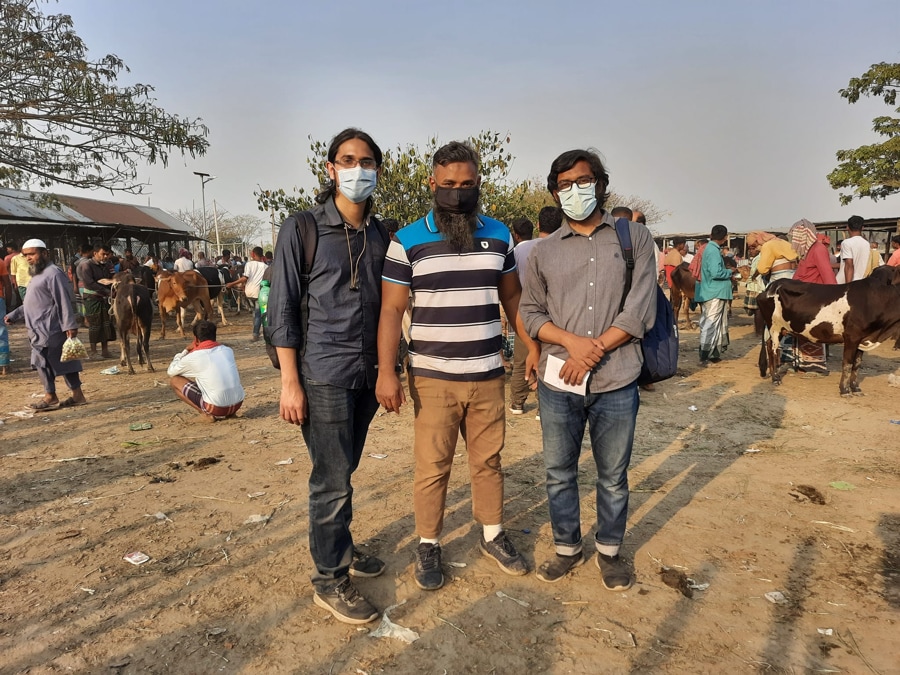
Site visit and verification. The team verifies the business's actual operations and examines its financial and operational information. The biniyog team visits the actual location — office, warehouse, factory, or shop. The visit covers whether the owner runs the operation alone or has a management layer, how accounts are maintained, and whether the business can sustain a financing cycle without the owner’s daily intervention. The team tries to read the governance and underlying risk management structure.
Risk assessment. The business is evaluated against biniyog's financial, operational, and behavioural criteria. After the visit and document analysis, a risk-scoring engine synthesises over 40 data points, including both financial and behavioral data, into a grade published on the campaign page. Scoring models vary by industry. A B2B FMCG distributor is evaluated differently from an e-commerce retailer. An agribusiness with seasonal cycles is evaluated differently from a manufacturer with confirmed purchase orders. The model has been updated continuously since 2021, with every underperforming campaign feeding a post-mortem that updates the criteria.
Campaign structuring. If the business qualifies, biniyog structures the financing amount, contract, duration, repayment schedule, and investor return. The business owner reviews and signs before it goes live.
Fundraising. The campaign is open to investors for 10 to 14 days. Most campaigns in the 10–50 lakh range finish raising funds within the window.
Underlying transaction. For Murabaha financing, biniyog purchases the specified goods and then sells them to the business under the agreed financing arrangement. The documentation goes to investors as proof. The company says it shares contracts, payment records, and handover images with investors all the time.
Repayment and monitoring. The business repays according to the agreed schedule while biniyog continues to monitor the financing relationship. The repayment structure is usually customized to the business cycle during the contract and is not fixed in equal installments. The team monitors repayment against the schedule throughout.
First-time applicants who submit documents promptly typically see their campaign live within two to three weeks. Second and subsequent campaigns are materially faster; the assessment team already knows the business, the site visit is lighter, and the document review is quicker.
biniyog says the process can be completed without repeated office visits and that eligible businesses can receive financing within three to four weeks after submitting relevant documents.
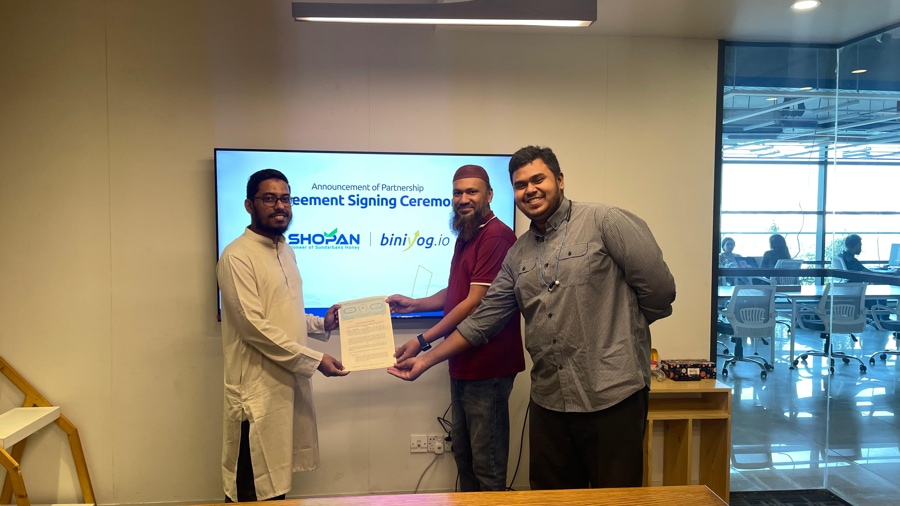
Businesses that raised capital through biniyog tell an interesting story. One aspect of that story is that many different kinds of businesses use biniyog to raise working capital.
AponBazar is one example.
The company operates retail shops inside RMG factories, selling essential goods to workers at discounted prices and offering additional services including interest-free credit purchases and a loyalty programme. It has raised working capital through biniyog eight times.
Then there is Supplyline Enterprise, an FMCG trading and distribution company that connects small retailers with suppliers. At the time of writing this piece, it raised capital through biniyog 25 times.
AgroShift, a food supply-chain company founded in 2022, uses financing for procurement. The company sources staple commodities directly from farmers and sells to consumers and institutional buyers. It raised funds through biniyog at least three times.
These are not businesses that look alike. They operate in different sectors, have different customers, and have different capital requirements. Some of these businesses have raised institutional investment, including from Accelerating Asia and ADB Ventures.
What connects them is the financing cycle. They need capital to buy or move goods before the cash comes back.
For these businesses, biniyog does not substitute for equity financing. The two types of capital serve different purposes. Equity can finance the company and its longer-term growth. Working-capital financing can finance a particular procurement or operating cycle.
A company can therefore use both.
There are other examples that make the point from the opposite direction.
Take Ahlan Agro.
Ahlan Agro is a cattle farming operation in Bosila, Mohammadpur. It started in 2021 with 19 cattle. It expanded to 24 in 2022, 57 in 2023, and 70 in 2024. Its model is seasonal: cattle are purchased and reared ahead of Eid al-Adha.

Ahlan Agro raised capital more than eight times through biniyog, with its campaigns tied to specific livestock cycles. The company didn’t raise any venture funding or take any bank loans. It maintains a seasonal model with a documented track record, a growing investor base that follows it across campaigns, and a team that has added veterinary coverage and mortality risk mitigation to the operation.
The more interesting part is what happened to the assessment over time. biniyog's understanding of the business became more specific as it financed more campaigns. Livestock-related factors such as rearing duration, growth yield, mortality risk, and veterinary practices became part of the assessment. These didn’t exist in 2021, when biniyog first helped Ahlan raise capital on the platform.
They were built from the operational reality of this business and others like it. Each Ahlan Agro campaign has refined both the risk grade and the disclosures investors see. The business has grown. The assessment has grown with it.
The financing relationship therefore produced something beyond capital. It produced information. The same pattern appears in other repeat borrowers.
The businesses mentioned above, such as SupplyLine, AponBazaar, AgroShift, and Ahlan Agro, describe a platform that operates across a genuine spectrum. They are not similar businesses except that they share a working capital need that the formal system is not designed to serve.
The earlier Future Startup reporting mentioned One Ummah BD, the muslim fashion and lifestyle company, with five campaigns on biniyog; Loopfreight, a transport and logistics company, with four; and Best Electronics, a well-known consumer electronics retailer, with four campaigns.
Repeat use is the most direct measure of whether a product is useful. Not only the businesses we mentioned here; of the more than 280 businesses that have raised capital through biniyog, a significant number of them have raised more than once.
The fact that well-run, diverse businesses choose an SME financing platform enabled by retail investors indicates that biniyog has built a specific product for a specific need. Short-duration working capital, structured around how these businesses operate and what they need. It also signals that the platform is used by all types of businesses.
It is still useful to ask: if a business already has a bank relationship, why use a marketplace? As we just noted above, different forms of capital can serve different purposes. A business might use a bank facility for fixed assets or longer-term financing while using biniyog for a particular inventory cycle.
An importer may need capital for one shipment. An FMCG distributor may need to stock inventory ahead of a seasonal period. A manufacturer may have a confirmed purchase order but need money to procure raw materials.
A business can therefore be financially healthy and still have a working-capital timing problem. This is the gap biniyog is trying to fill. It is also why the company's business is better understood as a financing product than simply as an alternative lender. The product has a specific use case.
The same specificity also tells us where biniyog may not fit. It is not designed for a business that has just started. It is not designed for a company with no verifiable operating history. A business with mostly undocumented cash transactions can be harder to assess. And it is not necessarily the cheapest source of financing for a business that already has access to a low-cost bank facility.
biniyog's current minimum eligibility criteria require a business to have operated for at least one year, be profitable, and hold a valid trade licence. The product therefore makes the most sense where a business has a defined financing need, a reasonably clear operating cycle, and limited access to the kind of collateral or financing structure conventional lenders typically require.
And that brings us to another part of the relationship between biniyog and the businesses it works with that is easy to miss.
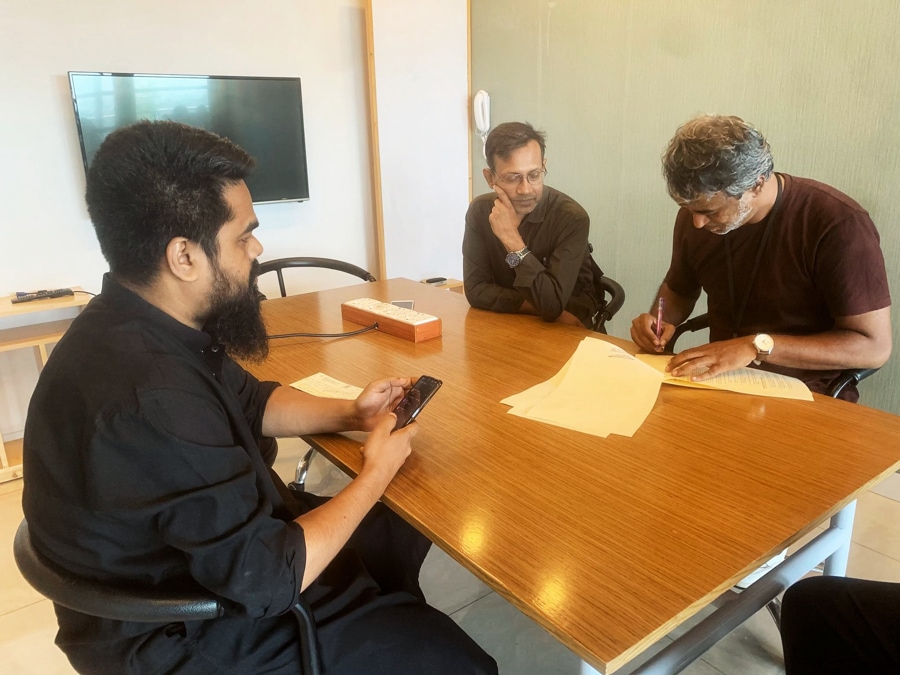
biniyog remains involved during the repayment period. The company communicates with businesses, tracks repayments and, when necessary, communicates developments to investors. This creates a different kind of financing relationship for a small business.
The capital comes with scrutiny. The business has to provide information. This comes with other second-order consequences. Its transactions become easier to track. Its financing history becomes part of the information available for future campaigns.
biniyog's current risk-grading system also makes repayment and business information visible to investors as part of the campaign information they use to make investment decisions. The platform explicitly says that its risk grade is an indicator of relative risk, not a guarantee of repayment.
For businesses, the same process can create a financing history.
A business that returns for another campaign brings its previous financing experience with it. The platform already knows something about the business. Investors can also see its previous campaign and repayment information. That can make subsequent financing different from the first.
Businesses that have raised funding through biniyog consistently mention four things about the relationship.
biniyog does not approve every business that applies to raise investment. Businesses with inconsistent revenue, governance problems surfaced during the site visit, assessment, and verification, or insufficient documentation are turned down. The rejection rate is meaningful. The platform has also declined businesses in industries it does not finance, regardless of financial profile.
As we noted above, the relationship does not end when the campaign closes. The team stays in regular contact throughout the repayment period. For businesses, this is useful. If a genuine problem arises — a buyer defaults, a shipment is delayed — there is a channel to communicate it early, document it properly, and have investor communication handled professionally.
Businesses that maintain cleaner accounts, such as bank-reconciled records, digital transaction trails, and documented supplier relationships, move through assessment faster and receive better risk grades. Better grades mean higher investor confidence, faster funding windows, and better terms on subsequent campaigns.
Second campaigns perform materially differently than the first. Repeat customers, businesses that raised investment more than once through biniyog, consistently mention that after one successful campaign, the assessment becomes faster as the team gets to know the business. The site visit is faster. The documentation review is more predictable. The campaign structures more quickly. The incremental effort per financing round drops significantly for businesses that maintain a clean repayment record.
In fact, it is worth mentioning how biniyog continues to evolve and maintains its credibility as it matures as a platform. For instance, its experiment with incentives. Businesses that repay on time and comply get rewarded through better terms and other benefits. Similarly, those who don't are penalized, such as being blacklisted, downgraded, etc.
At the same time, the platform continues to add more features to enable transparency so that investors can make informed decisions. For instance, investors can see the exact history of repayment of a particular business on the platform in the Repayment Insights section when they come back for a new round. It means a business with a not-so-good track record is unlikely to succeed in raising capital in future rounds as well.
Then comes the question of Shariah compliance and what it means for the businesses that raise capital through biniyog.
Most discussions frame Shariah-compliant financing as a constraint: fewer instruments, more processes, additional oversight. While some of that may be true, for businesses using biniyog, Shariah compliance also means certain upsides.
The investor pool. Bangladesh Bank data shows that deposits in Islamic banking have grown faster than conventional deposits for several consecutive years. A significant share of Bangladesh’s savings is held by people who prefer Shariah-compliant investment options to interest-based channels. It means a business that raises through biniyog accesses that pool. That is a large and structurally underserved pool of capital with few suitable homes.
The patience principle. Under Islamic finance principles, a financier cannot impose penalty interest on a business experiencing genuine, documented hardship. In practice, a verified supply chain disruption, a delayed buyer payment, or a force majeure event gets met with an extended schedule rather than compounding penalty charges.
For instance, the Russia-Ukraine commodity shock of 2022 affected several businesses in biniyog’s portfolio. The platform worked through those cases on extended timelines. Most were resolved in full repayment. A conventional lender would have imposed default interest through the same period.
Track record that transfers. The documentation and transparency requirements of biniyog’s assessment process also make a business more fundable by other sources over time. Businesses that complete multiple campaigns with clean repayment records are building a credit history and investment readiness. That documented track record has practical value in future financing conversations with banks, NBFIs, and development finance institutions.
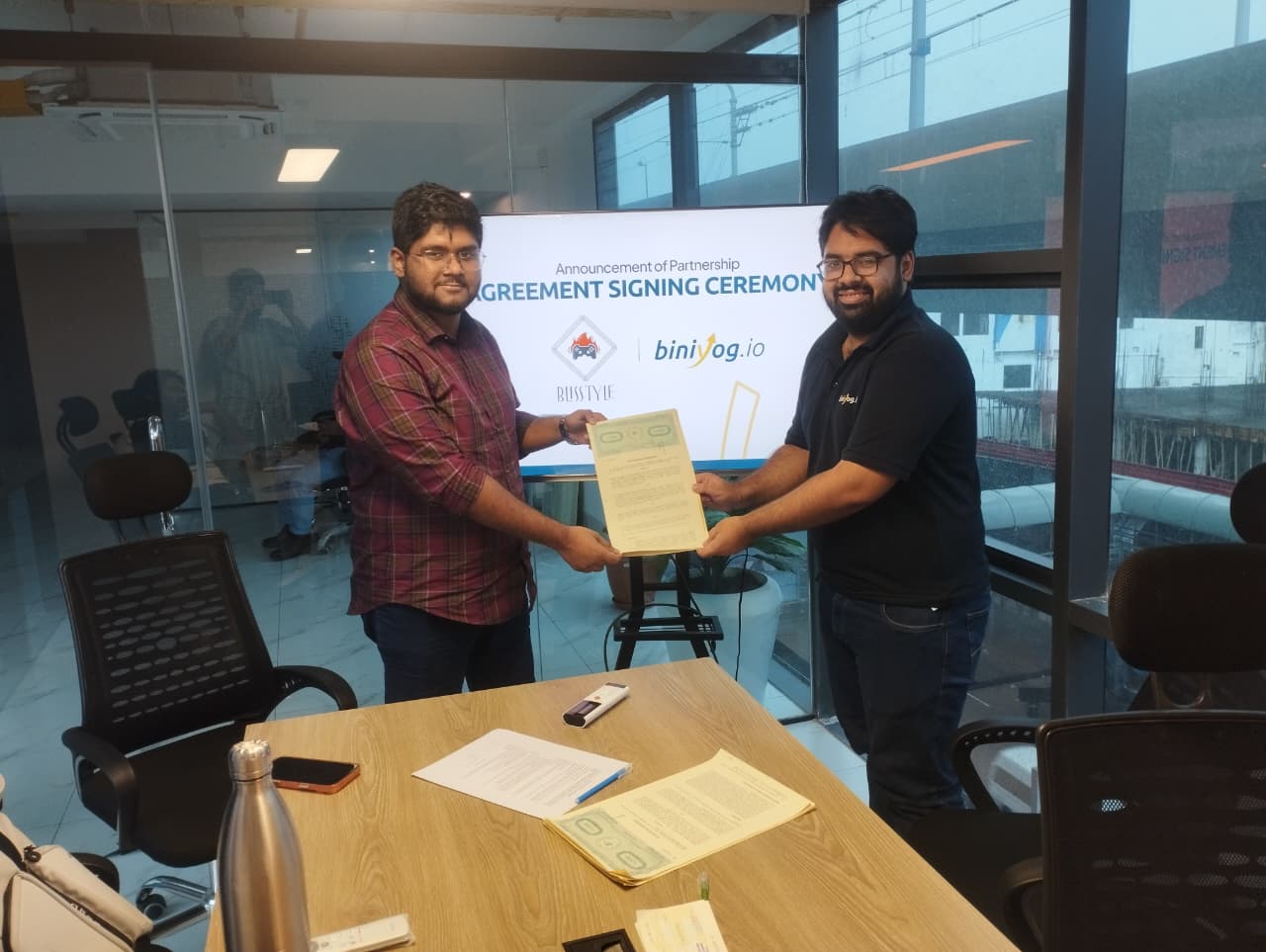
biniyog has grown considerably since its first campaign in 2021. The company reports that, at the time of writing this profile in September 2026, it has facilitated more than Tk 142 crore across nearly 430 financing campaigns involving more than 280 businesses, with more than 3,600 investors having used the platform.
The business has also evolved from manually assessing individual campaigns to building an assessment system around how small and medium businesses operate. That may ultimately be the more important part of the story.
The company has spent years collecting information about businesses: their bank statements, procurement cycles, repayment behaviour, supplier relationships and operational characteristics.
The challenge now is turning that accumulated knowledge into a system that can work at a greater scale.
A different piece of the financing market.
The earlier Future Startup profile identified assessment capacity as one of biniyog's constraints. Much of the company's early assessment process was manual, involving phone calls, site visits and document review. Its current risk-grading system shows how that process is becoming more structured. The company says its proprietary scoring engine now uses more than 40 assessment factors, while its analysts combine that output with business verification and qualitative analysis.
If biniyog can continue to improve that system, its value may eventually extend beyond simply matching individual investors with individual businesses.
It could become infrastructure for assessing and financing a much larger pool of businesses. That is the longer-term possibility.
For now, the story is: a business in Bangladesh can have customers, revenue, and a working business model and still struggle to obtain the specific working capital it needs. biniyog has built a product around that gap.
It does not replace banks or solve every SME financing problem. Instead, it offers a different financing mechanism: short-duration capital structured around a business's operating needs, without requiring conventional property collateral, and funded through a pool of investors looking for Shariah-compliant opportunities.
The businesses using it range from venture-backed companies to small seasonal operators. That range is perhaps the most useful way to understand what biniyog has built.
Applications go in at biniyog.io/apply. You’ll need your last twelve months of bank statements, recent supplier invoices and delivery records, trade licence, and identification. The team responds within two working days.
For the full context on how biniyog was built and what it has navigated, read our comprehensive company profile. For the halal compliance and investor safety infrastructure in detail, read our deep dive on Shariah compliance and investor protection. This piece is the missing third angle, where we look into whether the product actually works for businesses. The repeat customers are the clearest answer to that question.
Note: Business data is drawn from biniyog.io platform pages and self-reported company data. This is not financial or legal advice.