
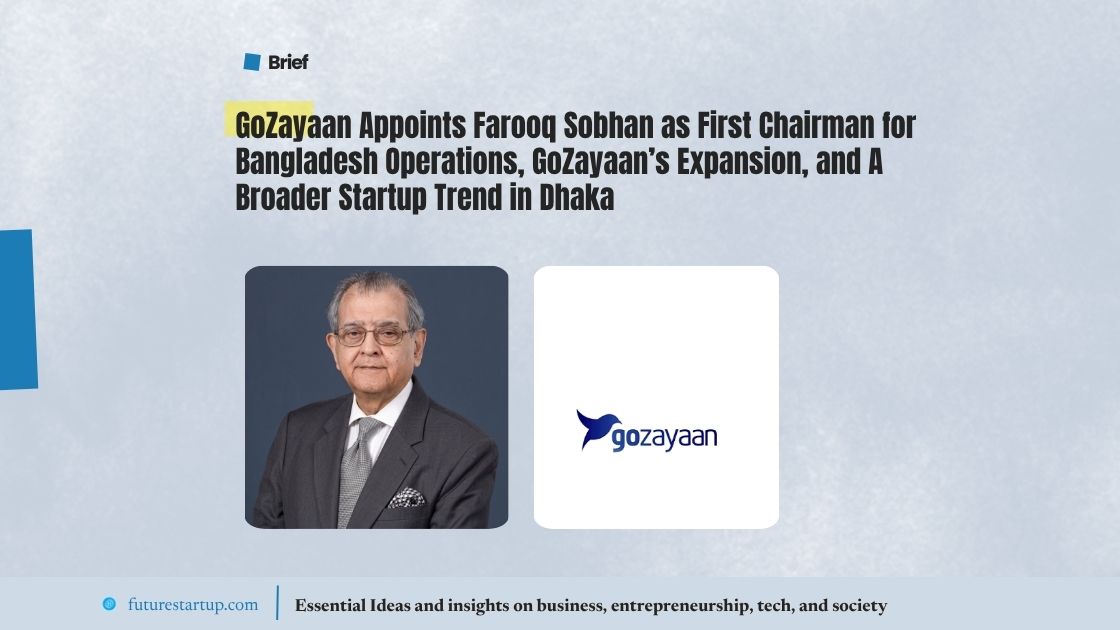
GoZayaan has appointed former foreign secretary Farooq Sobhan as the first chairman of its Bangladesh operations, bringing a veteran diplomat and policymaker into the leadership of one of Bangladesh's better-known travel-tech companies, first reported by TBS.
The appointment comes as GoZayaan expands beyond its original online travel business. The company is building Hometown, a platform for Bangladeshi expatriates that combines flight booking with remittance services. The product has seen an excellent response from Bangladeshi expatriates in markets like Singapore and is now looking at Malaysia and other markets with large Bangladeshi migrant populations.
Sobhan will provide strategic and governance oversight and advise the company on policy engagement, according to The Business Standard's report on the appointment.
The appointment offers a useful segue to have a quick look at where GoZayaan is today and why this is an interesting move on the part of GoZayaan.
GoZayaan began as an online travel company, primarily helping customers book flights and hotels. The company has since built a successful business in the travel vertical with a growing user base. It has also expanded its product offering and developed ambitions beyond Bangladesh.
As we noted above, one of its interesting recent moves has been Hometown. The idea came from looking closely at the lives of Bangladeshi migrant workers. In a 2025 interview with Future Startup, GoZayaan chief business officer Wafiul Haque described how the team spent months speaking with migrant workers in Singapore before developing the product.
Hometown started with flight booking for migrant workers, with intuitive design ideas and customized customer service that address the challenges migrant workers face in buying flight tickets. The company says it received an excellent response from the users. Remittances followed.
That combination of flight booking and remittances makes intuitive sense. Migrant workers travel home periodically, while sending money to their families more regularly. GoZayaan is trying to build a relationship with the customer around both activities.
The company has since built an excellent presence in Singapore, taken Hometown into Malaysia, and has talked about expanding into other markets with large populations of Bangladeshi migrant workers.
Apart from its travel tech platform, this gives GoZayaan an interesting international proposition following a customer group whose economic and personal lives already connect multiple countries.
The expansion also changes the nature of GoZayaan's business.
Travel booking is competitive but relatively familiar territory. Moreover, the company has built a leading position in the vertical in Bangladesh. Remittances bring banks, payment companies, licensing requirements, and regulators into the picture. Operating across several countries adds another layer of complexity. That makes institutional experience more valuable.
Sobhan spent decades in diplomacy and government. He served as Bangladesh's foreign secretary from 1995 to 1997 and later served as executive chairman of the Board of Investment. He has also served as the president and CEO of the Bangladesh Enterprise Institute, a private sector think tank. He currently chairs the governing bodies of SAJIDA Foundation and the CSR Centre, and is chairman of The Osiris Group, a private equity, advisory and consulting firm.
For GoZayaan, his value may therefore extend beyond the traditional responsibilities of a chairman. The company is increasingly operating in areas where understanding how to work with government, regulators, financial institutions and international partners matters. GoZayaan is no longer simply trying to build a popular consumer internet product. It is trying to build a cross-border business around Bangladeshi travellers and expatriates.
GoZayaan's appointment is also part of an emerging pattern among Bangladeshi startups. As startups grow, some are bringing veteran professionals from established industries and institutions into senior management and board roles.
ShopUp is an early example. In 2024, the company appointed veteran banker Mamun Rashid as president. His mandate included helping the company develop strategic partnerships, unlock new sources of capital and build organisational capability. Future Startup covered his appointment here.
PriyoShop has recently taken a similar approach as it has moved beyond its original marketplace proposition into B2B commerce, distribution and financial services.
The challenges of a startup change as it grows. The skills required change with the business. Early on, speed matters most. Founders need to find customers, build a product, and figure out whether people are willing to pay for it. As the company grows, building an organization becomes the more critical challenge./ The company may have to manage growing headcounts, increasing capital needs, institutional investors, regulators, strategic partners, and increasingly complex operations.
A veteran professional can bring operational expertise that a founder may lack. These people have spent years navigating institutions, managing large organizations, and dealing with problems that young companies are only beginning to encounter. This has been a common practice across the startup world, from the early days of Google or Dell in Silicon Valley to today’s GoZayaan in Dhaka.
For GoZayaan, Farooq Sobhan's appointment comes at a moment when the company is broadening its ambition. Hometown is taking it into remittances and expatriate services, while Malaysia offers a natural market for a business built around Bangladeshi migrant workers.
The company is therefore becoming more institutional at the same time as its business expands and becomes more complex. That may be the more important story behind the appointment.