
Bangladesh's digital advertising market has grown meaningfully over the last several years. A decade ago, most brands ran television spots, print ads, and the occasional billboard. Digital was an afterthought, a line item handled by a junior executive who understood Facebook better than the CMO did. That has changed completely. Every brand of any size now runs Meta campaigns, buys programmatic inventory, works with influencers, and reports monthly on impressions, clicks, and conversions. Digital marketing agencies have multiplied. Ad networks like Reachable, Adfinix, and Eskimi have built real businesses connecting advertisers to publisher inventory. Media buying budgets that used to sit entirely with TV channels now split across a dozen platforms.
But the infrastructure underneath that growth has lagged behind the spend. From a certain perspective, the industry has grown up fast without growing up properly.
Three problems keep showing up when you talk to people who buy or sell advertising in Bangladesh.
The first is fragmentation. A marketing head running campaigns across Meta, Google, a few ad networks, and a PR agency ends up with five different dashboards, five different reporting formats, and no single view of what actually worked.
The second is data trust. Numbers arrive from every platform, but very few of them are independently verified, and impression fraud, bot traffic, and inflated reach are open secrets nobody talks about on record.
The third is decision support. Reports tell you what happened. Almost nothing tells you what to do next. A brand can see that a campaign reached two million people, but translating that into "spend 20 percent more on this channel next quarter" still requires a human being to sit down, cross-reference spreadsheets, and guess.
None of this is unique to Bangladesh. But the country's ad-tech ecosystem is still young enough that these gaps are wide open rather than incrementally competed away, the way they might be in a market like India or Southeast Asia, where audience-builder platforms and unified measurement stacks are already several years into maturity.
That gap is where ViewSense, a newly launched Dhaka-based ad-tech company, wants to play.
ViewSense prefers to describe itself as a technology company rather than a media agency. Asked to introduce the company in one line, its co-founder and CEO Saidur Rahman Sagor says: "ViewSense is a technology company that provides solutions at the intersection of media, PR, and advertisement for clients in Bangladesh. We help our clients reach the right audience at the right moment."
Unpacking that introduction provides useful details. The company has an in-house ad-tech platform (an SSP and DSP it built itself), media buying across Meta, TikTok, YouTube, and Google's display network, and PR and influencer marketing. All wrapped around a stated ambition to bring data and AI into how brands make advertising decisions.
While ViewSense says it has been building a unique product that combines several things, the more important part of the story is the people behind it. The company's founders, Saidur Rahman Sagor and Tanvir Hashem Bhuiyan, are industry veterans with years of experience.
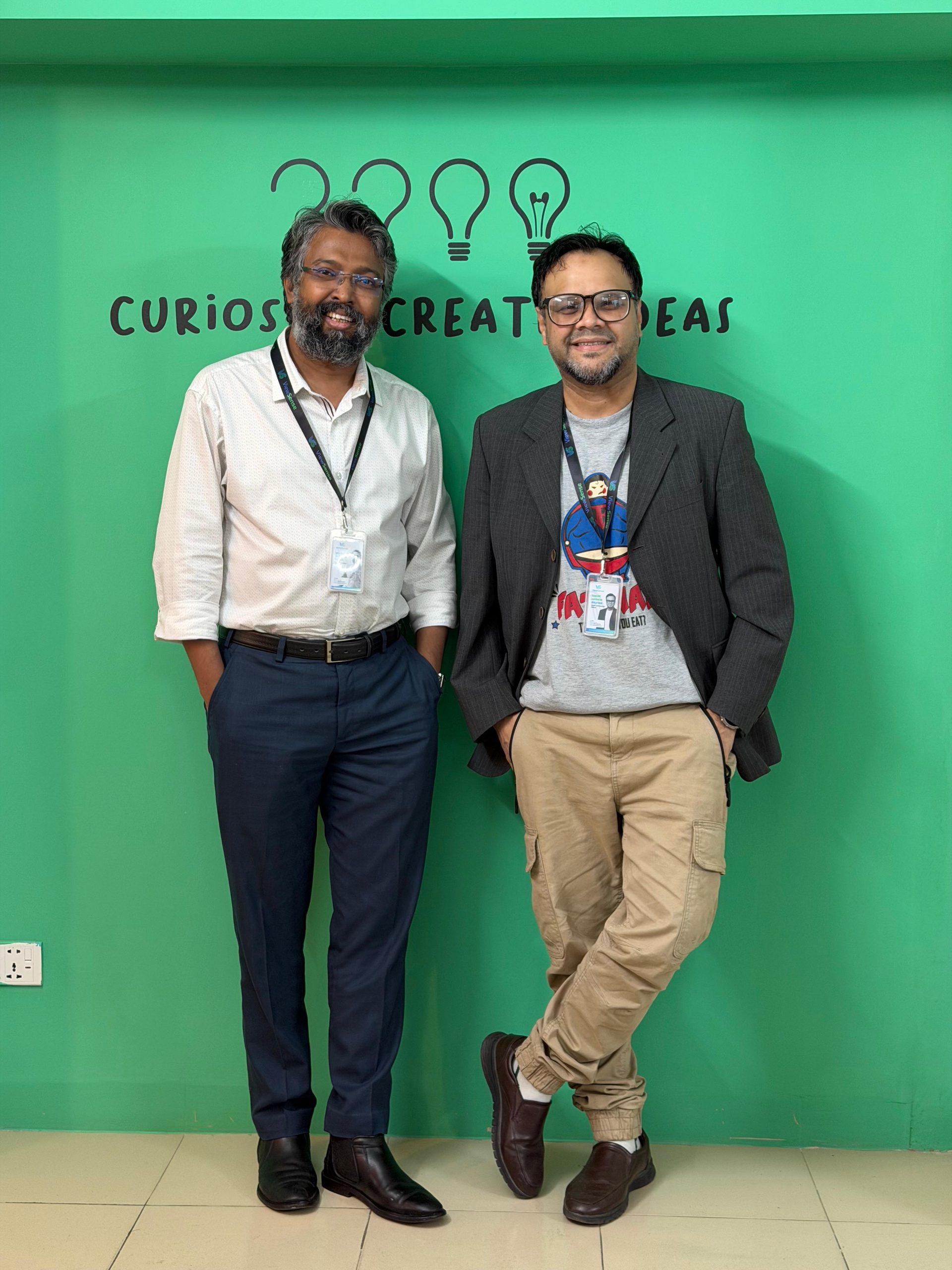
Sagor previously led Eskimi's Bangladesh operations and traces his roots back to G&R, one of the country's first ad-tech startups.
Tanvir, ViewSense's Chief Commercial Officer, has spent years in ad technology and media, including stints at multinational organizations. Between them, the founding team's experience runs from four years to close to two decades, as Tanvir put it: "the expertise of people in our team, minimum is four years and maximum for seventeen, eighteen years."
That experience plays an important role in how the company approaches both building its products and its business. For instance, while the official age of ViewSense is just a few months, its platform had been under development quietly for a long stretch before public launch. The founders waited until they were confident in the product. They also wanted to wait for a while after leaving their previous roles before starting operations, specifically to avoid any conflict of interest in a market where everyone knows everyone.
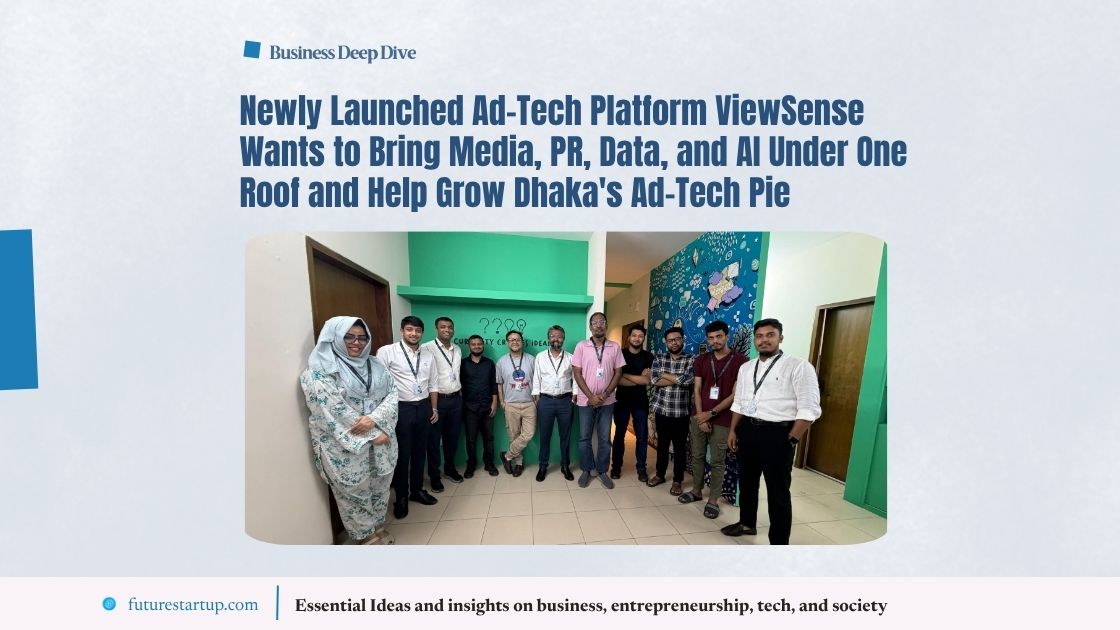
By the time of this conversation, ViewSense had been operating for just a few months. In that short window, it had already assembled a team of roughly sixteen full-time people (about twenty including remote contributors) and onboarded three to four clients, including at least two big-name local and multinational corporations. That is hardly a typical early-stage trajectory. It is the trajectory of founders who spent years building relationships before they built the company, and are now cashing in years of trust in a matter of weeks.
In 2026, you can’t claim ad-tech is something particularly fascinating. Moreover, Bangladesh already has ad-tech companies. Then it is logical to ask what makes ViewSense interesting. Part of the answer to that question comes from the specific bet the company is making about where value in ad-tech gets created next.
Most digital advertising conversations in Bangladesh, and frankly in many markets, are still organized around buying more efficiently: better targeting, lower cost per click, more inventory. While ViewSense's founders talk about that too, they frame the decisions rather than transactions as the most important question. As Sagor put it, the real pain point isn't a shortage of data; it's what happens after the data arrives: "you can actually gather a lot of data to run better analysis and make better decisions, I think that this is a pain point for everyone until now."
They argue that the market has plenty of data and not enough judgment sitting on top of it, and that the next competitive edge in Bangladeshi advertising will belong to whoever can turn a marketing head's messy pile of dashboards into an actual recommendation about the next best action. "Data is no longer a sole limitation," Sagor says, "but from the data, now we are helping to make the decision, so that making the right decisions is easier."
That means it is not about media spend alone; it is also about infrastructure. A bet that will likely take years to prove out, because building trustworthy AI-driven decision support on top of messy, multi-platform data is a genuinely hard engineering and product problem.
The founders seem to be aware of this. Their own timeline for the more ambitious parts of the product runs to 2027 and 2028, which is honest for a company that could easily have oversold "AI-powered everything" on day one.
ViewSense was not built overnight. The founders describe years of groundwork behind the scenes before the company took its current shape. That gestation period matters for understanding the product itself, which is really three layers stacked on top of each other rather than one single offering.
The base layer is ViewSense's own advertising technology platform, functioning as both a supply-side platform (SSP) and a demand-side platform (DSP).
On the supply side, the company places code directly on publisher properties, giving it inventory it can sell into.
On the demand side, it connects to ad exchanges, letting it buy inventory across a broad swathe of apps and websites in Bangladesh and beyond.
Sagor described the mechanics: "some ad exchanges are connected to my product on this platform, and at the same time, we actually provide a code directly to the publisher as well, through which we can place my ads on the publisher's placement, alongside we can show ads through the ad exchange." This is the part of ViewSense that looks most like a conventional ad-tech company, and it is the foundation the rest of the business sits on.
The second layer is a media buying and communications practice layered on top of that foundation. ViewSense buys media directly on Meta, TikTok, YouTube, and Google's Display Network, and pairs that with PR, media relations, and influencer marketing.
The company's strategic team decides, campaign by campaign, whether a client's budget should flow through ViewSense's own SSP/DSP, through one of the major ad platforms, or through some blend of the two. The reasoning, according to Sagor, is a simple observation about how clients actually think: "the client actually doesn’t merely want to buy media with ad-tech or SSP DSP, what they really want is to reach an audience. It means, in many instances, they need a blended service to reach their audience wherever they are." This is meaningful. An advertiser rarely frames their problem as "an SSP problem." They think about reaching an audience within a budget, and the channel is just a means to that end. ViewSense team believes that they should be able to cater to this need as well.
The third layer, still under construction, is where the company's real ambition lives: a unified dashboard that would let a client see performance across ViewSense's own platform alongside Meta, YouTube, and Google Display Network results in one place, with AI-generated analysis sitting on top rather than a raw feed of numbers.
Today, that unification happens manually. Asked directly whether a client can already see this in one place, Sagor was candid: "This we are working on, yes, we are working on the single view. But right now we make a customized report which, on the backend, our team analyzes and creates a report for the client. But in the future, the client will be able to see this on his dashboard with one click."
A fourth piece worth naming separately is the influencer marketing infrastructure. ViewSense wants to eventually build a platform where individual content creators can connect their various channels and give brands a single view of an influencer's reach and performance across all of them, the same logic it applies to publishers, just pointed at people instead of properties.
This is early and unbuilt, but it signals where the company thinks the market is heading: toward treating every source of reach, whether a publisher, a platform, or a person, as a node that can be measured, verified, and optimized against.
Structurally, ViewSense functions more like a hybrid agency-and-platform, which is, as we can see from the above analysis, a deliberate choice rather than an accident of early-stage messiness. Clients come in with a communications goal and a budget. ViewSense's strategy team decides where that budget should flow, blending its own ad-tech platform with direct buys on Meta, TikTok, and Google, plus PR and influencer work where relevant.
Revenue, in other words, comes from a mix of platform-based media buying margins and service fees on the agency side, rather than from a single software subscription.
The sixteen-person core team spans engineering, ad operations, strategy and planning, a commercial team focused on sales, and administration and finance, with another handful of people contributing remotely to round the total out to around twenty.
The founders describe a deliberate choice to blend senior industry veterans with younger, less experienced hires. Sagor framed it as a two-way exchange: "we have seen that we are always learning from our young teammates, because they are very innovative and more in touch with the world today."
Tanvir, in particular, frames this as a cultural project as much as a staffing one, built around a promise made to every new hire: "everyone's induction or introduction when we do it with the company, we say you will get a good culture, there is no boss culture." He connects this directly to a generational anxiety he sees in the market, where young Bangladeshi talent is unsure whether to bet on a corporate job, freelancing, or leaving the country altogether: "Gen Z actually are in a lot of confusion about their career, whether they should pursue a career in ad-tech, technology, AI, or freelancing. We are telling those talents, you come here, you will get a global taste."
While early clients include local conglomerates and multinationals, the company says one of the core segments it aims to serve is the small and mid-sized businesses that, in the founders' view, are currently priced or complexity-gated out of sophisticated media buying and ad-tech.
Sagor described SMEs as a genuine gap rather than an afterthought: " there is a gap in the market when it comes to ad-tech solutions for SMEs in the market. So that is a big target group we want to serve along with large companies."
That ambition is worth watching. Most of the credibility and case studies in year one will come from large, recognizable brands. But if ViewSense's economics genuinely work at a smaller budget size, it opens a much larger and currently underserved segment of the market—businesses that want targeted digital reach but cannot justify a full agency retainer.
ViewSense is entering a field that already has real players. Eskimi, Adfinix, and Reachable all operate in Bangladesh's ad-tech and ad-network space, and ViewSense's own co-founder built part of his career at one of them. Notably, the founders decline to frame these companies as competitors in the usual sense. Sagor was explicit about this: "we don’t see other players in the market as competitors. We think the market is still in its early stage and there are a lot of rooms for growth. We believe together we can help the pie get better than merely."
Tanvir's framing of the underlying economics is clarifying: "The media market is always actually revolving around 100 taka, and nobody is focusing on making it get 150 taka. Everything is focused on this 100 taka. Previously three people together used to divide that 100 taka, now 10 people do so. We want to help make this pie bigger to 150 or 110, at least."
Whether or not that framing survives contact with the competitive pressure once ViewSense starts winning or losing client budgets to Eskimi or Adfinix, it is a coherent thesis. If AI-assisted targeting and verified data genuinely reduce wastage and improve outcomes, the total value clients get from a fixed advertising budget should rise, which in turn should make brands willing to spend more, which grows the pie for everyone selling into it, ViewSense included.
The company's stated competitive advantage rests on two claims: data accuracy, backed by third-party verification tools like Integral Ad Science and Moat, and a genuinely end-to-end use of AI and machine learning across its ad-tech stack, from predictive audience analysis to eventual campaign automation.
On the first, Sagor says: "We can say this confidently that our data is accurate because we are using various data verification tools for this, like IAS or Moat." Both claims are plausible and, at this stage, essentially unverifiable from the outside. Verification tooling is table stakes in more mature ad-tech markets, and its presence in Bangladesh is a real signal of intent, but "our data is more accurate" is also the single easiest claim for any ad-tech company to make and the hardest one for a client to check independently. The real test will be whether ViewSense's reported numbers hold up against a brand's own attribution over a full year of campaigns, not what the company claims itself.
The bigger structural challenge is timing. The founders are candid that some of the technology they are building might be ahead of what Bangladeshi clients are ready to buy. Tanvir explains: "We have partnered with some such technologies that, if we implement right now in Bangladesh, the market is not ready to adapt." He describes the gap in demand: "At this moment, people know I need AI, but if you ask what you need the AI for, there is a lack of clarity around that question."
That is a rather disciplined position for a young company to take publicly, resisting the urge to lead with the flashiest capability before the market has a real use for it. It also means ViewSense's near-term business will look, to most clients, like a well-run media buying and ad-tech shop with better reporting, not like the AI-native decision engine the founders eventually want to build.
However, executing well on that less glamorous version, consistently, for two or three years, is the actual test the company faces before its bigger ambition gets to matter.
Step back from ViewSense specifically, and the company is a useful marker for where Bangladesh's digital economy sits right now.
The country has enough advertising spend, enough platform sophistication, and enough experienced operators to support a genuine ad-tech layer, not just agencies re-selling Meta and Google inventory with a markup. That is meaningful progress.
Five years ago, a company positioning itself as "technology first, media second" in this market would have struggled to find clients who understood the difference. Today, ViewSense can walk into a conversation with a CMO who already knows what an SSP is and already suspects, correctly, that the reports arriving on their desk each month don't add up to a decision.
At the same time, the honesty in this conversation about market readiness, about the gap between "I need AI" and "I know what I need from AI," is a useful corrective for anyone building technology products for Bangladesh right now, in advertising or otherwise.
The country's appetite for AI as a concept has run well ahead of its ability to specify what problem AI should solve for a given business.
One implication is that companies that win in that environment are not necessarily the ones with the most advanced technology. They are the ones patient enough to sell the boring, trustworthy version of the product first, earn the right to be believed, and only then introduce the harder, more automated version once clients have a concrete reason to want it.
That is the quieter lesson sitting underneath ViewSense's launch. Its founders are veterans who spent years inside the market before deciding what to build. They waited to avoid conflicts of interest before starting. And they are now sequencing a genuinely ambitious AI roadmap behind a more conventional media and ad-tech business that clients already understand how to buy.
Whether ViewSense succeeds will depend on execution most early-stage companies fail to get right: verified data that actually holds up, a unified dashboard that actually ships, and AI recommendations that actually improve decisions. But the strategic sequencing of the ViewSense team is pragmatic. Take a patient, relationship-first approach where you under-promise on the AI story in year one so that you gain the trust of the market. Done tight, it makes sense as a more useful template for Bangladeshi founders to build than most of what gets celebrated in the market right now.
Note: This piece draws on a Future Startup interview with ViewSense's founders and the company's public website.