
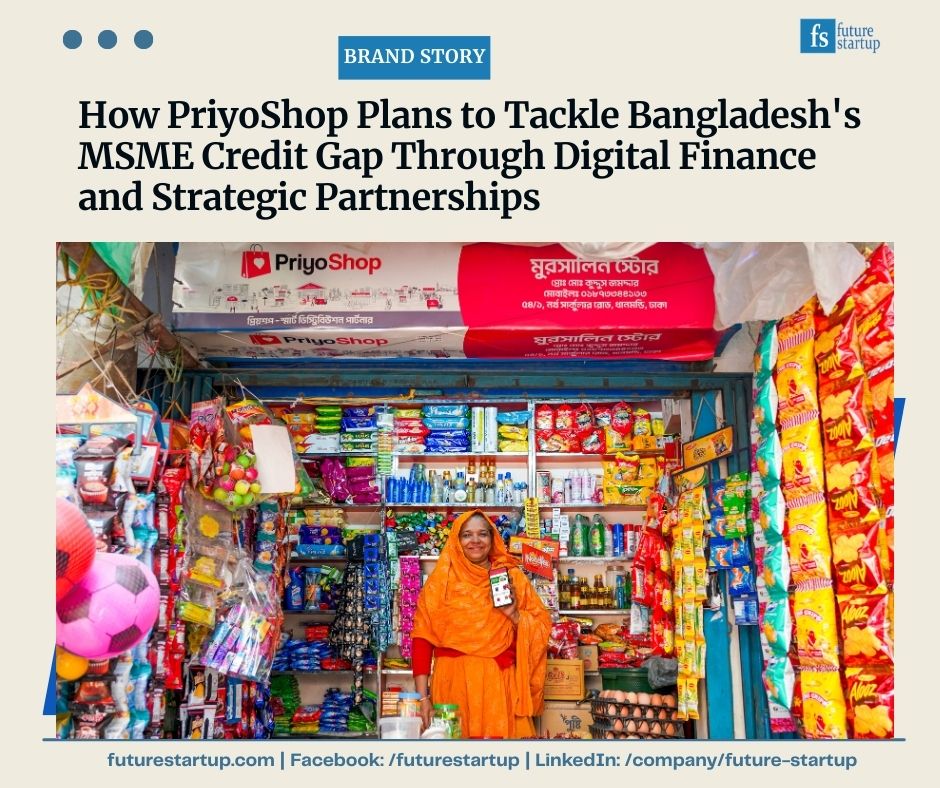
PriyoShop has launched three major financial partnerships in 2024-2025 that aim to expand credit access for Bangladesh's micro-retailers: a co-branded CMSME credit card with LankaBangla Finance and Mastercard, an embedded lending initiative with BRAC Bank's Shafollo platform, and the country's first AI-powered credit scoring system with Community Bank and InsightGenie.
These partnerships target a $3.5 billion credit gap affecting over five million retailers who have historically been excluded from formal banking.
The B2B marketplace, which claims to have achieved operational profitability in May 2025, now serves nearly 2 lakh active retailers across 103 thanas, according to the company.
By integrating financial services directly into its commerce platform, PriyoShop claims it is creating digital footprints that make previously unbankable retailers eligible for formal credit, with the company reporting that platform users are three times more likely to secure bank loans compared to non-digitized counterparts.
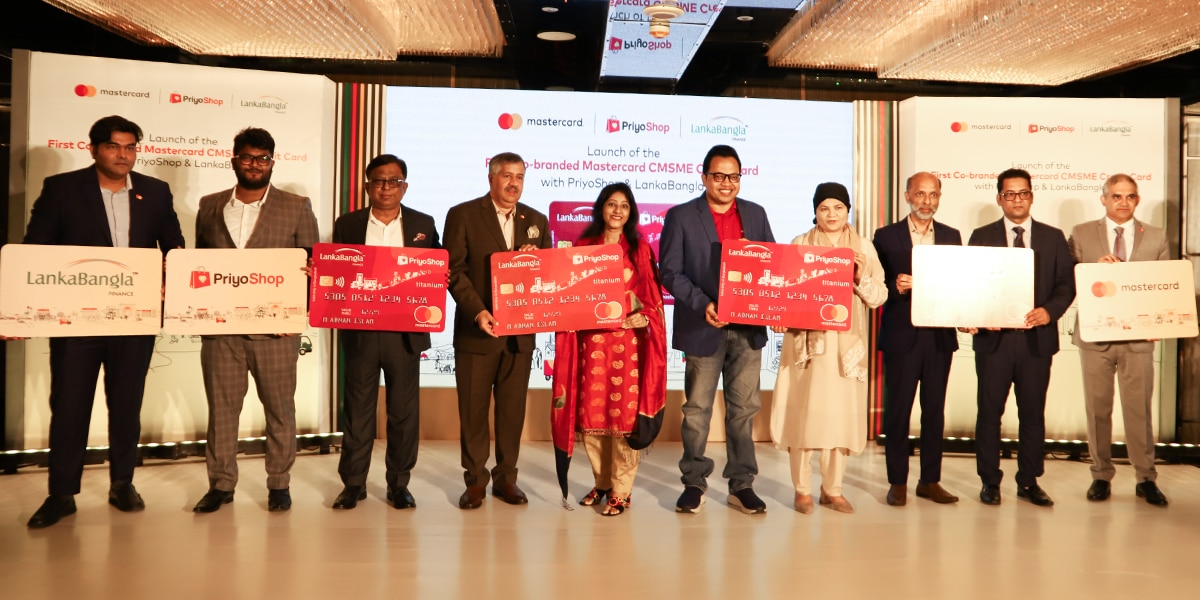
The LankaBangla-Mastercard CMSME Card, launched in September 2024, became Bangladesh's first co-branded credit card for micro-retailers, according to the partners. The product won the Mastercard Excellence Award 2024 in the Innovation category and enables over 5,000 merchants to process digital payments while building formal credit history, the company says.
For retailers who have never held formal credit, the card is designed to provide working capital flexibility and an alternative to predatory informal lending.
The BRAC Bank partnership, formalized in June 2025, integrates Shafollo's digital lending platform directly into PriyoShop's ecosystem. Merchants can discover, apply for, and receive loans without leaving the platform they use daily for inventory orders. "By embedding digitally processed lending into PriyoShop's ecosystem, we are removing friction and expanding access to formal credit for micro merchants nationwide," said Syed Abdul Momen, Additional Managing Director and Head of SME Banking at BRAC Bank.
The Community Bank-InsightGenie AI system, launched in August 2025, represents what the partners describe as a departure from traditional lending. The AI model uses demographic data, purchase patterns, psychometric insights, and behavioral analytics to assess creditworthiness—eliminating the need for collateral or extensive documentation, according to the companies. Retailers can access flexible credit facilities of up to $500 for one to three months through a seamless eKYC process.
According to World Bank estimates, MSMEs in Bangladesh face a credit gap of $3.5 billion. In Bangladesh's retail landscape, over five million micro-retailers power 97% of the country's retail transactions. These neighborhood shops—the mudir dokans on every street corner—form the backbone of a $200 billion retail economy. Yet they've operated in the shadows of formal finance for decades, trapped between informal moneylenders charging exorbitant rates and banks demanding collateral they don't possess.
With 11.8 million MSME entrepreneurs in Bangladesh, the challenge extends far beyond PriyoShop's current reach. Without a formal credit history, small retailers can't access capital to grow; without growth, they remain vulnerable to cash flow shocks and unable to optimize inventory. Traditional supply chains compound these challenges—multiple intermediaries mean higher costs, inconsistent pricing, and unpredictable delivery.
"The micro and small shopkeepers powering our economy deserve the same opportunities as large businesses," says Asikul Alam Khan, Founder and CEO of PriyoShop.
There are several reasons why embedded finance might be the response to the growing MSME credit gap challenges.
First, data advantage. The common thread across all three partnerships discussed above is data. PriyoShop's position as the primary commerce platform for its retailers gives it visibility into business performance that traditional lenders typically lack, the company argues.
Every order reveals inventory velocity. Payment timing indicates cash flow patterns. Product mix shows business sophistication. Response to promotions demonstrates market awareness. This behavioral data, PriyoShop says, creates a more accurate picture of business health and creditworthiness than traditional balance sheets or credit scores.
Financial institutions partnering with PriyoShop can potentially offer credit to borrowers who appear risky by conventional metrics but whose digital behavior demonstrates reliability. They can set loan terms that match actual business cycles rather than forcing standardized repayment schedules. They can intervene early when warning signs appear, protecting both borrower and lender.
The company reports early validation of this approach. MSMEs using PriyoShop are reportedly three times more likely to secure formal bank loans compared to their non-digitized counterparts, according to PriyoShop's data.
This data-driven approach addresses what many consider banking's thorniest problem: the high cost of serving small-ticket loans. By automating assessment and integrating loan products into existing workflows, PriyoShop claims to dramatically reduce acquisition and servicing costs. What's unprofitable as a standalone product may become viable when embedded in a platform retailers use daily, the company suggests.
Traditional banks struggle to justify the operational expenses of processing a $500 loan. PriyoShop's model attempts to turn this equation around. The commerce platform generates revenue from transactions while creating the credit assessment infrastructure. Financial institutions access a pre-qualified customer base with rich behavioral data, minimal acquisition costs, and digital-first servicing—at least in theory.
Third, for retailers who have operated in the informal economy for generations, PriyoShop aims to provide the digital identity that makes them visible to the formal financial system as viable business partners with demonstrable track records. "We are not just facilitating commerce; we are creating economic identities," Asik asserts. Digital transactions are trackable, building the transactional history that supports everything from tax compliance to larger loan applications.
Finally, PriyoShop's approach involves building a comprehensive infrastructure rather than offering isolated financial products. The platform addresses multiple pain points in the MSME value chain: sourcing, logistics, payments, and financing.
Currently serving nearly 2 lakh active retailers across 1,320 delivery routes and partnering with 280 brands, including 190 exclusive relationships, according to the company, PriyoShop has created a network it believes is dense enough to generate meaningful behavioral data. While the platform is digital, the company operates its own hubs to ensure reliable next-day delivery even in areas where third-party logistics are unreliable.
Integrating WhatsApp addresses digital literacy barriers. Rather than requiring retailers to master a new app, PriyoShop meets them on a platform they already use daily. This accommodation of ground realities, the company suggests, separates successful emerging market platforms from those that impose assumptions that may not fit local contexts.
The willingness of established banks like BRAC Bank and innovative players like Community Bank to partner with PriyoShop suggests growing recognition that platform-based lending may represent the future of MSME finance. This reflects what some observers view as a broader shift within Bangladesh's banking sector: reaching MSMEs requires meeting them where they already operate, rather than expecting them to navigate unfamiliar institutional processes.
The company's earlier partnership with Prime Bank, established in 2020 to provide collateral-free MSME loans up to Tk 50 lakh, laid the groundwork for this ecosystem approach. Each subsequent partnership adds another capability, another service, another reason for retailers to deepen their engagement with the platform.
PriyoShop's reported achievement of operational profitability in May 2025 suggests that financial inclusion can be commercially sustainable. The company reports maintaining a 30% quarter-on-quarter growth rate while serving increasingly remote areas—what it sees as evidence that the model works even as it scales.
"This milestone is more than just a financial metric—it is a validation of our team's discipline, resilience, and the pressing need for scalable, inclusive retail solutions in emerging markets," Asik reflected.
Training and support play crucial roles in the model. PriyoShop doesn't just provide financial products—it educates retailers on how to use them effectively. Understanding credit terms, managing repayment schedules, leveraging digital payments: these require skills that can't be assumed. The company's investment in capacity building aims to ensure that access to finance translates into improved business outcomes rather than debt traps.
Despite progress to date, significant challenges remain. Digital literacy varies enormously across PriyoShop's user base. Entrenched interests—the traditional middlemen who benefit from supply chain inefficiencies—may resist disruption. Regulatory frameworks designed for traditional banking don't always accommodate innovative embedded finance models.
Even a platform serving nearly 2 lakh MSMEs addresses only a fraction of the 11.8 million MSME entrepreneurs in Bangladesh. Scaling while maintaining credit quality and operational efficiency will test whether the model can work at a significantly larger scale.
Asik acknowledges these challenges while maintaining ambitious goals: expanding to serve one million MSMEs, entering new verticals beyond FMCG into categories like electronics and pharmaceuticals, and potentially extending the model to other South Asian and Southeast Asian markets where similar structural problems exist.
Each expansion requires adapting the model to new contexts—different supply chain structures, different retailer needs, different regulatory environments. The embedded finance approach must prove flexible enough to accommodate this variation while maintaining the data quality that makes smart lending possible.
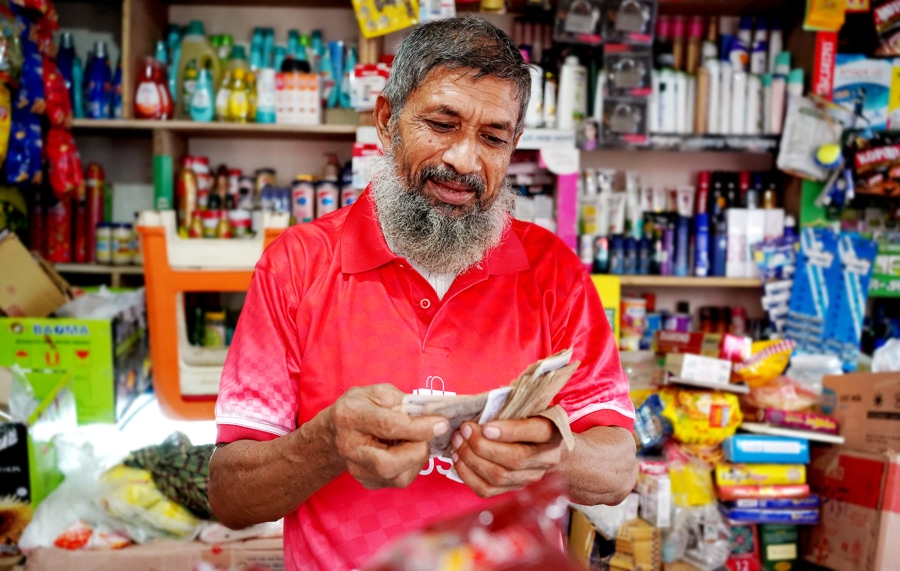
Globally, 1.4 billion adults lack access to formal financial services, with small business owners disproportionately affected. Technology promises solutions, but too often those solutions fail to account for the complex realities of informal economies.
PriyoShop's approach—comprehensive, data-driven, partnership-oriented—represents one attempt at a path forward. By embedding financial services within commerce platforms that deliver immediate, tangible value, the company aims to make inclusion a byproduct of business growth rather than a separate initiative requiring sacrifice.
The partnerships with LankaBangla-Mastercard, BRAC Bank, and Community Bank-InsightGenie represent successive generations of sophistication. From basic credit cards to embedded lending platforms to AI-powered scoring, each innovation attempts to expand who can access formal finance and on what terms.
As PriyoShop continues expanding—both geographically and across product categories—its influence on Bangladesh's retail and financial ecosystems will likely grow. The company's success or failure in the coming years will test whether embedded finance can truly bridge the MSME credit gap at scale, or whether structural barriers will ultimately constrain even innovative approaches.
For the millions of retailers who have built Bangladesh's retail economy from the bottom up, working long hours for modest returns while excluded from financial tools that could transform their businesses, PriyoShop represents one attempt at practical solutions.
Whether this chapter becomes a turning point or a footnote will depend on execution, scale, and the willingness of the broader ecosystem to support alternative approaches to financial inclusion.