
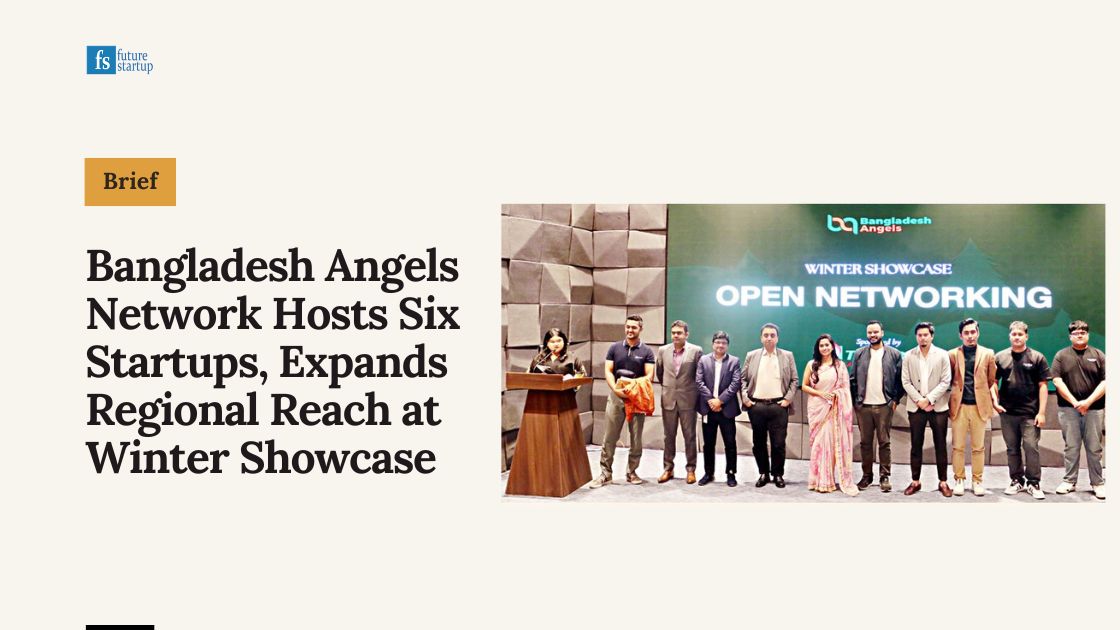
Bangladesh Angels Network, the Dhaka-based network of angel investors, held its Winter Showcase 2025—its eighth Startup Showcase—on December 6th at IUB Auditorium in Bashundhara, bringing together investors, founders, and ecosystem stakeholders. Six startups across pre-seed, seed, and angel stages—four from Bangladesh and two from Pakistan—pitched, marking BAN's most explicit move yet toward regional dealflow curation.
The event stood out in what has been a notably quiet period for Bangladesh's startup ecosystem. Dealflow has slowed, investor activity has been muted, and ecosystem events have been sparse. Against that backdrop, a well-attended showcase with cross-border participation and substantial programming felt like a welcome exception.
The event featured KalPay and Paymo from Pakistan alongside Bangladesh-based WeGro Global, Palki Motors, Dodoza, and Localoy.
Three fireside conversations with founders of BAN-backed companies—Jatri, Airwork, and Nuport—complemented the pitches.
Trust Bank sponsored the event, with Senior Vice President and Head of SME Sadat Ahmed Khan speaking on his bank’s desire to support early-stage innovation and the SME sector in the country.
The dealflow and operator insights
The Pakistani startups brought fintech solutions. KalPay, at seed stage, is building Shariah-compliant digital lending for installment financing across gadgets, education, and travel.
Paymo, in pre-seed, is developing an engagement-first digital banking app targeting younger demographics.
Bangladeshi companies covered four sectors. WeGro Global, raising seed capital, operates an agri-financing and supply-chain platform deploying structured capital to farmers.
Palki Motors, also at seed stage, manufactures electric three-wheelers and light commercial EVs for urban transport.
Dodoza, in pre-seed, connects amateur athletes with teammates and venue bookings.
Localoy, at angel stage, uses AI to power a city discovery app with real-time feeds for events and local services.
The stage breakdown—two pre-seed, three seed, one angel—gave investors exposure across the early-stage spectrum, while sector diversity spanned fintech, agriculture, mobility, sports tech, and urban discovery. This breadth reflects a more mature founder landscape than Bangladesh showed even two years ago, when ecosystem activity clustered heavily around ride-hailing, food delivery, and e-commerce. However, it also felt that Dhaka needs more savvy operators and more startups tackling more substantial problems.
The showcase also featured three fireside chats, featuring founders whose companies BAN had previously backed. Khaled Hasan, now lead corporate finance at Jatri, discussed financial discipline and regulatory navigation in mobility. Sayem Faruk, CEO of Airwork, spoke about integrating AI and automation from inception. Fahim Salam, CEO of Nuport, covered building vertically integrated supply-chain technology and managing enterprise sales cycles.
These sessions were tactical rather than aspirational, providing investors with useful benchmarks for evaluating similar companies in the pipeline and meaningful insights for founders building in emerging markets.
The BAN context
BAN CEO Ivy Huq Russell highlighted recent momentum in the network's portfolio, specifically noting PulseTech's recent $3 million raise. The reference underscored that despite broader market challenges, some companies continue to close rounds and demonstrate traction.
BAN now has 51 portfolio companies, including notable names like Pathao, Jatri, Chaldal, and Nuport. The network has facilitated over $11.7 million in direct funding and has co-invested alongside regional and international partners including Sequoia Capital, Accelerating Asia, SOSV Green Bridge Capital, and Startup Bangladesh. That co-investment track record signals that BAN's deal selection is credible enough for institutional capital to follow.
The network operates in collaboration with institutional partners including Trust Bank and UCB Investments, giving it deeper connections to traditional finance than many angel networks typically maintain.
The other important aspect of the showcase was the inclusion of two Pakistani startups—a third of the program. It signals BAN's regional ambitions. The network has been talking about a regional ambition for some time. The showcase was a follow through of that. This positioning expands the investable universe for its members, creates comparative context across South Asian markets, and positions BAN as a potential platform for international capital seeking early-stage exposure in the region.
However, the approach comes with potential challenges. Can BAN source consistently strong dealflow from Pakistan? Can it provide value to founders outside its home market where its network is thinner? Can it convince investors that multi-country deployment makes sense at the angel stage? The answers will emerge as BAN either doubles down on this strategy or pulls back. If successful, BAN could attract more international capital to the region, potentially benefiting Bangladesh companies even as it backs regional startups.
The engagement of partners like Trust Bank reflect traditional financial institutions engaging more seriously with startups. Bangladesh has seen limited meaningful bank-startup partnerships compared to more mature markets. Whether this engagement leads to concrete collaboration or remains at the sponsorship level will indicate how seriously traditional finance is taking the sector.
Looking forward
The Winter Showcase wasn't large, but it was well thoughtout—clear programming, logical structure, strategic positioning. It indicates BAN as an institution has been growing, and more importantly, suggests that the foundation-building work continues regardless of market cycle.
The broader startup landscape has been challenging. Globally, venture funding has contracted significantly from 2021-2022 peaks. In Bangladesh, that contraction has been felt acutely—fewer deals closing, longer fundraising timelines, more cautious investor behavior. Events like the Winter Showcase matter in this context because they maintain rhythm and momentum. They keep investors engaged with dealflow, keep founders connected to capital and the community, and signal that the ecosystem remains active even when headline funding numbers are down.
For founders, the rising bar means better preparation is necessary. The investors in that room have now seen hundreds of pitches and are getting better at distinguishing storytelling from traction. In a slower market, that scrutiny intensifies and investors can afford to be more selective. For investors, six investable opportunities with stage and sector diversity, plus context on post-investment realities through the fireside conversations. And BAN's curation quality matters because it affects investor behavior. If investors consistently see strong deals, they'll keep showing up and deploying capital, even when the broader market is soft.
The event delivered what it promised: curated dealflow, cross-border representation, and institutional depth. Whether this translates into actual capital deployment into these six companies remains to be seen. What's clearer is BAN's strategic direction: building toward a regional platform, maintaining curation quality while expanding geography, and investing in community building alongside direct dealflow.
The Winter Showcase won't single-handedly revive Bangladesh's startup ecosystem. But it demonstrates that even in slow markets, the work of building infrastructure, connecting capital to founders, and maintaining institutional quality can continue. In a period when many ecosystem players have pulled back or gone quiet, BAN's continued activity and execution is a good sign.
Update on December 7th at 11:30 PM: BAN has facilitated over $11.7 million in direct funding over the years. We previously put that at $1.7 million mistakenly. It has been been updated.