
How a Bangladeshi-Canadian founder is bringing structure, trust, and professionalism to an unorganized industry
In 2020, while Tanveer Rahman was working at TD Bank in Toronto, his father began searching for a match for him back in Dhaka. What should have been straightforward quickly became frustrating.
"Ghotoks took money and disappeared. Others sent biodatas that made no sense—no compatibility with my background, nothing," Tanveer recalls. "I searched for a proper agency, a reliable brand, something corporate. There wasn't one. Not a single trustworthy name in the entire industry."
If a relatively informed, well-resourced family found the process this difficult, the broader trust gap in the market was clearly serious.
"I realized that even families with strong intent and decent judgment were being forced to make life's single most important decision through an unreliable process."
That experience became the seed for Saiyonee, a Dhaka-based matchmaking consultancy working to build what the category has long lacked: a trusted, structured, and professional approach to arranged marriage.
Contrary to what popular media might suggest, arranged marriage remains deeply relevant in Bangladesh. Even among educated urban families, roughly two-thirds of marriages are still arranged. But the infrastructure supporting those arrangements is broken.
Historically, arranged marriages worked through close-knit community networks. In the villages and smaller cities where most Bangladeshis lived through the 1980s and 1990s, neighborhood elders and extended family facilitated matches. Trust came from long-standing relationships.
As Bangladesh urbanizes, those systems have weakened. The urban population has grown from 48 million in 2011 to over 75 million today. In Dhaka, where a third of urban Bangladeshis live, families are more nuclear, more mobile, and disconnected from the networks that once helped arrange marriages.
"In the past, neighborhood elders would help, but that dynamic is gone," Tanveer explains. "People don't even know their building neighbors properly. They're afraid to search for arranged marriages or don't know where to look."
The result: educated families still need arranged marriages, but lack networks to facilitate them. And traditional matchmakers? Widely viewed as unreliable.
Tanveer's research looked into traditional marriage media with a prominent presence on Google and Facebook. Field investigation revealed troubling patterns: several had no physical office despite Google Maps listings; others operated multiple "companies" from a single room.
"The category suffers from a serious trust deficit," Tanveer observes. "For educated families, traditional matchmakers are associated with inconsistency, low transparency, and weak accountability."
What emerged was a clear gap: a large, still-relevant market with very limited institutional trust.
Like many founders, Tanveer began with what seemed elegant: taking the dating app model and applying it to arranged marriages.
From March 2022 to April 2023, he invested personal funds and money from family and friends to build a swipe-based web application from scratch. It flopped. The app attracted maybe 50-60 registrations, and they weren't from the target demographic.
"The early users were not the segment I had intended to serve," Tanveer recalls. "Engagement stayed low. By early 2023, it was clear the product was not matching how this market actually wanted to be served."
The reason was cultural. The decision-makers in arranged marriages—parents and guardians—weren't comfortable with a swipe interface. They wanted human interaction, consultation, and real people who could be held accountable.
The pivot was painful, not strategically, but personally.
"Switching to manual matchmaking meant accepting some hard truths," Tanveer admits. "I'd be on the same ground as the ghotoks I'd criticized. A UBC-educated ghotok. My whole identity felt challenged."
Tanveer had built a career at multinational companies—GlaxoSmithKline, Lululemon, TD Bank—across Dhaka, Singapore, Vancouver, and Toronto. He'd imagined building a tech startup that would scale to millions. Instead, he was facing the prospect of helping families one conversation at a time, in a sector most educated Bangladeshis looked down on.
But the market had already spoken. Guardians responding to Saiyonee's classified ads in Prothom Alo's Friday matrimonial section kept saying the same thing: they wanted tailored service and were willing to pay for it.
"I wasn't ready to walk away from the problem," Tanveer says. "So instead of forcing the original idea, we built around what clients were consistently asking for."
In April 2023, Saiyonee repositioned itself as a human-led matchmaking consultancy under Matpreneur Ltd. Technology remained part of the internal workflow, but the service model shifted toward guided, trust-based matchmaking.
Saiyonee sits somewhere between a consultancy, a curated member network, and a full-service matchmaking partner that walks with clients from registration through to marriage.
The model is deliberately selective, and the approval rate is around 20%. The company screens for fit with its target segment, seriousness of intent, and realistic expectations. The aim is not mass enrollment, but a pool where matches have higher compatibility and follow-through.
"Many families enter with expectations that aren't market-aligned," Tanveer says. "Part of our job is helping them think more clearly about compatibility and trade-offs."
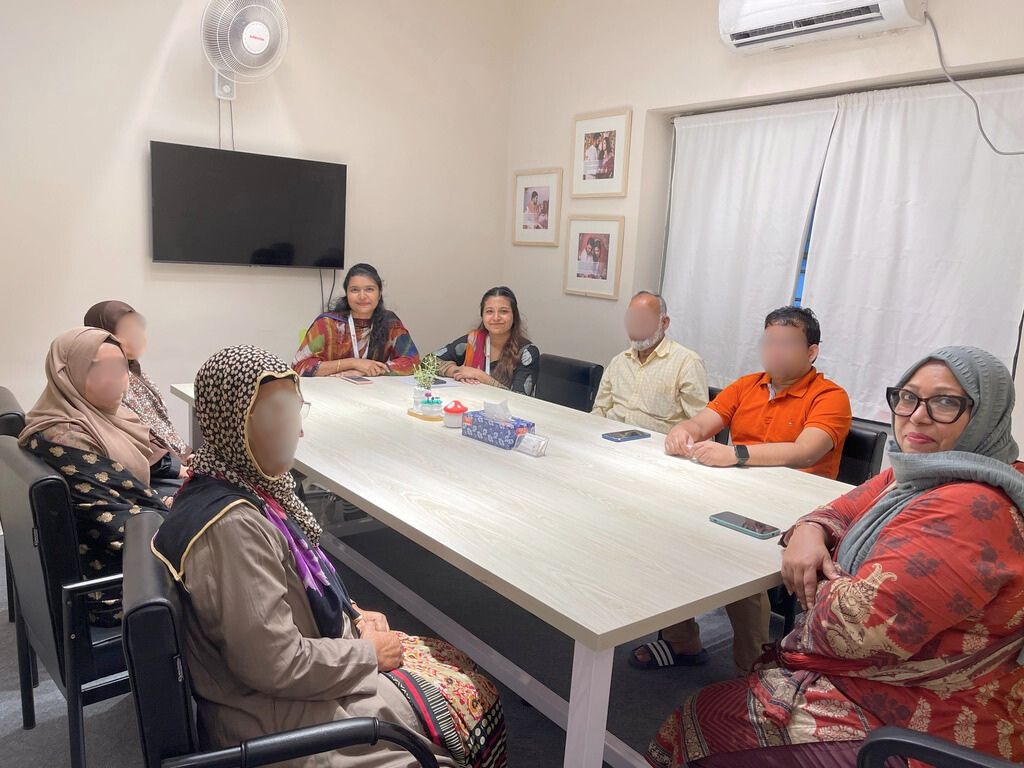
Approved clients sign a service agreement, submit verified biodatas and recent photos. All National IDs are checked; no fake profiles enter the system. The team shares relevant profiles via WhatsApp, and when mutual interest emerges, Saiyonee facilitates meetings—either at their Mohammadpur office or online for diaspora clients.
The service continues until the marriage is finalized. If a marriage results, Saiyonee collects a success fee.
What differentiates Saiyonee is process discipline, something Tanveer brought from his corporate background at multinationals, in a category that has historically lacked it.
Curated member base. Focused on educated middle- and upper-middle-class families with selective intake to improve compatibility quality.
Verification and privacy. Government IDs verified, sensitive information protected. Families connected gradually and with consent.
End-to-end service. Unlike operators who disappear after collecting fees, Saiyonee follows through with documented workflows, meeting facilitation, and ongoing consultation until the journey concludes.
Client protection. Partial refund policy, uncommon in this category, reinforces accountability.
Among the marriages Saiyonee has facilitated, one captures the emotional weight of the work.
"A widowed school teacher came to us, terrified about how she'd marry off her daughter," Tanveer recalls. "In Bangladesh, fatherless girls often struggle in the marriage market. The mother had no network, no connections, no idea where to turn."
Saiyonee matched the daughter with an Australia-based engineer from a respectable family. The marriage happened.
"That case clarified the deeper value," Tanveer says. "This work is about helping families navigate what is arguably the most important decision in an adult's life, one that shapes how far and how happily they'll go."
Saiyonee now serves over a thousand registered families, with 9 marriages completed and approximately 10 couples in active courtship. The company has built a Facebook community of over 20,000 members and 12,000+ page followers.
The team has grown from Tanveer working alone to a 10-member operation. Establishing a physical office in Mohammadpur in July 2025 strengthened client confidence and made the brand more tangible.
The company has also gained recognition in Bangladesh's startup ecosystem. Saiyonee was among the top 4 teams in the Startup Dhaka Incubation Program 2023, and was shortlisted for Shark Tank Bangladesh Season 1, though Tanveer chose to withdraw, feeling it wasn't the right stage for the company's growth at that time.
Like many matchmaking businesses, Saiyonee operates in a structurally imbalanced market where attracting high-quality male candidates remains a strategic priority, addressed through partnerships, events, and community-led growth.

Saiyonee recognizes a generational shift. While parents prefer guided matchmaking, younger professionals want more agency and a more natural meeting process.
The company launched Saiyonee Singles Soirée, curated social events designed as a middle ground between dating culture and traditional arranged marriage. Not casual dating, but a dignified format for serious connections.
The third Singles Soirée, held April 10, 2026, brought together 24 participants, 12 men and 12 women, resulting in 15 mutual matches. Curated participants, structured conversations, and an atmosphere of a social gathering rather than a marriage interview.
These events represent an important brand extension: engaging younger urban audiences while redefining what contemporary matchmaking can look like in Bangladesh.
Saiyonee's roadmap extends beyond matchmaking. The company sees opportunity across the broader wedding value chain, from preparation and styling to celebrations and beyond.
"Many candidates come thinking 'I'll marry whoever likes me,' which is emotional and impractical," Tanveer notes. "We want to help people prepare mentally and financially for marriage, not just find them a match."
The long-term vision: a brand that families associate not just with finding the right partner, but with the entire journey that follows.
The diaspora market, millions of Bangladeshis across North America, Europe, and Australia, faces even more acute network challenges and a higher willingness to pay.
Tanveer's ambition is to make Saiyonee the most trusted name Bangladeshi families think of when they need help finding a life partner.
"Choosing a life partner is not just an important decision, it is the most important decision an adult can make," he says. "It shapes how far you'll go and how happily you'll live. Families deserve a process that feels trustworthy and professionally handled. They should be able to breathe easy, knowing there's a place they can trust."
That is the space Saiyonee is trying to occupy: not merely a matchmaker, but a credible, modern institution in a category that has long operated without one.
In a market of 180 million people where marriage remains a defining life decision, and where trusted brands have been scarce, that's not a small ambition. It's a generational opportunity.
Saiyonee is a matchmaking consultancy based in Dhaka, Bangladesh, operating under Matpreneur Ltd. Learn more at saiyonee.com