
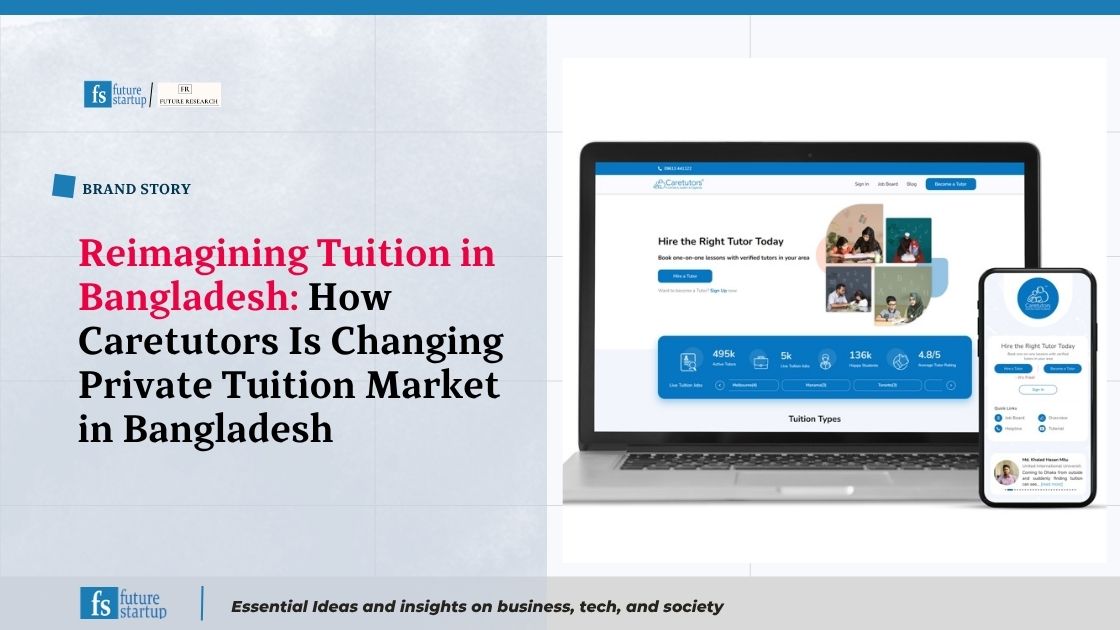
The traditional private tutoring market in Bangladesh has always been an unpredictable and inefficient market, both for tutors looking for tuition and parents and students looking for tutors. Two parallel frustrations play out daily, usually without the people experiencing them knowing they are two sides of the same problem.
On one side: a family in Dhanmondi needs a Class 9 Physics tutor. The mother asks a neighbor. The neighbor knows someone who knows someone. A phone number is passed along. A young man arrives at the door, says he studied at BUET, and seems pleasant enough. The parents have no way to verify who he is, where he actually studied, or whether the credentials are real. They let him in anyway, because the alternative, calling a tuition media with the number printed on a poster pasted to the school gate, is only marginally better. The agent charges a fee up front, sends whoever is available in the area, and has no stake in what happens after.
On the other side: a first-year student at a university in Dhaka, newly arrived from Sylhet or Comilla or Rajshahi, needs income. Private tutoring is the obvious option: flexible hours, decent pay, something his seniors are all doing. He has two options: seniors with a network and paid tuition agents. For many, seniors hardly provide meaningful support, and many others come without any senior network. He then goes to two tuition agents, pays a registration fee to one of them, and waits. Weeks pass. One call comes, for an area an hour away from where he lives, for a grade level he isn't confident teaching. He takes it anyway. Two months later, he's still calling and waiting.
Both experiences are common, both are accepted as the normal cost of doing business in the private tutoring market, and both are, at their root, the same structural failure.
Private tutoring in Bangladesh, although supplementary education, is critical, almost essential, for the effective learning of students. Families often rely on private tutoring to fill gaps that the formal classroom leaves undone. And for hundreds of thousands of university students, it is one of the few flexible, decently-paid forms of work available during their studies.
However, a largely informal and unstructured market serves both groups badly in related ways. On one side, a family that cannot reliably hire a tutor; on the other, a student who cannot reliably access the opportunities that exist.
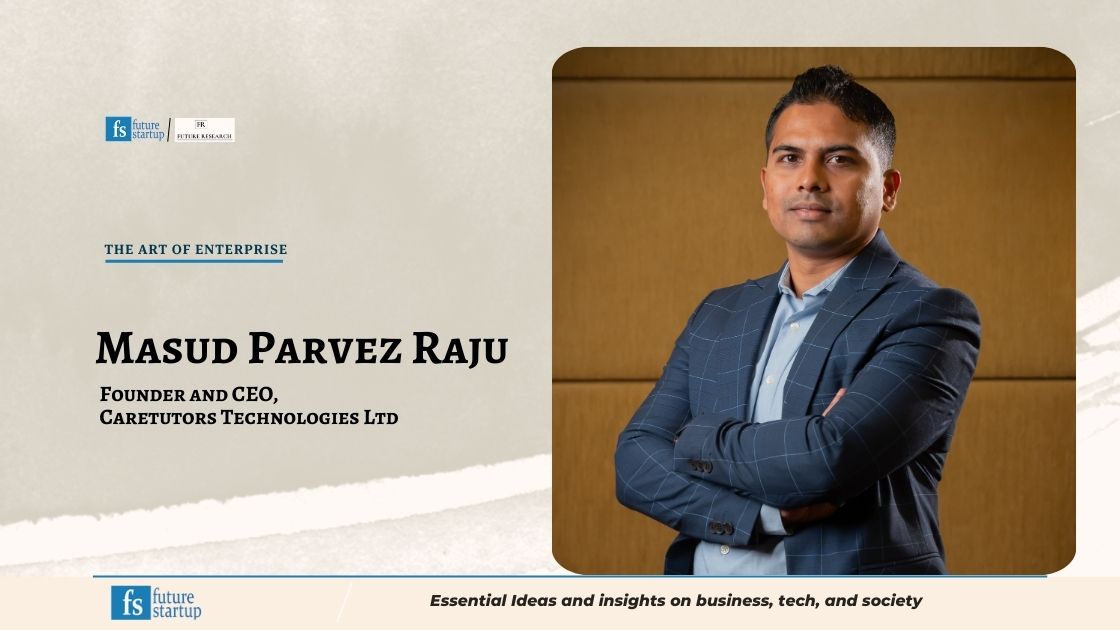
Caretutors was founded in 2012 with an ambition to fix this. Masud Parvez Raju, the company's founder and CEO, spent four to five months before founding the company talking to guardians who had paid agents and received the wrong person, and to students who had paid for tuition and heard nothing back. He found that the market was not broken because of supply—a shortage of tutors, or demand—a shortage of families who needed them. It was broken because of a shortage of reliable infrastructure. The intermediary layer had no incentive to make good matches. Build an intermediary whose revenue depends on match quality, and the structural incentive problem disappears. He realized that a platform built around verification, accountability, and consistent execution would not just improve the experience. It would become the market.
Thirteen years later, Caretutors has 500,000 registered tutors and more than 125,000 registered students and guardians, operations in Bangladesh's major divisional cities, across more than twelve countries, and a profitable business that has grown consistently every year. Less than 1% of a market of 38 to 40 million active students has been reached. The company is large enough to show the model works. It is small enough that almost everything still lies ahead of it.
The tuition media sat at the center of the market for decades. These were informal brokers: small operators who maintained lists of tutors on one side and handled guardian requests on the other. Their offices were often a single room, sometimes just a phone line. Their marketing was the posters and banners stuck to school gates, pasted on walls near university campuses, and handed out in neighborhoods. They were genuinely useful in the way that any intermediary is useful in a market where buyers and sellers cannot easily find each other. The problem wasn't their existence. It was what their business model did to their incentives.
Agents collected fees either from tutors, the guardians, or both. Their revenue came from the transaction, whatever the outcome may be. Once the fee was paid, the agent's incentive to care about match quality dropped sharply.
A tutor placed in the wrong household, wrong subject level, wrong area, wrong teaching style, still counted as completed work from the agent's perspective. A guardian who paid for a placement and received someone with misrepresented credentials had no mechanism for a refund. The fee was paid. The service was rendered.
Credentials were entirely self-reported. A tutor who claimed an English medium background might have attended an English medium school briefly and spent the rest in Bangla medium. A guardian who asked for someone from a particular university got whoever the agent had available that week in the right neighbourhood. Verification was structurally absent, not because agents were dishonest, but because honest verification was not their business.
The safety dimension deserves separate attention. In-home tutoring means letting a stranger into your home, into the room where your child sits alone for hours, which is a trust decision of a specific kind. Guardians managed this risk through the only mechanism available to them: personal networks. They preferred tutors known to someone they personally trusted—a colleague's recommendation, a neighbor who'd used the same person for years, a friend's assurance. Personal referrals were worth more than any credential precisely because they came with accountability: the person who made the referral would have to face you if it went wrong.
When personal networks ran out, families went to agents, accepted the information gap, and hoped.
For tutors arriving in Dhaka without connections, the system's dysfunction and thus the challenges were different but structurally similar. The market for tutoring was large and visible. Access to it was controlled entirely by social proximity.
A university student who arrived in Dhaka from outside the city, without established social connections, was trying to enter a market governed entirely by those connections. "I would ask them from time to time about how they found the tuition," Raju said of his early conversations with classmates at IUB. "After some informal conversations, I came to learn about seniors and tuition media who provided tuition for a fee and sometimes for a portion of the salary. I also met others who didn't get tuition despite paying money to these tuition media or agents."
There was, in other words, no shortage of supply or demand. There was a structural failure of the intermediary layer: agents who had no incentive to verify, no mechanism for accountability, and no investment in whether the match actually worked. There was no reliable infrastructure. That distinction is the whole point.
The structural changes Caretutors introduced are worth examining specifically because the word "platform" can obscure the actual work. When people describe Caretutors as a "platform for finding tutors," they are technically correct but vague in details.
The company has introduced a set of structural interventions in the matching process that replaced unpredictability, chance, and social capital with repeatable systems. Walking through these interventions one by one is the easiest way to see what the company has actually built and how it changes everything.
Verification as a first principle. The most consequential change was making tutor identity checkable rather than assumed. The old system answered this question through assumption. Agents never verified credentials because verification wasn't their business. Caretutors built it into the enrollment process: tutors must complete profiles: academic credentials, location, teaching history, supporting documentation, before accessing the job board. An incomplete profile can't apply.
A dedicated team of six people conducts manual checks for new tutors and for placements where the stakes are higher: home address, academic records, identity documents.
The verification isn't exhaustive across 500,000 profiles; it can't be, but it converts the trust question from "do I know this person?" to "has a platform with thirteen years of reputation checked this person?" That shift matters most to families who've run out of people they personally know. For them, institutional verification is the only verification available.
Guardian control and a job board for tutors. In the old system, the agent made the match. The guardian received whoever was available; the tutor waited for a call. Caretutors reversed this for both parties. When a guardian posts a requirement, eligible tutors in the right location and category get a push notification and can apply directly. The guardian reviews applicants, shortlists up to five, invites trial classes, and confirms only after observing someone teach. Decision authority rests with the family.
For tutors, the change is equally significant: rather than waiting for an agent to call, they can see live job postings daily and apply to the ones that match their subjects, location, and schedule. The student who arrives in Dhaka from Rajshahi with no senior connections and no social network has access to the same job board as everyone else. Documented performance on the platform can substitute for the connections they don't have.
Trial classes as standard procedure. The idea of trying a tutor before committing sounds obvious in retrospect. In the agent system, it was practically unavailable. The fee was paid upfront, the tutor arrived, and the relationship began. Caretutors built the trial class into the workflow as a default step.
A guardian who shortlists a tutor invites them to teach a trial session before any confirmation is issued. If it doesn't go well, the guardian has options to seek another tutor. The system understands what every guardian already knows: credentials predict competence imperfectly, and watching someone teach for an hour is more informative than reading their academic record.
For tutors, the trial works as a chance to assess the student, the household, and whether the arrangement is worth their time before they commit to a monthly schedule.
Digital confirmation as enforceable accountability. Once a guardian confirms a hire, Caretutors generates a digital confirmation letter signed by both parties — a formal agreement governing teaching days, subjects covered, fees, and expectations.
In the old system, every tutoring arrangement ran on verbal terms, which meant that when a guardian reduced payment without warning or ended the arrangement abruptly, the tutor had nothing to stand on. The letter doesn't eliminate disputes. It gives both parties something specific to point at when disputes arise, which changes the power balance in those conversations considerably.
Post-hire fees. One of the more consequential design choices Caretutors made is that tutors pay the platform fee after receiving their first month's salary, not before. In the agent system, upfront registration fees were a real financial risk for students with limited income — you paid, and you might receive nothing. Caretutors' model removes that risk entirely.
A tutor who joins and finds no work pays nothing. This removes the extractive dimension from the registration process entirely. As one tutor on the platform said, "The best part is that we can pay the platform charge after receiving the month's salary. So tutors like us do not feel extra pressure." The platform's revenue is aligned with successful placement, not with applications submitted. That alignment is everything.
Tutor profiles have a portable professional reputation. Under the old system, a tutor's reputation was local and short-lived. A guardian might mention to a neighbor that a particular person was good, but this information didn't travel far or persist long. Tutors who moved neighborhoods, changed universities, or simply lost contact with their social network had to start over.
On Caretutors, a tutor's profile accumulates history, completed jobs, ratings, and reviews that follow them and improves their competitiveness over time. A tutor with a strong track record has a form of professional credibility that exists independently of who they know or where they studied. The tutor who has completed forty jobs on the platform with a strong rating is demonstrably more competitive than a newcomer with no record, independent of who they know. For students from outside Dhaka who've spent their first months in the city building no social capital, this accumulated profile is the only professional reputation they have that's portable.
The clearest measure of whether any of this actually worked is whether users kept coming back. The answer, across thirteen years of data, they did. About 20% of Caretutors' new business comes from referrals: existing guardians and tutors recommending the platform to people they know. This is not a marketing achievement. Referral volume at that level is produced by people having experiences good enough that they wanted someone else to have them too. The informal tuition media, by contrast, were rarely recommended with enthusiasm. They were used because they were the only available option.
The supply-side network effect compounds this. A platform with 500,000 registered tutors can serve a guardian in almost any neighborhood of Dhaka or any major divisional city, in almost any subject or skill category, at almost any point in the academic calendar. Guardians can receive anywhere from twenty to two hundred applications for a single job posting. That volume of choice, filtered through verification and matching systems, is the service. It is something the agent model structurally could not offer.
The cohort dynamics compound over time in a way that's easy to underestimate. Students who used Caretutors to find tutoring jobs between 2014 and 2020 are now, in many cases, parents. They return to the platform as guardians — already familiar with it, already trusting it, requiring no convincing. "Before, maybe a brother hired a tutor for his sister; now that same brother is taking a tutor for his child," Raju said. "This circle will keep rotating." Every year, a portion of the supply side graduates into the demand side. The platform's oldest users are its most reliable new customers.
"We have always tried to serve our customers the best," Raju said, "giving them such an experience through customer service, through good tutor selection, and by motivating the tutor so they deliver good service — so that our existing clients refer us to others." Caretutors' customer relationship team proactively calls existing users to understand their experience rather than waiting for complaints. It's expensive relative to automated alternatives. It's also why the referral rate holds.
The original offering was academic tutoring, specifically matching guardians with tutors for SSC, HSC, and university-level subjects across Bangla medium, English version, and English medium curricula. Everything that followed came from users asking for it consistently enough that the signal became impossible to ignore.
"In around 2017, we started getting some requests for skills-based tutors, such as language learning," Raju said. "Our users would ask whether you have Arabic tutors. Whenever we received consistent requests for tutors for a category, we took it as a market signal for an existing demand, and we worked on it."
Arabic came first. Drawing and painting followed, then music, dance, and fitness. Then coding, professional skill development, special needs education, and Madrasa instruction. Today, Caretutors operates across thirteen categories. The matching infrastructure underneath them is identical. Posting a requirement for a painting tutor works exactly like posting one for an HSC Chemistry tutor.
The service format has also diversified in response to actual use patterns. Group tutoring emerged when students asked whether they could share a tutor and split the cost. Online tutoring expanded during COVID and produced an unexpected network effect: Bangladeshi tutors now teach students in the United States, Canada, Saudi Arabia, and the UK, primarily for Bangla and Arabic language instruction, without Caretutors needing any physical infrastructure in those countries.
Shadow Tutoring, launched in 2025, addresses dual-income households where parents need a trusted person to spend extended daily hours with their child: school pickup, homework, gap between parental shifts, a category that is structurally growing as urban dual-income households become more common.
Package Tutoring covers defined syllabuses over fixed periods, useful for SSC and HSC final preparation or university admission cramming, at a reduced platform charge.
None of these was designed first and then marketed. Each was identified in demand before it was built into supply.
Raju’s thesis for all of it: "We are a platform that connects learners, students, and guardians with teachers and tutors to learn skills and subjects, be it academic or non-academic, where in-person tutoring is a superior method of learning than other alternatives." The company is not an edtech company in the conventional sense. Rather, it aims to build the infrastructure for human, in-person, personalized learning across the full spectrum of what people want to learn.
Caretutors is not trying to compete with edtech platforms offering recorded courses or AI-generated content. Those platforms serve a different need and a different population. The company's competitive frame is narrower and more specific: the market for in-person, personalized, human instruction, which it believes is both durable and structurally distinct from what online learning provides
On AI tutoring specifically, Raju's answer is direct: "Education is hardly about the text we study. It is also about discipline. It is also about attention, attitude, and approach. Human children learn more from people and the environment than from the text. There are emotions. There are internal struggles of a learner. That's why we feel comfortable when a human teacher is with our kid. Someone is physically there."
Raju’s framing doesn’t focus on AI and its capabilities and relevance. Caretutors rather focuses on the value of in-person tutoring, which is not primarily informational. A child sitting with a tutor for two hours is not just receiving answers to questions. They are experiencing attention and the behavioral modeling of someone working carefully at something. These are attributes that transfer through human presence in ways that software does not currently replicate.
This is the strongest version of the argument, and it's probably right about the high end of the market. In-person tutoring isn't primarily an information delivery service. The accountability produced by a human being sitting in the room, noticing when you've stopped working, adapting when you're stuck, generating the low-grade social pressure of being observed, isn't replicated by a well-designed interface. The discipline effect alone may account for more learning gains than the content delivery.
But the strongest counter-argument needs stating. AI tutoring tools are already producing real gains for drill-based and conceptual learning. The genuine risk to Caretutors is that AI captures the bottom of the market first: the large proportion of tutoring hours that are essentially assisted homework completion and exam drilling. It will then force Caretutors to move upmarket.
However, we don’t see that migration is happening any time soon. Caretutors' user base has grown every year for the last five years, a period during which AI tutoring tools have proliferated globally. The market Caretutors serves appears to be distinct from the market those tools are capturing.
The more immediate competitive pressure is from the informal market that has always operated alongside Caretutors. Facebook groups, WhatsApp referral chains, university seniors passing around names. These channels persist because the trust that makes a platform feel safe takes time to build, and in areas outside Dhaka where Caretutors' brand presence is thinner, many families default to what they know.
"We have a massive trust issue," Raju acknowledged, particularly outside Dhaka. Building the kind of trust that makes the platform use the obvious default across the full geography of Bangladesh's tutoring market is a long-term project, and it is not finished.
Caretutors' growth story is often framed as a story about scale: more tutors, more categories, more countries. That framing is accurate but incomplete. The binding constraint isn't supply. It's trust at the geographic frontier.
To that end, the immediate strategic priority for Caretutors is geographic. Dhaka-level operational depth—verified tutors, active guardians, local brand recognition, a functioning customer relationship operation—took a decade to build in the capital. The task in divisional cities is to compress that timeline without compromising the standards that make the platform trustworthy.
"The goal for the next two to three years is to reach a similar scale in divisional cities," Raju said. Offline marketing, campus activations, and regional hiring are all part of this effort.
The international segment, by comparison, is almost frictionless to grow. Bangladeshi diaspora communities in the Gulf, North America, and Europe want Arabic instruction and Bangla tutoring for their children. The online infrastructure already exists. A tutor in Dhaka can teach a child in Riyadh without Caretutors having any physical presence in Saudi Arabia. The market is niche in each country, but aggregated across twelve-plus countries, and a diaspora that numbers in the millions, it is meaningfully large.
Further out, the company holds an aggregator power that it is only beginning to explore: a large, trusted user base of students, guardians, and tutors with an interest in education. The platform already runs a discount partnership program with dozens of brands. Whether this evolves into a meaningful ecosystem of products and services—educational materials, financial products, or something else—is undecided. But the user base, the precondition for such growth, is there. And it is a clear possibility.
For investors and partners, the picture is this: a profitable marketplace that has raised one small round since 2017 and funded all subsequent growth from revenue; a supply side at 500,000 tutors that took a decade to build; thirteen years of operational learning about what goes wrong in tutor-guardian relationships and how to prevent it; a cohort structure where each year's tutors become the next generation's guardians; and less than 1% of a 38-to-40 million student market served. The company has spent a long time building the infrastructure for a very large market. The infrastructure is real. The market is mostly still ahead of it.
Framing Caretutors as a technology company that disrupted an inefficient market is accurate and insufficient. Plenty of technology has been deployed in broken markets without fixing them. What determined the outcome here wasn't platform sophistication.
What Caretutors actually built is structural trust. The kind of trust that personal networks provide to those who have them. Caretutors supplied the same level of trust through institutional mechanisms to those who don't have that network.
The old system was broken because its intermediaries were profitable precisely when the market was broken. Agents earned their fees at placement, not at outcome. They had no incentive to verify, no mechanism for accountability, and nothing to lose from a bad match. The dysfunction was load-bearing for them. Caretutors changed the incentive structure: revenue depended on match quality, tutor fees came after successful placement, and verification wasn't optional. Every structural choice the company made aligned the platform's interests with the interests of its users.
"In business, reputation is the most important capital," Raju said. "If I lose trust once, this journey will be difficult for me."
That sentence describes a constraint. It also describes a strategy. A company that has built thirteen years of reputation on trustworthy matches has a compounding advantage that a new entrant with better technology can't quickly replicate, not because the technology is hard to copy, but because the reputation isn't. Trust is the product. The app is how it gets delivered.
The old system persisted not because it was good and no one understood it was broken, but because building the alternative required something that couldn't be assembled quickly: accumulated credibility. Caretutors has spent thirteen years accumulating it, one reliable match at a time. And it still has most of its work in front of it.